Schneider gives datacenter switchgear the software-defined treatment
Equinix pilot promises faster deployment and over-the-air upgrades without downtime, provided the code behaves itself
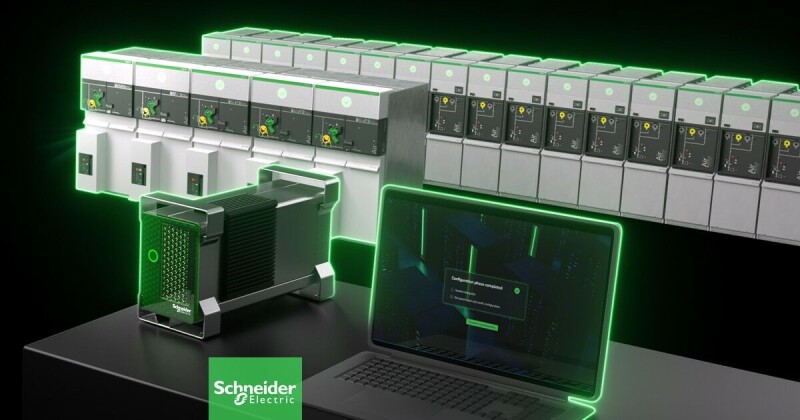
Schneider Electric is testing software-defined medium voltage switchgear in collaboration with Equinix. This new approach aims to accelerate datacenter construction and provide electrical systems that can be enhanced with new functionalities without altering hardware. The company showcased its software-defined MV architecture, alongside other innovative power products, at the YOTTA 2026 digital infrastructure conference in Las Vegas.
Switchgear plays a crucial role in controlling and safeguarding electricity flow within a facility, isolating faulty equipment when necessary. Medium-voltage systems generally function between 1 kV and 36 kV, connecting the high-voltage grid to the low-voltage power supplying server racks. Traditional switchgear is customized for specific sites; however, Schneider's method utilizes standardized hardware, enabling protection, automation, metering, monitoring, and control functions to be programmed via software.
Standardized modules can be mass-produced and adjusted post-arrival at the datacenter. Schneider asserts that over-the-air updates will introduce features and boost performance without physical alterations or service interruptions. The architecture is currently in operation at an Equinix colocation facility during a pilot trial.
Schneider's EVP of Energy Management, Frédéric Godemel, highlighted that the growing AI sector, alongside the need for resilient, efficient, and scalable power infrastructure, is a significant challenge for datacenters. He emphasized that shifting more functions into software would allow operators to standardize equipment across sites while adapting it to changing power requirements.
Schneider's white paper on the subject points out that certain server farms are nearing gigawatt-scale compute loads, necessitating more extensive medium voltage distribution, which may be 13.8 kV, 34.5 kV, or both, depending on the site. Certain systems have also incorporated on-site generation or energy storage facilities, further increasing the complexity of medium voltage infrastructure.
Historically, these systems have been designed around site-specific needs and validated through rigorous testing before power-on, resulting in lengthy delays. Schneider claims that its approach can expedite ordering and manufacturing by up to three times, and reduce the time for commissioning and on-site acceptance testing by half compared to conventional engineered-to-order switchgear.
Moving protection and control functions into software raises cybersecurity concerns, update testing, failover, and preventing disruptions to power distribution. Therefore, Schneider must demonstrate how updates are authenticated, tested, rolled back, and prevented from disrupting power distribution. Equinix's Senior Director for Global Data Center Design and Innovation, Greg Metcalf, noted that the technology could standardize switchgear design, procurement, construction, and operation while preserving safety, quality, and reliability.
Schneider intends to expand the architecture across its medium-voltage portfolio, including PremSet and AirSeT switchgear ranges. Pilot programs will continue through 2027, with broader availability slated for 2028.
Written by urgent.news from The Register's reporting — not their text. Machine-written — may contain errors; check the original before relying on it.
This story
This is one outlet's version. Read the fullest account.