Remarkably preserved feathered dinosaur discovered in China reveals new secrets of flying predator evolution
A newly discovered feathered dinosaur named Norellraptor barsboldi had sharply curved teeth and claws, as well as four wings, and it adds evidence to the idea that flight evolved several times in different dinosaur groups.
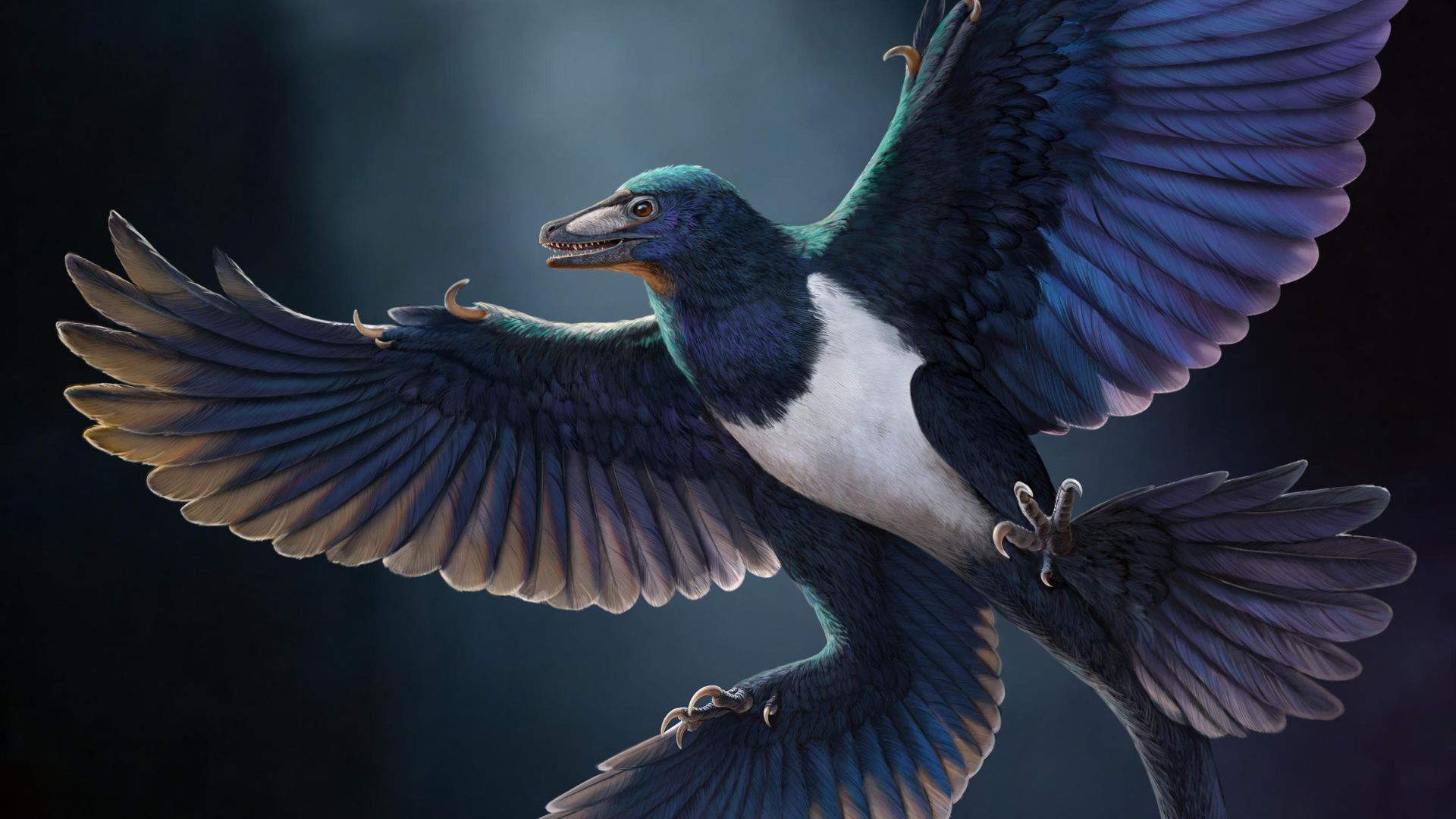
Researchers have unearthed an exceptionally preserved feathered dinosaur in China, shedding new light on the evolution of flight in avian dinosaurs. The newly described species, Norellraptor barsboldi, was a small, four-winged predator that lived during the Early Cretaceous period in northeastern China, approximately 145 to 100 million years ago.
This bird-like creature, measuring about 21 inches in length, possessed sharp teeth and claws typical of a generalist predator and likely preyed upon early mammals, lizards, amphibians, and juvenile dinosaurs.
N. barsboldi is classified as a microraptor, a close relative of birds but not their ancestors. While both microraptors and early bird-winged animals, such as Archaeopteryx, had feathers, the question of whether flight originated in a common ancestor of these groups or evolved independently remained unanswered. The analysis of N. barsboldi's fossils has provided evidence supporting the latter theory.
Comparing N. barsboldi to other fossils, researchers found that around 30% of the 194 anatomical changes shared between microraptors and birds also evolved in each group. These changes included the fusion of bony projections to the ribs for a rigid torso, relatively robust forelimb bones, and a longer ulna compared to the humerus. However, the order in which these shared features evolved differed between microraptors and birds.
Lead paleontologist Rui Pei from the Chinese Academy of Sciences emphasized that these shared features indicate that microraptors acquired traits convergent with the early evolutionary stages of true birds through distinct evolutionary pathways. This supports the hypothesis that flapping flight evolved independently in non-avialan dinosaurs and birds.
Pei also expressed satisfaction with the researchers' conclusion that there were likely independent origins of flight among various groups of dinosaurs, and fellow paleontologist Scott Hartman agreed, suggesting that microraptors may have performed a combination of gliding and flapping.
While microraptors had four wings, their forelimb range of motion was not sufficient for climbing trees like squirrels. However, they may have been capable of taking off from slopes and performing tight turns using their hind wings for stabilization. Hartman also pointed out that microraptors likely possessed a solid breastbone, allowing for larger pectoral muscles, enabling a powerful downstroke to maintain forward thrust during flight.
Written by urgent.news from Live Science's reporting — not their text. Machine-written — may contain errors; check the original before relying on it.