Plastic fused to coral rubble raises new concerns for ocean pollution
From the seafloor to turtle stomachs, scientists are finding plastic everywhere they look for it. Now, researchers in Japan have found plastic thermally adhered to coral rubble, an amalgamation they’ve termed “plasticoral,” according to a new study. The finding is raising concerns about potential ocean chemical leaching, habitat degradation and a new way for microplastics […]
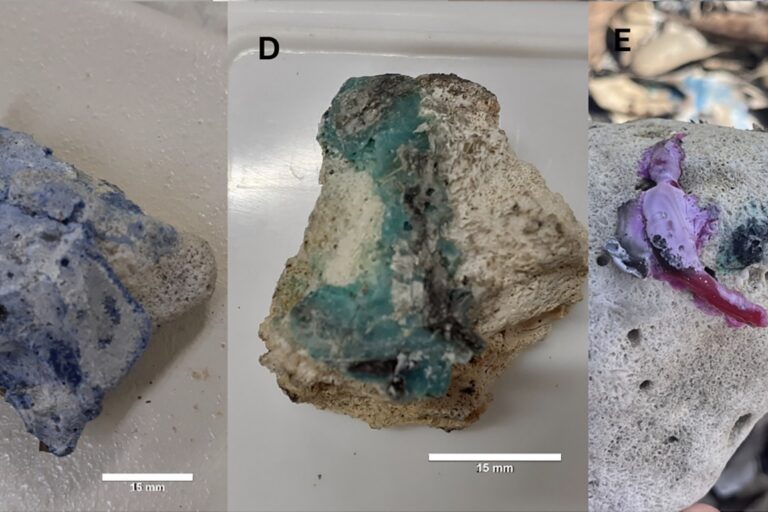
Scientists in Japan have discovered a new phenomenon involving plastic fused to coral rubble, which they've named "plasticoral". This discovery, detailed in a recent study, has raised concerns regarding potential ocean chemical leaching, habitat degradation, and the introduction of microplastics into marine environments. The term "plasticoral" was coined by researchers at the University of Ryukyus in Japan, who first observed the phenomenon during a routine marine litter survey on Okinawa Island's beaches in August 2024.
The team did not intentionally seek out "plasticoral." Instead, they stumbled upon it while examining coral rubble. Ilechukwu, the study's first author, noted that previous research had focused on "plastiglomerates," which are melted plastic debris combined with rocks, wood, or other natural materials. However, the coral rubble containing plastic, which was not just adhered to the surface but entirely integrated into the structure, proved to be a unique and unusual finding.
This discovery represents a new subset of plastiglomerates, with "plasticorals" being different because the melted polymers conformed to the coral rubble's complex, porous skeleton. Researchers speculate that the plastic was burned into the coral rubble by a beach fire, although further investigations are necessary to confirm this hypothesis.
In the laboratory analysis of the five plastic samples, four were identified as polyethylene, which is commonly used for single-use bottles, while one was polypropylene, a more rigid plastic often found in food containers and bottle caps. Both plastics are among the most prevalent types used globally.
Written by urgent.news from Mongabay's reporting — not their text. Machine-written — may contain errors; check the original before relying on it.