MG4 Urban im Test: Was der chinesische Golf-Gegner zum Kampfpreis kann – und was nicht
Mit dem MG4 Urban tritt die chinesische Marke gegen den VW Golf an. Das Modell hat nicht nur überraschend viel Platz, sondern auch einen Preis, der manchen in Wolfsburg schockieren dürfte.
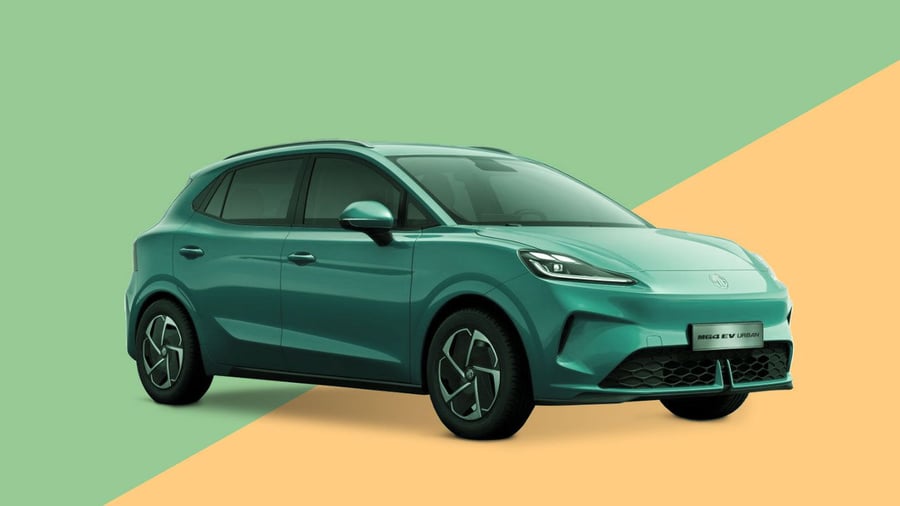
When a teacher once taught me that in economics, there is no such thing as a free lunch, and secondly, that any deal that sounds too good to be true likely is, the MG4 Urban caught my skepticism. The car's starting price of around 25,000 euros appears moderate for a compact car, but MG further discounts it by 6,000 euros at launch.
That brings the price down to just 13,000 euros for a brand-new vehicle in 2026. Is this possible? There must be a catch. We experienced the MG4 Urban firsthand. It enters the compact class, which has been dominated by the VW Golf in Germany for decades. However, it offers more space than its competitor. At around 4.40 meters in length, it is approximately ten centimeters longer than a Golf 8, and also wider and taller.
The model name initially causes confusion since the MG4 Urban is not a variant of the similarly priced MG4, but rather a model built on a completely different platform. Imported from China, the MG4 Urban enters Germany's favorite segment. Since the beginning of the year, the brand has sold about 23,200 vehicles in Germany, a 48% increase compared to the same period last year.
However, other Chinese brands are growing faster. BYD is expected to overtake MG as Germany's most successful Chinese brand this year. Although the name may sound British, MG has been part of the Chinese state-owned conglomerate SAIC for several years, which the EU accuses of distorting the market with unfair subsidies. The price advantages of Chinese production seem to outweigh it.
Currently, all models of the brand are imported from China, with plans for local production in Spain starting in 2028 to avoid tariffs. As long as the cars come from China, options are limited. There are currently two battery sizes and two trim levels for each - for example, for extras like seat heating or a 360-degree camera. The entry-level model is available in red, while the rest comes in eight different paint colors, each without an additional cost.
The test vehicle is painted metallic light blue. Designed for mass appeal, the Chineses opted for a simple solution: what many like. Designed by Jozef Kaban, the former designer for Bugatti Veyron, Skoda Octavia, and ID.Buzz, the MG4 Urban aims for mass appeal. The front is aerodynamically flat but less aggressive than its sibling.
Gone is the sharp nose of the sibling model. Instead, there are more rounded edges. The sporty Cyberster has contributed some design elements, including the sharply designed headlights and sporty wheel arches. At the rear, the MG4 Urban evokes the brand's heritage. With a bit of imagination, the Union Jack can be seen in the tail lights.
Overall, the design is cohesive and appears smaller than it is from the outside. The interior reveals surprising space for a compact class model. The cloth seats are at least comfortable for city driving. The rear seat has significantly more legroom than what is typically expected in the compact class. This makes the MG4 Urban an exciting second car, especially for families.
While the brand does not go all out on material quality, they have managed to make the interior look more premium with leatherette, padded plastic, and aluminum-looking controls. However, this is not always the case. The raw fabric of the induction wireless charging pad looks rather cheap despite the low mileage on the test vehicle.
Unfortunately, the MG4 Urban smells bad in the heat of the test period. The armature releases an unpleasant odor into the interior. Despite the price, practicality shines through. The climate and sound controls feature rotating switches, and additional programmable buttons on the steering wheel. There are 30 storage compartments in the interior.
The chargable battery is robust, made of iron phosphate, and promises higher energy density. Unusually, it is not yet available for ordering. While the capacity is not excessive compared to the competition, such as the ID.3 from VW, which offers an optional larger battery, the 405 kilometers of range promised by the manufacturer for the tested variant are still more than sufficient for everyday use of a city car, especially considering the consumption rates, which are within the industry average at 15.5 kWh.
The MG4 Urban's heat pump is standard, and real-world consumption even drops slightly to 14.3 kWh. With a range of over 300 kilometers, it is well within the everyday range for a city car. Even in the entry-level variant, a heat pump is included, and the added range during winter is expected to be modest. The MG4 Urban's range is impressive, but it does not necessarily mean the car is flawless.
Written by urgent.news from Handelsblatt's reporting — not their text. Machine-written — may contain errors; check the original before relying on it.
This story
This is one outlet's version. Read the fullest account.