Glyphs Painted in Mexican Cave May Reveal Ancient Warrior Rituals and a Lost Writing System
Learn about three symbolic glyphs painted in a cave in Mexico where people once visited to perform fire rituals for warriors.
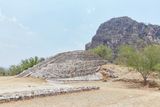
In a cave situated between two volcanic hills in Mexico, red glyphs painted on the rock may suggest the presence of an ancient Mesoamerican writing system. Located near Chalcatzingo, the archaeological site once frequented by Teotihuacan, the cave's inhabitants likely visited to perform fire rituals for warriors, as indicated by evidence of burned fires.
A new study published in Antiquity examined three glyphs within the cave. These glyphs feature a stylized mountain, a beaded necklace, cloak, and pointed dart, as well as a rectangular frame adorned with five-pointed stars. According to the study authors, these glyphs may represent a distinct writing system employed by the Teotihuacan culture, potentially commemorating deceased warriors through fire rituals.
The archaeological site of Chalcatzingo, situated approximately 56 miles southeast of Mexico City, is renowned for its Middle to Late Formative period architecture, monuments, and rock art. Over 50 rock art panels, often displaying a connection to the local geography and agriculture, have been documented at Chalcatzingo. During the Classic period (350 CE to 550 CE), Teotihuacan culture occupied the site, contributing ceramics and the glyphs studied in this new research.
The three glyphs in question are found within a rock shelter known as Cave 19, located about 0.2 miles from Chalcatzingo's center. Using a dark red pigment, the creators of these glyphs painted them on the rock with a brush. Researchers visited Cave 19 in 2022 to document the glyphs, capturing photographs that later revealed hidden details.
The first glyph depicts two identical mountain signs, one surrounded by two large scrolls emanating from an open mouth, suggesting a connection to speech. The researchers believe a third mountain sign, now faded, may have also been present. This "tri-mountain" sign, along with the scroll depiction, could signify a place name meaning "Singing Mountain," a local name for a hill near Cave 19. Similar to murals in Teotihuacan, the "Singing Mountain" name indicates pilgrimages from Teotihuacan to the hill.
The second glyph portrays multiple items, including a beaded necklace, cloak, and upright dart positioned as if stabbing through the necklace. As these items constituted warrior attire in Teotihuacan culture, the researchers conclude that this glyph likely pertains to a warrior title. The third glyph showcases a rectangular frame with a star motif, centered on a bedrock shelf where evidence of burning was found. The blackened back wall and ceiling above this glyph support the idea of fire rituals conducted in the cave.
While the researchers acknowledge debates about Teotihuacan symbols being considered writing, recent studies confirm these symbols contain elements of expression akin to hieroglyphic scripts of other Mesoamerican cultures like the Maya and Aztec. The glyphs with a necklace, cloak, and dart suggest that people likely visited Cave 19 to cremate funerary bundles associated with a warrior order in Teotihuacan.
Although the third glyph lacks direct ties to Teotihuacan script compared to the other two, its blackened back wall and ceiling reinforce the notion of fire-based rituals in the cave.
Written by urgent.news from Discover Magazine's reporting — not their text. Machine-written — may contain errors; check the original before relying on it.