El milagro de Europa del Este puede sobrevivir al proteccionismo
La región debe avanzar del ensamblaje barato hacia chips, tecnología y manufacturas de mayor valor añadido
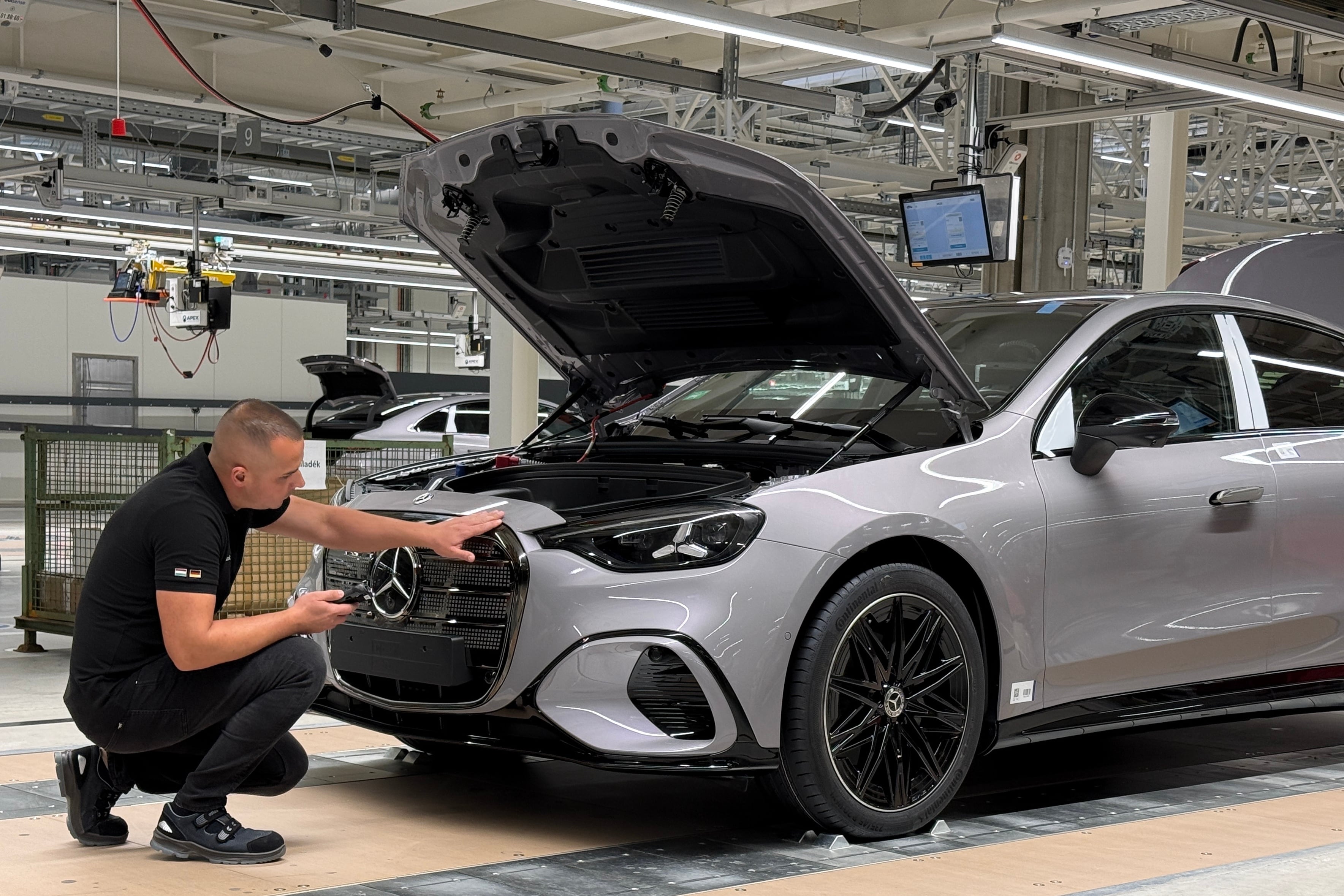
In Eastern Europe, a miracle of growth similar to that of China, South Korea, and Taiwan may survive despite protectionism. When MAN Truck & Bus announced in summer that it would invest up to 1.200 million euros in its Cracovia plant in Poland, it put Volkswagen's mother company in an awkward position. Earlier, Volkswagen had decided to end production in Dresden, marking the first such closure in its 88-year history on German soil.
This exemplifies a broader trend. Since the end of the Cold War, Central and Eastern Europe has witnessed a growth miracle comparable to that of China, South Korea, and Taiwan. Instead of boosting giants like BYD through state aid and trade surpluses, their rapid development relied on leveraging the backbone of European industry, employing cheap yet skilled labor to attract firms willing to move their supply chains.
This now faces an existential threat due to China's excessive exports. Yet, the region has shown surprising resilience. With a deliberate bet on high-value-added manufacturing and a firmer stance against Beijing, its growth model based on industry may still endure. Oxford Economics predicts the region's GDP will grow by 2% this year, compared to Germany's 1%.
Poland is performing best, recovering a pre-pandemic pace above 3%. Its new drivers resemble those of a rich country rather than an industrial developing one: rising consumption, a deficit equivalent to 6.5% of GDP, and a diversified economy where the automotive industry accounts for only 8% of manufacturing added value, according to Eurostat.
In contrast, Germany's industrial production was already 14% below its 2019 level in July, leading to a slump in exports and weaker near-term prospects for these countries more dependent on automobiles. This vulnerability reveals the problems of a strategy based on exports and heavily dependent on decisions made elsewhere: it's much harder to change products and markets.
OECD data shows that around half of the added value of Central and Eastern Europe's exports in 2022 came from abroad, compared to 14% in rich countries. Their main companies are still largely foreign-owned, and R&D spending lags behind that of richer economies. Moreover, the historic lack of investment in renewables has made the recent energy price hike particularly harsh.
The big question is whether the region should change its direction entirely. Many countries' per capita GDP is approaching that of Spain, meaning wages have risen enough to erase part of their competitive advantage. However, households have also become wealthy enough for consumption and services to drive growth. Indeed, Germany's dependence on Eastern Europe is already transforming: it not only relies on Eastern Europe for components and equipment but is also becoming a destination for vehicle, chemical, and machinery exports that China no longer purchases.
For Volkswagen's struggling brands, BMW, and Mercedes, Poland and the Czech Republic, as well as the Baltic states, represent an increasingly rare opportunity for expansion. According to the Penn World Tables 1995-2023, converting to a more consumption-oriented economy and reducing the weight of manufacturing could work. They show that production per hour grew largely in line with countries' initial income levels: poorer economies expanded more rapidly.
There is no clear signal that more industrial investment translated into better growth. The value chain However, drawing a general conclusion from this phase of "convergence growth" could be misleading. Among the countries that had reached the productivity level now seen in Eastern Europe in the 1990s, success depended more on innovation and the shift towards higher value-added manufacturing, as shown by Germany, Denmark, and Switzerland.
Those that paid less attention to industry, like Italy and Spain, fared worse. It is concerning that the World Bank data indicates Europe Central and Eastern Europe has fallen out of the value chain since the pandemic, becoming even more dependent on low-margin assembly jobs rather than technologically advanced production. Governments admit the problem, presenting strategies aimed at moving towards chips, software, and advanced manufacturing while diversifying exports to the Gulf, Asia, and Latin America.
Poland and the Czech Republic have taken advantage of EU initiatives on chips, and Prague has used state aid to support projects like the silicon carbide plant of U.S. Onsemi in Rožnov pod Radhoštěm. Nevertheless, the division of the region in the face of EU protectionism leaves the limits of their ambitions exposed. When Brussels imposed tariffs on Chinese battery vehicles in 2024, Poland, Estonia, Latvia, Lithuania, and Bulgaria supported it, but Hungary, Slovakia, and Slovenia opposed it, along with Germany.
The division remains important as the EU considers extending the measures to Chinese hybrids. However, the fear of retaliation weighs heavily on the leaders of Central and Eastern Europe, despite the fact that imports of these vehicles into the EU have multiplied tenfold this year compared to the same period in 2024. Unlike Germany, Eastern Europe exports few luxury vehicles directly to China, but would suffer from a sharp increase in input costs if Beijing restricted critical minerals, battery modules.
Written by urgent.news from El Pais Economia's reporting — not their text. Machine-written — may contain errors; check the original before relying on it.