Accounting for public funds is not enough to prove performance – Ghana Audit Service
Director of Audit at the Ghana Audit Service, Hannah Mensah, has urged journalists to look beyond how much public money is spent when assessing the performance of government institutions and projects.

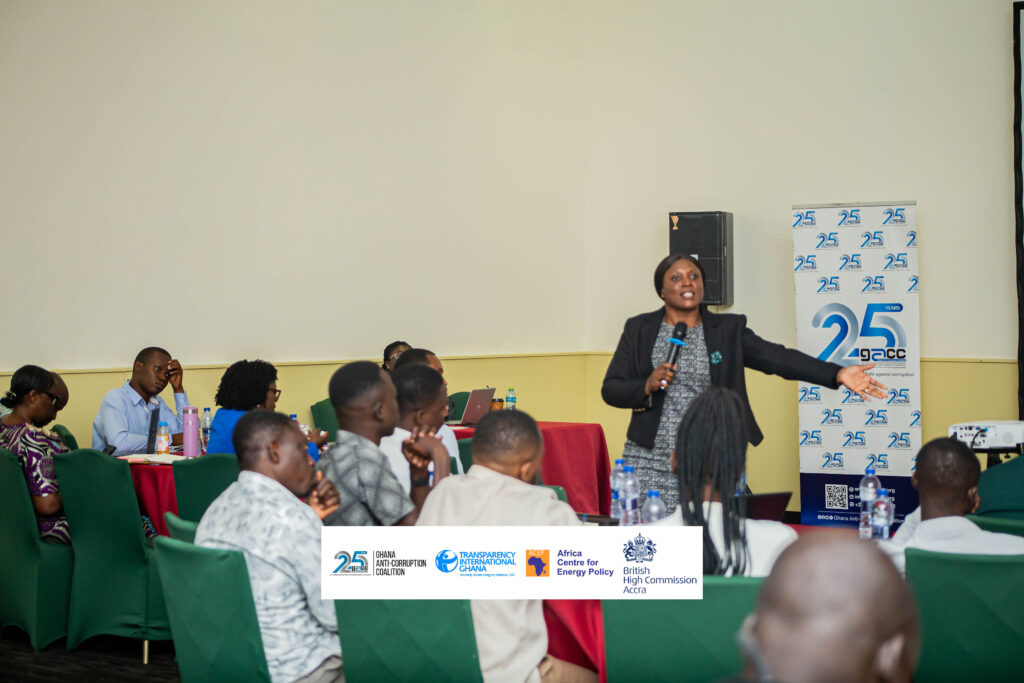
Ghana Audit Service Director Hannah Mensah has cautioned against relying solely on the amount of money spent when evaluating the effectiveness of government projects. During a media training in Accra, she emphasized that performance auditing goes beyond mere accounting of funds.
Ms. Mensah highlighted that spending money does not automatically mean the intended outcomes have been achieved. Using a hypothetical 100 million dollar project, she illustrated that a government entity could account for every penny spent without delivering the desired results. She stressed that spending represents one aspect, while the project's deliverables are distinct.
Performance auditing, according to Ms. Mensah, evaluates how well resources have been transformed into the desired outcomes. This process involves examining the systems, processes, and activities that should produce results. The audit considers whether resources were used efficiently and effectively, and if the maximum benefit was derived from them.
The auditor-general's assessment can be approached through an input-output relationship. Financial, human, and material resources act as inputs, which flow through specific activities to generate outputs and ultimately achieve intended results.
Ms. Mensah cautioned against assuming that the completion of an activity automatically signifies the accomplishment of its objectives. For instance, deploying staff to monitor filling stations would count as an output, but the impact of the monitoring on the intended purpose remains to be determined.
She advised journalists examining audit reports to question the rationale behind specific activities and whether they produced the expected outcomes. Journalists should not solely focus on expenditure figures or recorded activities, but also delve deeper into whether the activities achieved the desired results.
Ms. Mensah urged journalists to treat observations in audit reports as starting points for further investigation rather than conclusive findings. She explained that auditors must investigate why there is a difference between expected and actual outcomes before drawing conclusions. This approach necessitates a thorough analysis, often referred to as root cause analysis, where multiple factors influencing the situation are considered.
Written by urgent.news from MyJoyOnline Ghana's reporting — not their text. Machine-written — may contain errors; check the original before relying on it.
This story
This is one outlet's version. Read the fullest account.