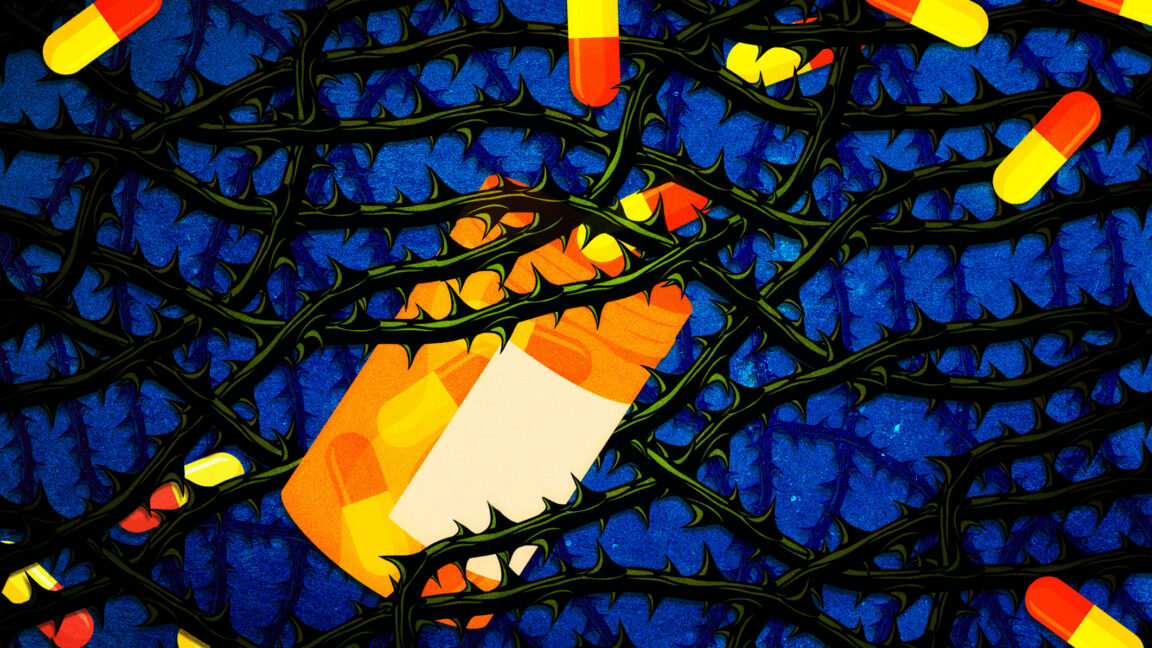
To keep drug prices high, pharma has been piling up the patents
Add-on patents have increased drug patent periods from two years to over six.
In the United States, the cost of healthcare often acts as a significant obstacle for its citizens. However, prescription drug prices frequently emerge as a particularly vexing issue. Numerous factors contribute to Americans paying more for their medications than counterparts in other comparable nations, and one glaring example is the exploitation of the US patent system. A recent study featured in JAMA underscores the substantial increase in patent exploitation over the past three decades.
Since 1990, the number of patents on small-molecule drugs has surged more than threefold, jumping from an average of 2.1 patents per approved drug to 6.9 patents per approved drug by 2019. The majority of this growth has occurred in nonprimary patents, which are not directly tied to a drug's active ingredient but rather to minor modifications to inactive ingredients, alterations in the drug's usage, or the design of specialty delivery devices like auto-injectors.
These additional patents on a single drug can give rise to a "patent thicket," a situation that hinders the timely entry of cost-effective generic alternatives into the market. This delay in the availability of affordable generics perpetuates high drug prices without necessitating any substantial clinical advancements.
Written by urgent.news from Ars Technica Health's reporting — not their text. Machine-written — may contain errors; check the original before relying on it.
Also reported by 1 other outlet
- To keep drug prices high, pharma has been piling up the patents arstechnica.com