SpaceX puts Starship megarocket in orbit for first time
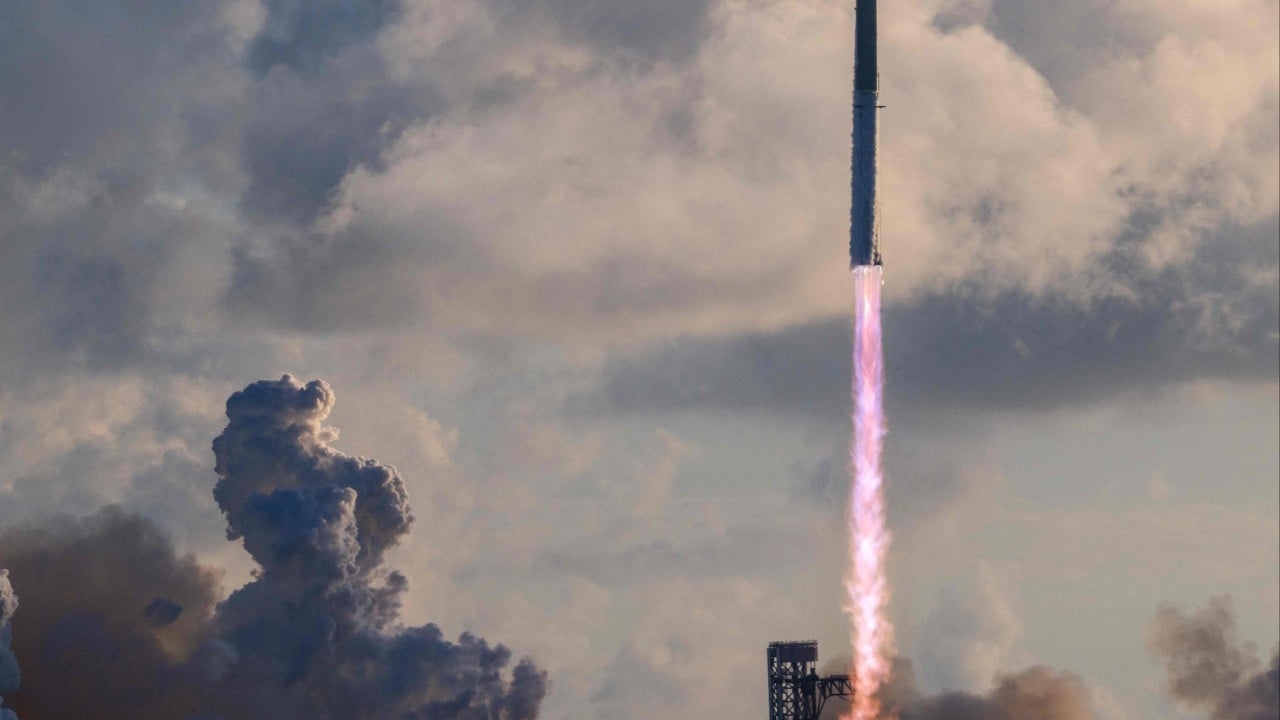
Elon Musk’s Starship megarocket reached orbit for the first time on Monday after blasting off from Texas, in a major milestone for SpaceX’s future plans, including trips to the Moon and Mars . The black-and-silver behemoth, standing more than 120 meters tall, rose through a thick cloud of smoke on an ambitious 14th test flight. The upper stage separated from the Super Heavy booster and reached…
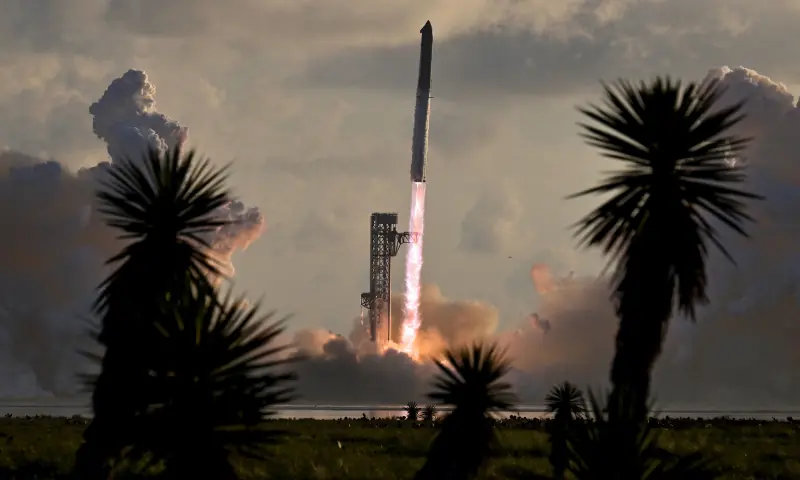
Elon Musk's Starship megarocket successfully reached orbit for the first time on Monday, marking a significant milestone for SpaceX's future plans, including lunar and Martian missions. The towering black-and-silver rocket, over 120 meters tall, ascended through a cloud of smoke during a 14th test flight. After 26 minutes, the upper stage separated from the Super Heavy booster and entered orbit around 26 minutes into the 10-hour-long test.
The experimental rocket was designed to orbit Earth multiple times and deploy 26 next-generation Starlink satellites. Initially set for a suborbital trajectory, the launch team decided to perform a second burn to reach orbit, with one member of the launch team announcing "Starship is orbital" as cheers erupted. Satellite deployment commenced shortly after.
Previous Starship tests, conducted on safer suborbital trajectories, had ended in explosions. This latest test, following SpaceX's high-profile stock market debut, aims to accelerate the development of the largest and most powerful rocket ever designed. Despite substantial technical challenges, SpaceX envisions this as an "exciting new phase" of development that may include in-orbit refueling tests.
The second burn to reach orbit is considered the most challenging, requiring different approaches as the rocket deals with varying levels of gravity. SpaceX aims for a circular orbit about 275 km (171 miles) above Earth, necessitating a speed of approximately 28,000 km/hour. Following orbit, the spacecraft will deploy Starlink satellites, with the first-stage booster, "Super Heavy," falling into the Gulf of Mexico shortly after launch.
While engineers consider flight and data collection a success, public expectations demand flashy tests, as anything less would be deemed a failure. Despite repeated delays and competition from Chinese reusable rocket developers, SpaceX remains dominant in the global space launch market, driven by its partially reusable Falcon rockets.
Written by urgent.news from Dawn's reporting — not their text. Machine-written — may contain errors; check the original before relying on it.
This story
This is one outlet's version. Read the fullest account.
- SpaceX puts Starship megarocket in orbit for first time citizen.co.za
- SpaceX is trying to send Starship to orbit for the first time, with Starlink satellites aboard qz.com
- SpaceX launches first starship flight to orbit in key test moneyweb.co.za
- SpaceX's Starship rocket reaches orbit for first time after engine failure abc.net.au
- SpaceX's Starship launching to orbit for first time ever today space.com