Scientists solve 1840s space weather mystery
19th century Nature account of 1841 train delayed by geomagnetic storm got year wrong—thanks to a typo.
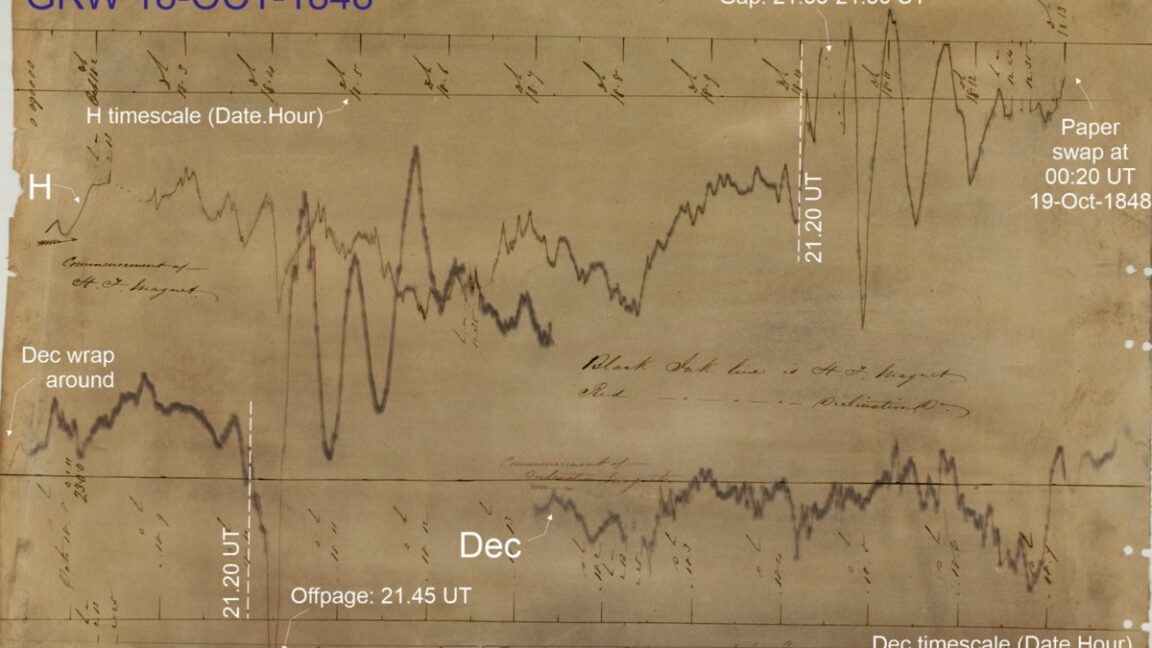
Scholars have discovered an anonymous report, published in 1871 in Nature, detailing how a very intense magnetic disturbance disrupted rail travel in Exeter, England, in October 1841. This report, if accurate, would be the earliest account of such an event. However, according to a paper in the journal Space Weather, the real railway disruption likely occurred several years later, suggesting the 1841 date may be a typo.
Jim Wild, a co-author from Lancaster University, emphasizes that this study reveals society has experienced space weather's effects on technology since the advent of electrical technologies. The Exeter train delay is significant as it marks the onset of modern technologies encountering space environment challenges.
The Carrington Event of 1859 is the most powerful geomagnetic storm in the scientific record, with global auroral displays causing sparking and fires in telegraph stations. At the time, the Carrington Event disrupted telegraph systems worldwide. Telegraph operators were sometimes able to transmit and receive messages despite disconnecting power, relying on the auroral current.
This historical case underscores the enduring impact of space weather on technological systems, even as modern society continues to rely on satellites, communications systems, and electricity networks.
Written by urgent.news from Ars Technica Science's reporting — not their text. Machine-written — may contain errors; check the original before relying on it.