Scientists solve 1840s space weather mystery
19th century Nature account of 1841 train delayed by geomagnetic storm got year wrong—due to a typo.
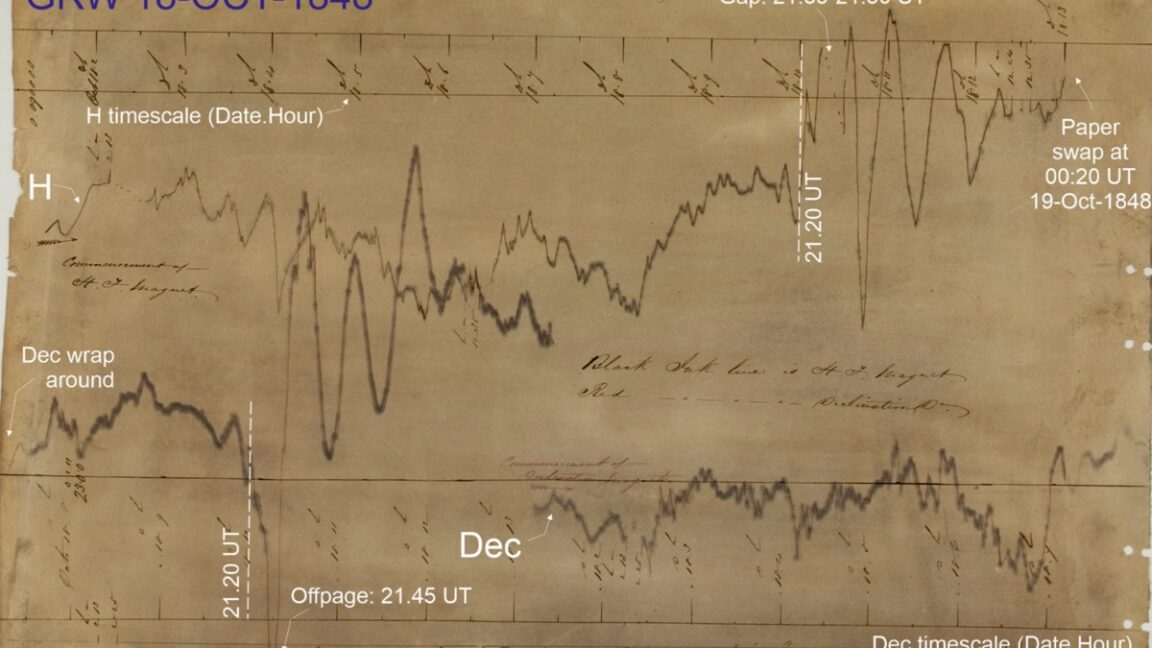
In the late 1840s, reports emerged of minor disruptions to telegraph equipment during geomagnetic storms, marking the beginning of mankind's interaction with space weather. A 1871 report in Nature detailed a particularly intense magnetic disturbance that caused significant disruptions to rail travel in Exeter, England, in October 1841, suggesting this could be the earliest recorded incident.
However, a study published in the journal Space Weather suggests the true date of the Exeter railway disruption likely occurred several years later, with a possible typo in the 1871 report.
Jim Wild, a co-author from Lancaster University, emphasized that this study underscores the long-standing impact of space weather on technological systems, paralleling the history of electrical technologies. The Exeter train delay represents a critical juncture where early technologies first encountered the realities of space weather.
The Carrington Event of 1859 remains the most powerful geomagnetic storm recorded, with worldwide auroral displays causing sparking and fires in telegraph stations. At the time, the telegraph was a novel technology, having emerged in the 1830s, and the geomagnetic currents induced by a probable coronal mass ejection from the Sun caused widespread telegraph failures. Despite powering off, some operators observed that messages could still be transmitted and received due to the intense auroral currents.
Written by urgent.news from Ars Technica's reporting — not their text. Machine-written — may contain errors; check the original before relying on it.
Also reported by 1 other outlet
- Scientists solve 1840s space weather mystery arstechnica.com