Part 2: Publicly funded, privately controlled! The multi-million-cedi Astroturf exposé
Corruption Watch’s investigation has uncovered evidence of a troubling pattern: ownership disputes, procurement irregularities, privatization of stadium lands, abuse of office, and conflict of interest. The investigation has found that former Minister of Energy, John Peter Amewu, and former Ghana Gas Communications Director, Ernest Owusu-Bempah, are at the center of the ownership dispute of…
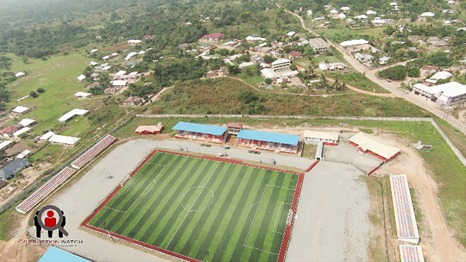
Corruption Watch's investigation has revealed a troubling pattern of ownership disputes, procurement irregularities, privatization of stadium lands, abuse of office, and conflict of interest within Ghana's Astroturf program. Former Minister of Energy John Peter Amewu and former Ghana Gas Communications Director Ernest Owusu-Bempah are the central figures in a dispute over the ownership and control of Hohoe and Agogo sports facilities, respectively, constructed with public funds exceeding GHS17 million.
The Astroturf program, under scrutiny by Parliament, has exposed multiple irregularities. In June 2026, Local Government Minister Ahmed Ibrahim informed Parliament of concerns about projects funded by GNPC to private individuals and Ghana Gas to private entities. He emphasized that government money should not be given to private persons but should benefit the Ghana government coffers.
The Hohoe Sports Complex, now called the Hohoe Sports Stadium, serves as a prime example of the problems identified. While the Hohoe Municipal Assembly initiated the project, acquired land, and led procurement, the facility has been operated by private individuals since 2024. Revenues generated from commercial use were allocated to private individuals instead of the local authority.
Despite the Assembly's record of the project, former Minister Amewu maintains that the stadium was his personal initiative, not an Assembly project. He claims the stadium was built for the community and not an Assembly project. Corruption Watch found, however, that the stadium was financed with substantial public resources, including GHS 8,195,000 from at least five public institutions.
The Hohoe Municipal Assembly claims it has been denied access to the facility and proceeds from revenue generated from commercial use. They assert the contractor failed to officially hand over the facility during commissioning. Former Minister Amewu stated that the Assembly might not manage the stadium due to concerns about mismanagement.
Despite being commissioned in 2024, the contractor confirmed to Corruption Watch's Right To Information request that the stadium is in use but they have not handed it over to the Assembly.
Written by urgent.news from Adom Online's reporting — not their text. Machine-written — may contain errors; check the original before relying on it.