New tool directly links carbon emissions to amount of environmental and economic damage caused
Carbon Impacts Tracer can be used to estimate climate impact from emissions across eight different factors, including lost food production The biggest coal project before authorities in New South Wales, the HVO mine , will emit the equivalent of about 809m tonnes of climate-warming carbon dioxide if it wins approval. That number, for most people, will carry little meaning, as might the…
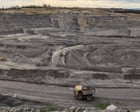
Carbon Impacts Tracer is a novel tool designed to translate carbon emissions from fossil fuel burning into tangible climate effects. Developed by a team of climate scientists, including Prof Sarah Perkins-Kirkpatrick from the Australian National University, the tool draws upon peer-reviewed climate studies to provide real-world estimates.
One of the primary applications of the Carbon Impacts Tracer is to quantify the environmental and economic consequences of carbon emissions across eight distinct factors. These include lost food production, among other impacts.
The tool's potential significance is illustrated by the HVO mine project in New South Wales. If approved, this project is projected to emit approximately 809 million tonnes of climate-warming carbon dioxide. While this figure may seem abstract to many, the tool offers a more relatable perspective. For instance, it equates this carbon dioxide release to the exposure of nearly half a million people to extreme heat or the loss of nearly 15 million coral colonies on the Great Barrier Reef during each coral bleaching event.
By presenting climate data in such a relatable manner, the Carbon Impacts Tracer aims to highlight the potentially catastrophic consequences of even small amounts of global warming.
Written by urgent.news from The Guardian Australia's reporting — not their text. Machine-written — may contain errors; check the original before relying on it.
This story
This is one outlet's version. Read the fullest account.


