Hidden Lunar Volcano Suggests the Moon Once Had an Earth-Like Magnetic Field
Learn more about a buried volcanic complex and what it tells us about the moon's past and the possible formation of its magnetic field.
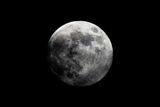
In the 1960s and early 1970s, astronauts returning from Apollo missions brought over 800 pounds of lunar rock and soil to Earth, providing scientists with valuable data about our moon and the broader Solar System. This new information also led to intriguing questions, one of which revolves around the moon's magnetic field. Evidence of the moon once possessing a magnetic field is found in magnetized rocks, but the origin of this magnetic field is still a topic of debate.
Two theories have emerged: one posits that the moon's magnetic field was similar to Earth's, driven by the transformation of mechanical motion into electrical and magnetic energy, while the other suggests that colossal meteorites and asteroids triggered the moon's magnetization. A recent study, published in Science Advances, supports the former hypothesis.
Researchers have focused on the Dewar magnetic anomaly, a swirling pattern of intense magnetism located near the Dewar crater on the far side of the moon. This anomaly, found in one of the strongest magnetic field anomalies on the moon's far side, contains some of the densest and most strongly magnetized rock on the lunar surface. The combination of this magnetic anomaly and a distinct gravity anomaly suggests that the Dewar region may hold the key to understanding the moon's internal structure.
The team of researchers behind the study, led by geophysicist Anna Mittelholz from ETH Zurich, calculated the density of material below the surface and identified the material itself. They discovered a buried volcanic complex, consisting of solidified magma, that formed approximately 4.2 billion years ago. The size of this complex is estimated at 37 miles (60 kilometers) wide and 6 miles (9 kilometers) deep.
Based on the iron content in these rocks, the researchers estimated the minimum strength of the magnetic field required to solidify the magma. The results indicate a minimum field strength of 11.4 microteslas, although it could be even stronger. Given the region's location, the team concludes that the magnetism was most likely caused by geodynamic forces, akin to Earth's, rather than an impact.
As the study sheds light on how a magnetic field could have formed in a relatively small core, it supports the theory that the moon could produce an intense dynamo early in its history. While many questions remain, including how such a large magnetic field could have formed in a small core, the research provides a new perspective on the matter. Experts believe that upcoming missions, such as Artemis and Chang'e, will offer further insights into the moon's enigmatic past.
Written by urgent.news from Discover Magazine's reporting — not their text. Machine-written — may contain errors; check the original before relying on it.