New agrarian law expected to curb farmer criminalization
Farmers urge the government to swiftly implement the law by, among other measures, forming an agrarian reform agency as mandated by the new legislation, while law enforcement agencies are also urged to adopt an agrarian justice perspective in looking at land dispute cases.
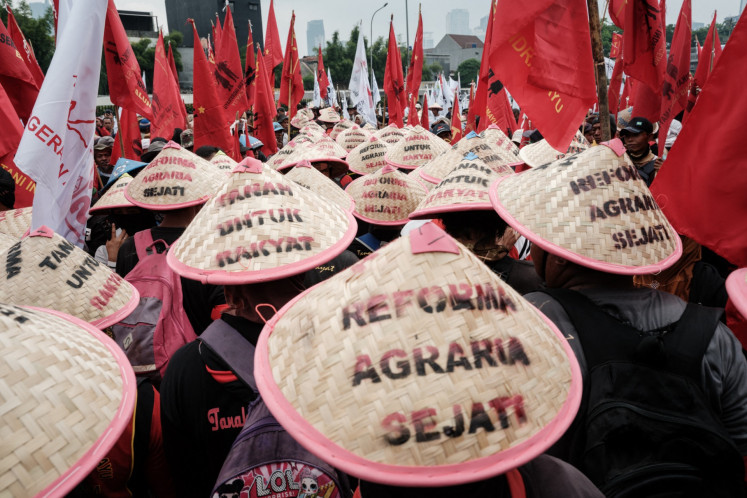
Farmers in Indonesia are urging the government to swiftly implement a new agrarian law aimed at curbing criminalization of land defenders. The law, passed by the House of Representatives on September 22, promises to fairly redistribute land, resolve agrarian conflicts, and protect beneficiaries such as farmers, fishers, and indigenous people.
Civil groups and lawmakers have been calling for an end to the repression and criminalization of farmers and agrarian activists. They are advocating for guaranteed protection for land defenders under the new Agrarian Reform Law. Despite these calls, farmers in various regions continue to face criminalization when defending their land against corporations in land disputes.
An example of this repression was seen in April, when five farmers from North Aceh regency were arrested by the police while traveling to Jakarta to seek legal help over their land conflict. They were subsequently released after mediation, but not before enduring intimidation. One farmer, Arminayanti, expressed hope that there would be no more such repression, emphasizing the importance of the new law passed by the government.
However, Arminayanti emphasized that the law alone is not sufficient. She urged the government to ensure it truly implements the regulation, stating, "The law alone isn't enough. We must ensure that our government truly implements it." Over 100 farmers attended a forum held by the Agrarian Reform Consortium (KPA) in Jakarta to discuss the new law and share their experiences, suggestions, and issues encountered.
Written by urgent.news from The Jakarta Post's reporting — not their text. Machine-written — may contain errors; check the original before relying on it.