MIT artificial reef helps Maldives beach double in size, growing by 90 feet
In a bold move against beach erosion, a Marriott resort in the Maldives is pioneering the use of artificial reefs. This project involves the careful placement of concrete blocks to enhance sand accumulation while simultaneously fostering local marine ecosystems. Via advanced satellite and ocean current data, Coastal Assembly identifies optimal reef locations, illustrating a transformative trend…
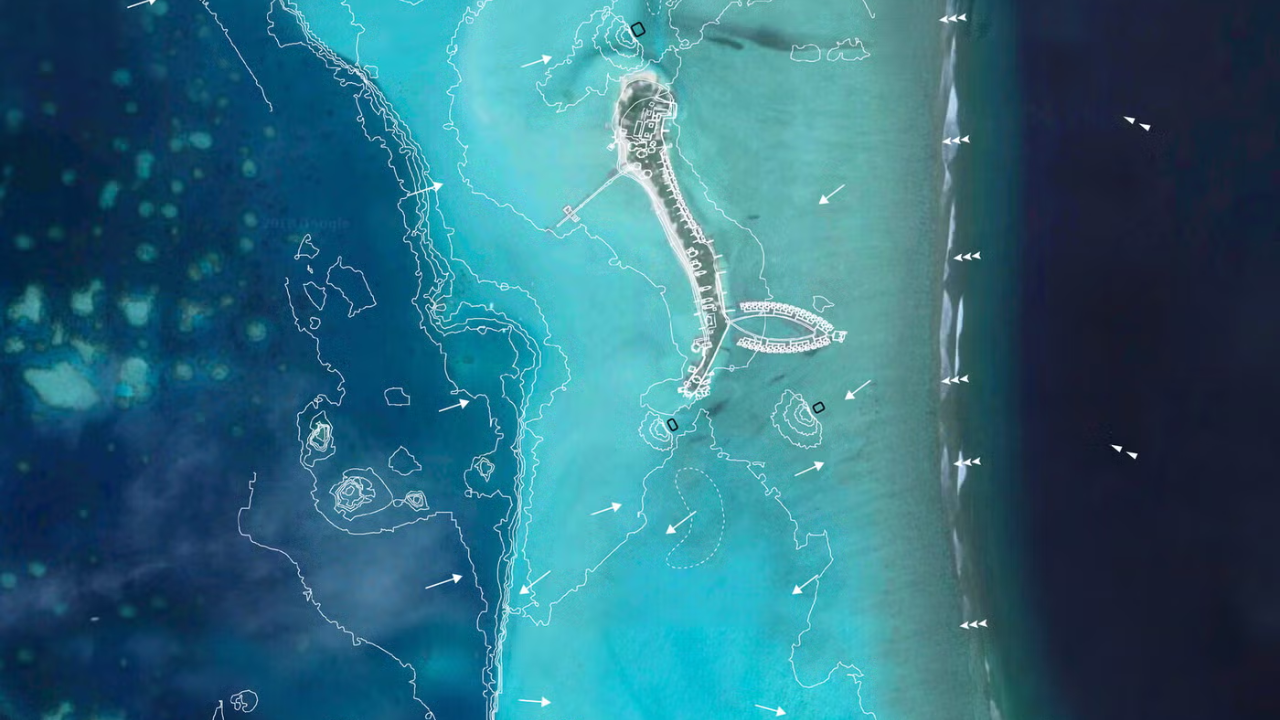
A 300-foot stretch of beach on a small island in the Maldives faced gradual erosion. To address this issue, the Marriott resort on the island turned to an innovative solution: an artificial reef developed by researchers from the Massachusetts Institute of Technology (MIT). This unconventional approach aimed to restore the beach's size and stability.
Coastal Assembly, a startup emerging from MIT's research, raised $4.4 million in funding recently to scale up its operations. The company employs artificial intelligence to analyze satellite and ocean current data for a specific shoreline. Based on this analysis, they design custom concrete blocks that can naturally accumulate sand through ocean waves.
Skylar Tibbits, a professor in MIT's architecture department and head of the Self-Assembly Lab, explained to Fast Company that the team takes 10 years of data and predicts the most erosion-prone areas over the next few months or years. This information helps them determine the most critical areas that require intervention.
In the Maldives scenario, the researchers installed 54 strategically placed concrete blocks around 150 feet offshore. These blocks help dissipate wave energy, redirecting sand back to the beach that had previously been lost. Additionally, they assist in maintaining the sand in its place.
The concept for this project originated from a chance observation. Tibbits visited a sandbar in the Maldives that had unexpectedly emerged within just a month. This discovery led the team to explore how they could harness and accelerate this natural process.
While traditional coastal protection methods, such as dredging sand, often harm coral reefs and provide temporary relief, the MIT-developed artificial reef offers a more sustainable solution. Traditional approaches like building seawalls are expensive and often ineffective, as nature tends to prevail in the long run. Moreover, seawalls can unintentionally worsen erosion on nearby beaches or even increase erosion at the protected beach.
The MIT-led research took nearly a decade to develop, transitioning from simulations to real-world deployments in the Maldives. Each design is custom-tailored, considering factors such as the beach's unique underwater landscape (bathymetry), wave conditions, and other complex parameters. The structures are also cast with distinctive shapes to create a more natural appearance, and they also provide additional protection against storms.
Remarkably, within six months, the beach's depth increased by 90 feet, and two years later, the entire beach had doubled in size. Furthermore, the artificial reef has become a thriving ecosystem, teeming with new coral and marine life, including various fish species and sea anemones.
Coastal Assembly is now expanding its efforts in the Maldives and plans to work on coastal protection projects in other locations, such as Boston and Miami. Experts recognize that traditional methods, like seawalls, are not the optimal solution. Tibbits noted a growing global shift towards "softer, more flexible, dynamic edges" as the preferred approach to coastal protection.
Written by urgent.news from Times of India's reporting — not their text. Machine-written — may contain errors; check the original before relying on it.