'Listen, father!': 1,700-year-old tomb discovered in Egypt contains a poem in ancient Greek and spells to protect the dead
A tomb dating back to the time the Romans controlled Egypt contains a funerary poem in ancient Greek.
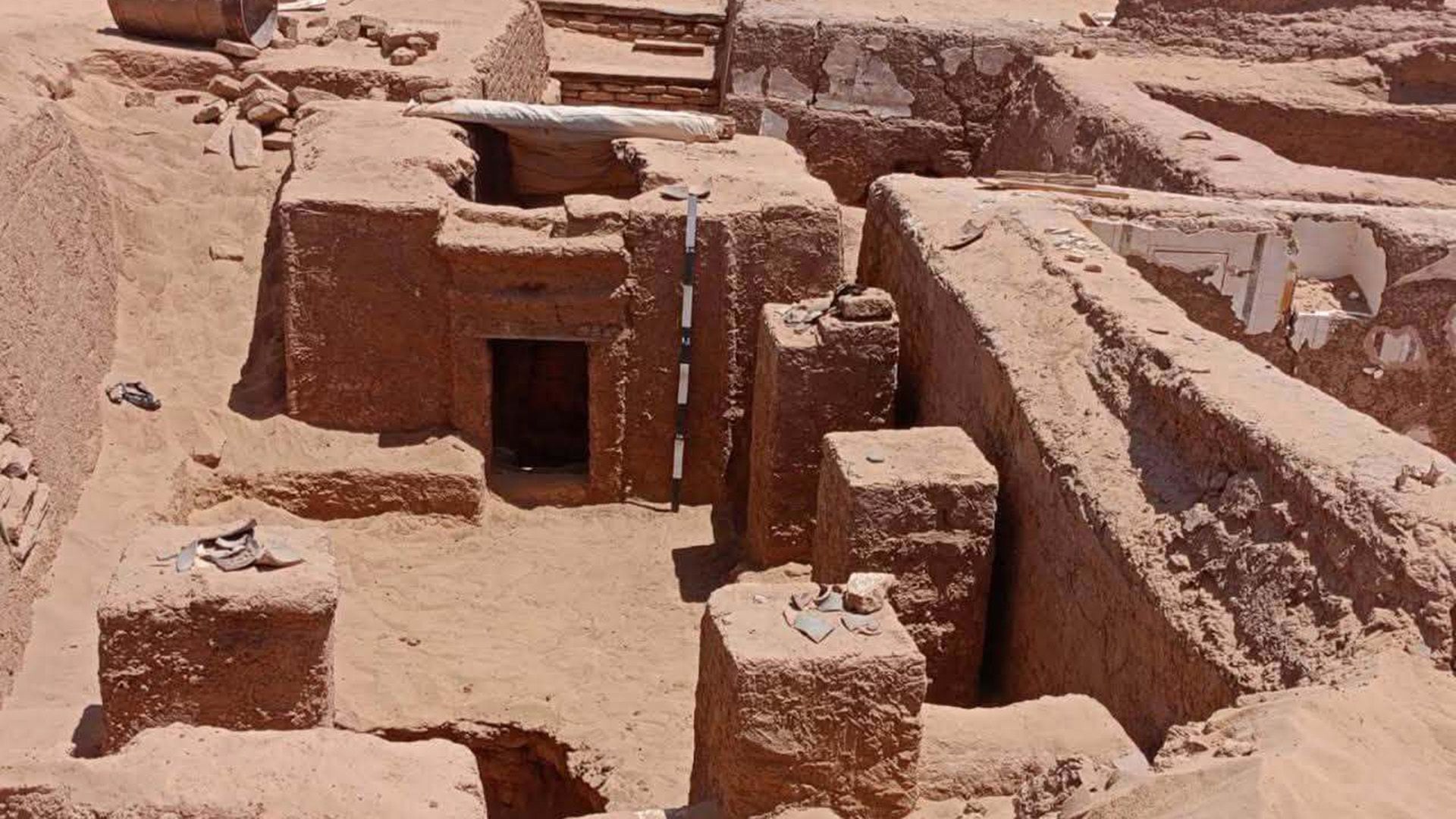
Archaeologists have unearthed a 1,700-year-old tomb in Egypt's Dakhla Oasis, containing a rare ancient Greek poem that likely mourns a father's death. The tomb, a pyramid-shaped structure, dates back to the fourth century during the Roman Empire's control over Egypt. The Egypt Ministry of Tourism and Antiquities announced the discovery, revealing a 19-line poem inscribed on a stone plaque, and the names of a husband and wife, Pisechtes and his unnamed wife.
The deceased Pisechtes may have been a judge, but there were no human remains found at the site. The tomb features hieroglyphic inscriptions of protective spells, including parts of the Amduat, a text describing the sun god's journey through the underworld. Archaeologists also discovered an offering table, a purification basin, pottery, and a coin depicting Emperor Constantine the Great, who legalized Christianity in A.D.
306. Despite the Christian roots, no Christian decorations or texts were found inside the tomb. Fourteen steps lead down to the entrance, adorned with images of a winged sun disk, Osiris, and cobras. The inscription's use of diacritical marks indicates the author's high level of education. The tomb's entrance is surmounted by a mud-brick shrine, which may indicate a later reuse.
Written by urgent.news from Live Science's reporting — not their text. Machine-written — may contain errors; check the original before relying on it.
This story
This is one outlet's version. Read the fullest account.