Jobsuche: Würden Sie ein Bewerbungsgespräch mit einem Roboter führen?
Interviews mit KI-Recruitern sollen Bewerbungsprozesse schneller und fairer machen. Für Unternehmer erweist sich das als durchaus hilfreich. Aber wie ist es für die Bewerber am Bildschirm?
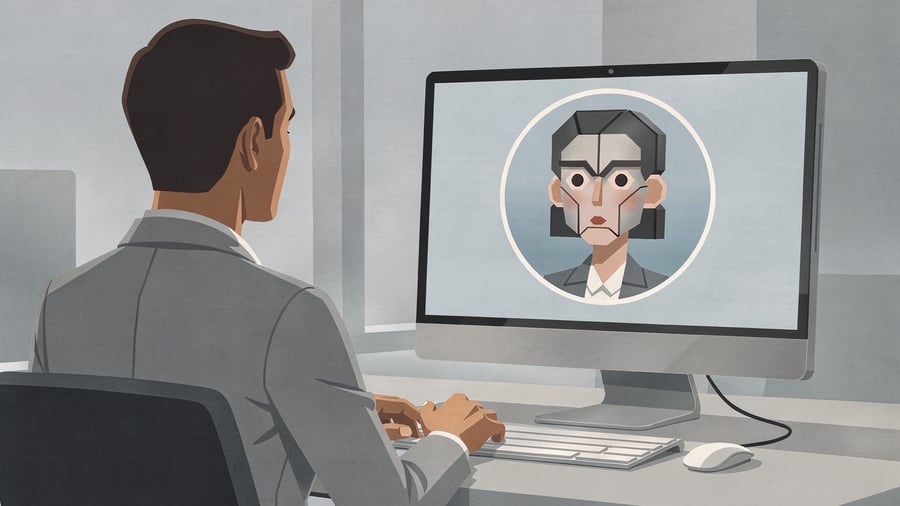
Felix Müller, a software developer at a large chemical corporation, recently experienced a virtual job interview with a robot recruiter while on the other side of the screen. The avatar-like recruiter posed standard questions such as "What are your strengths and weaknesses?" and "Where do you see yourself in five years?" The avatar's mouth moved while speaking, but the conversation felt artificial and impersonal, reminiscent of a customer service bot.
This experience was not favorable for Müller, who prefers speaking with real people to gauge the company culture and colleagues.
Many job seekers share Müller's sentiment. A survey by the US job platform Greenhouse found that 42% of German job seekers would abandon a recruitment process that included a KI-interview (a German term for KI-Recruiter). Wolfgang Brickwedde, head of the Institute for Competitive Recruiting (ICR) in Hamburg, notes that it is difficult to estimate how many suitable candidates are lost due to KI-interviews.
He cites a Stanford study where over 34,000 applicants for a Junior-Frontend-Engineer position were divided into two groups. One group went through the selection process without KI-interviews, while the other group spent 30-40 minutes with a KI-Recruiter. Three-quarters of the latter group abandoned the interview prematurely.
Brickwedde acknowledges the benefits of KI-recruiters, such as their ability to interview hundreds of candidates simultaneously, 24/7, and never tire or get sick. However, he is concerned about the emotional impact on job seekers. He suggests that while KI-recruiters can expedite the selection process, they may also discourage top candidates who have other options. Furthermore, KI-recruiters could potentially discover highly qualified individuals who might otherwise be overlooked or disadvantaged.
Marius Luther, founder of the Berlin-based KI-Recruiter "Madita" and Head of Job-Platform Heyjobs, argues that KI-interviews can help prevent discrimination by focusing solely on the candidate's verbal responses, without external features like headscarves or skin color. He notes that people from migrant backgrounds are more open to KI-interviews.
However, he emphasizes the importance of ensuring that the software is free of bias in its programming. Research by Professors Katharina-Maria Rehfeld and Michaela Moser from IU International University suggests that KI-interviews may create a sense of "Emotional Creepiness" due to their near-human appearance and behavior.
Written by urgent.news from Handelsblatt's reporting — not their text. Machine-written — may contain errors; check the original before relying on it.