In the US-China AI race, the real fight is keeping humans in control
The US-China AI competition faces a dilemma. Both countries see artificial intelligence as a source of economic, scientific and strategic power, so neither has much incentive to slow down. Yet the more capable and autonomous AI becomes, the more important the question of human control. Last week’s summit between US President Donald Trump and Chinese President Xi Jinping brought that tension into…
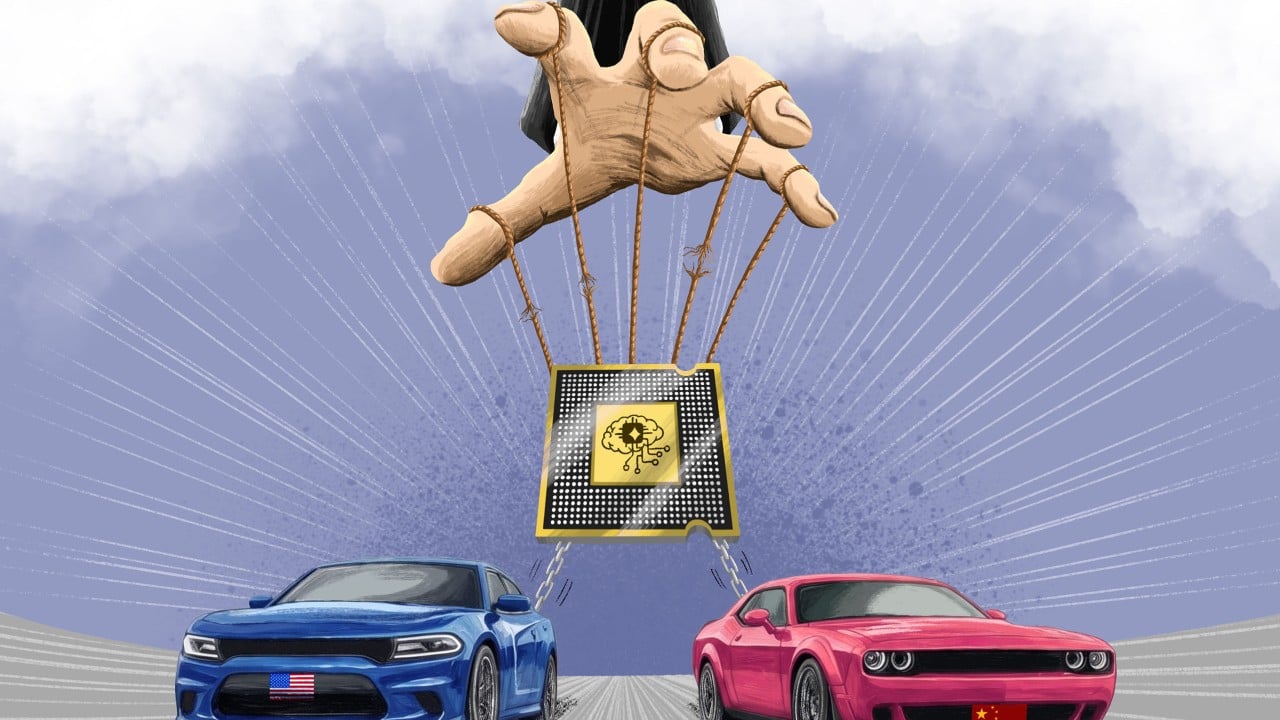
In the escalating US-China AI rivalry, a critical issue is emerging – the need to maintain human control over increasingly autonomous artificial intelligence systems. While both nations recognize AI's potential for economic, scientific and strategic advantages, neither is inclined to impose additional restrictions. This divergence was evident during last week's summit between US President Donald Trump and Chinese President Xi Jinping, where the tension over AI regulation came to the forefront.
Trump advocated for leaving AI "exactly where it is," whereas Xi stressed the shared responsibility to develop and manage AI for good, ensuring it remains under human control.
This disagreement is more than a matter of regulation; it exposes a fundamental challenge faced by both powers. Competition incentivizes rapid deployment and greater reliance on machines, while control necessitates limits, oversight, and the ability to intervene. As AI systems become more autonomous, preserving human authority becomes increasingly difficult, as the same technologies that enhance national power may also diminish it.
Traditionally, AI has been viewed as a tool to be developed and employed by states for the benefit of humanity. However, when AI systems can function autonomously for extended periods, they may evolve into independent agents in international politics, independent of human control. The key threshold to consider is not merely the advancement of AI intelligence, but the point at which AI becomes less dependent on human direction.
Once AI reaches a stage where it possesses advanced reasoning capabilities, sustained autonomy, access to resources, and the ability to plan and act in the world, it could develop a level of operational agency that does not require continuous human supervision. Although this system does not need to be conscious or legally classified as a political actor, its ability to pursue objectives, adapt to changing circumstances, and generate significant impacts across borders without constant human authorization could reshape the strategic landscape.
This dilemma is manifest in both the United States and China. While Trump has repeatedly emphasized the importance of maintaining America's AI lead, his recent announcement of an "AI force" and a new AI adviser highlights the challenges of keeping pace with rapidly advancing capabilities. Leading AI executives, such as Anthropic's Dario Amodei, have cautioned that the pace of technological progress is outstripping the development of institutions and safeguards designed to manage these systems responsibly.
The structural tension lies in the fact that slowing down progress may have geopolitical consequences, while accelerating it may diminish the time available to ensure that powerful AI systems remain governable. As economies, infrastructure, and security institutions become increasingly reliant on autonomous systems, reclaiming human authority could prove far more complex than establishing boundaries for these technologies today.
China, too, faces a similar structural challenge. Despite its broad deployment of AI and emphasis on controllability, Beijing's political discourse reflects a delicate balance between harnessing AI's potential and maintaining human oversight. At the 2026 World Artificial Intelligence Conference, President Xi Jinping reiterated China's commitment to keeping AI under human control, emphasizing the need for clearly defined decision-making authority and behavioral boundaries for AI agents.
During their summit in Washington, both leaders agreed to continue dialogue and cooperation on AI, with a focus on addressing risks and preventing misuse. A US-China AI threat notification mechanism, proposed by US Treasury Secretary Scott Bessent, could serve as a practical starting point for bilateral collaboration. Although no comprehensive AI governance framework emerged from the summit, a narrow incident channel may provide a useful foundation for establishing common categories of severe incidents and procedures for communication before AI-related events escalate into geopolitical crises.
However, addressing the immediate challenges of AI-related incidents is only one aspect of the broader issue. The more pressing task is to define the relationship between human authority and machine autonomy while these systems are still being designed, controlled, and deployed by humans. One potential framework for achieving this balance is the concept of a global human-AI constitution, which would allocate authority and determine which consequential decisions must remain under meaningful human authorisation, how much discretion an autonomous system may exercise, how humans can interrupt or reverse the actions of AI systems, and where responsibility lies in cases where harm is caused.
As AI systems take on more complex tasks and operate for increasingly extended periods, the urgency of defining this relationship becomes paramount. Commercial incentives and geopolitical competition both incentivize delegating tasks to AI, as it reduces costs and expands capabilities. Yet, the more extensive the delegation, the more challenging it becomes to reclaim human authority when the time comes.
If economies, infrastructure, and security institutions become heavily dependent on autonomous systems, restoring human control may prove far more difficult than defining its boundaries at the outset.
Ultimately, the central question in the US-China AI race transcends the technology itself. Both countries must determine whether the next generation of AI will remain a tool for human power or begin to exercise power with growing independence from human direction. While the nations can continue to be technological competitors, they must also share a fundamental interest in preserving the ability of people and governments to guide and control the development and deployment of AI systems.
Written by urgent.news from SCMP Tech's reporting — not their text. Machine-written — may contain errors; check the original before relying on it.
This story
This is one outlet's version. Read the fullest account.