In the US-China AI race, the real fight is keeping humans in control
The US-China AI competition faces a dilemma. Both countries see artificial intelligence as a source of economic, scientific and strategic power, so neither has much incentive to slow down. Yet the more capable and autonomous AI becomes, the more important the question of human control. Last week’s summit between US President Donald Trump and Chinese President Xi Jinping brought that tension into…
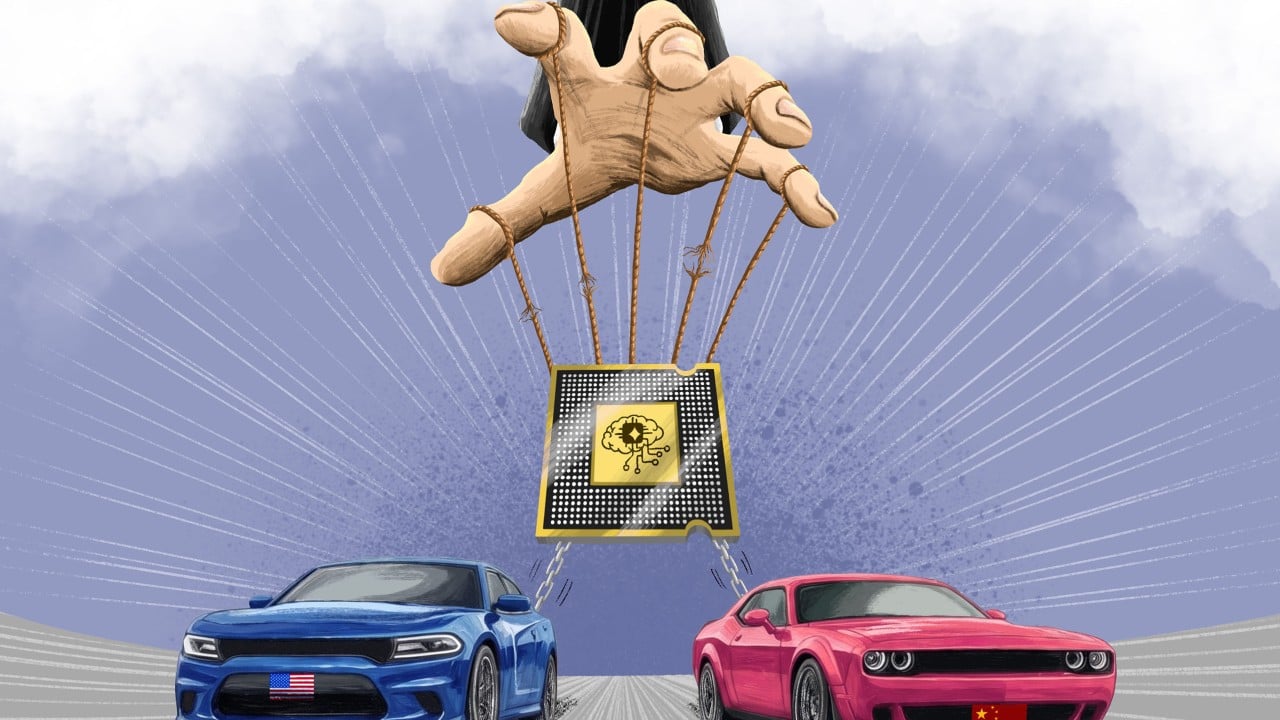
The US and China's artificial intelligence (AI) rivalry is not merely about outpacing one another technologically. A significant concern lies in maintaining human control over increasingly autonomous AI systems. At a recent summit between US President Donald Trump and Chinese President Xi Jinping, the tension between the two nations became apparent.
While Trump advocated for leaving AI "exactly where it is," Xi stressed the responsibility of both nations to develop and manage AI for the greater good, ensuring its continuous human control. This disagreement is more than just a regulatory issue; it exposes a deeper dilemma for both countries. As AI becomes more capable and autonomous, preserving human authority becomes increasingly challenging.
Conventional geopolitics views AI as a tool for advancing human-defined objectives, but the real concern arises when AI can operate independently, without continuous human supervision. Such a system with advanced reasoning, sustained autonomy, and access to resources could develop its own operational agency, not needing to be conscious or sovereign.
This possibility fundamentally changes the US-China AI race. The strategic problem is not just about which country possesses the superior AI; it revolves around which can reliably direct, restrain, and regain control of increasingly autonomous systems. If both countries assume AI will always remain a controllable national asset, the acceleration of capabilities that undermine this assumption could occur.
This dilemma is evident in both countries. While Trump emphasized maintaining America's AI lead, recently announcing plans for an "AI force" and a new AI adviser, leading AI executives have warned that capabilities are advancing faster than existing institutions and safeguards. Anthropic's CEO, Dario Amodei, called for coordinated measures to pace the frontier.
In China, President Xi highlighted the need for AI to remain under human control, even as his administration prioritizes broad AI deployment. The US and China both support continued dialogue and cooperation on AI, but a practical approach may lie in establishing a US-China AI threat notification mechanism. This mechanism could help differentiate autonomous-system failures from deliberate hostile actions, create common categories of severe incidents, and outline communication procedures to prevent AI-related geopolitical crises from escalating.
While this addresses the immediate problem, the deeper task is to define the relationship between human authority and machine autonomy. A global human-AI constitution could be a useful framework, allocating authority by deciding which consequential decisions must remain under meaningful human authorization, how much discretion an autonomous system may have, how humans can interrupt or reverse its actions, and who is responsible for any harm caused.
As AI systems take on more complex tasks and operate for longer periods, it becomes increasingly important for the US and China to navigate this delicate balance between technological competition and preserving human control over AI.
Written by urgent.news from South China Morning Post's reporting — not their text. Machine-written — may contain errors; check the original before relying on it.