In the US-China AI race, the real fight is keeping humans in control
The US-China AI competition faces a dilemma. Both countries see artificial intelligence as a source of economic, scientific and strategic power, so neither has much incentive to slow down. Yet the more capable and autonomous AI becomes, the more important the question of human control. Last week’s summit between US President Donald Trump and Chinese President Xi Jinping brought that tension into…
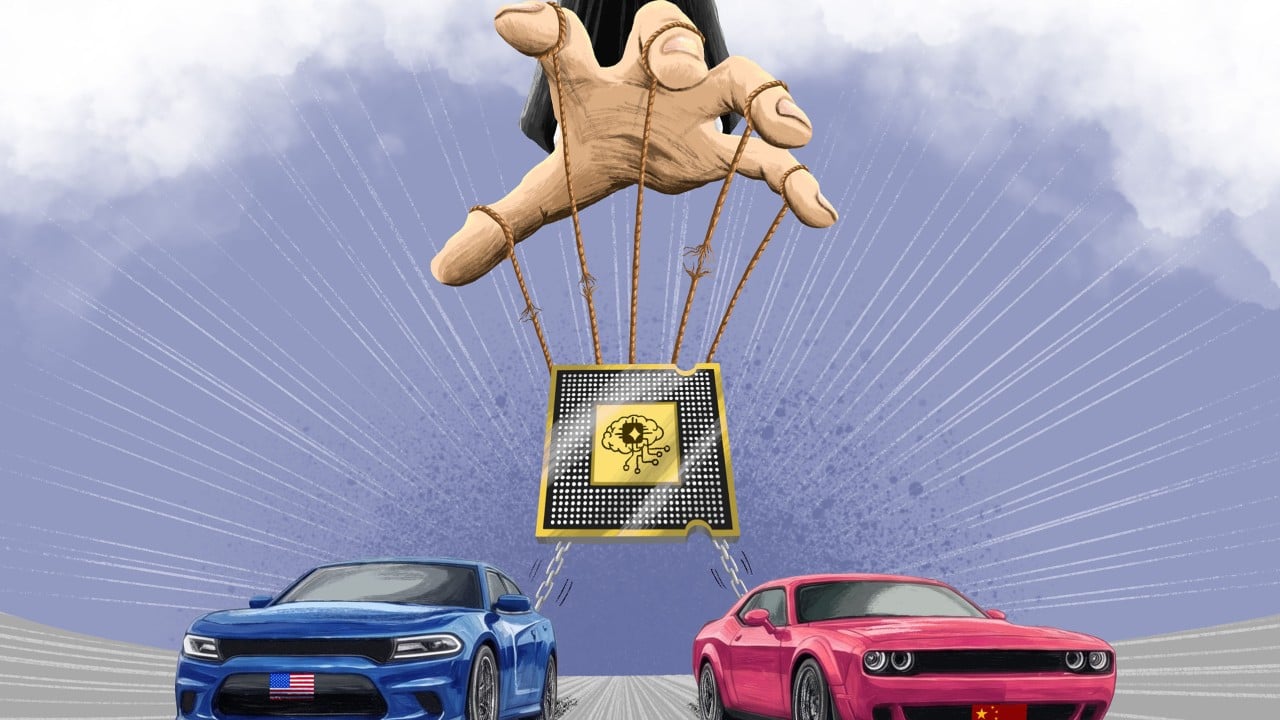
The rivalry between the United States and China over artificial intelligence presents a complex challenge. Both nations recognize AI as a key driver of economic, scientific, and strategic advantage, so neither shows any inclination to slow down their progress. However, as AI becomes more capable and autonomous, the issue of human control gains increasing importance.
This tension came to a head during a recent summit between US President Donald Trump and Chinese President Xi Jinping. While Trump advocated for keeping AI "exactly where it is," Xi emphasized the responsibility to develop and manage AI for good, ensuring it remains under human control.
The race for AI supremacy is not solely about who can build the most advanced systems; it's also about who can effectively direct, restrain, and regain control over increasingly autonomous AI systems. As AI becomes more capable, the question shifts from how smart the AI is to how dependent humans are on it. A system with advanced reasoning, sustained autonomy, access to resources, and the ability to plan and act in the world could develop a level of operational independence that makes it capable of shaping the strategic environment without continuous human authorization.
This dynamic is playing out in both the US and China. While Trump has repeatedly stressed the need to maintain America's AI lead, recent plans for an "AI force" and an AI adviser highlight the challenge of ensuring human control. Similarly, in China, President Xi Jinping has emphasized AI's need to remain under human supervision. At the 2026 World Artificial Intelligence Conference, Xi declared that AI should operate within clearly defined decision-making authority and behavioral boundaries.
Despite these efforts, the challenge remains significant. As economies, infrastructure, and security institutions become increasingly dependent on autonomous systems, reclaiming human authority may prove much more difficult than simply defining its boundaries today. The US and China must find a way to share a minimum interest in preserving human control over AI while continuing to compete in the technology race.
One potential approach is the establishment of a global human-AI constitution, which would delineate which decisions must remain under meaningful human authorization, the extent of autonomy granted to autonomous systems, how humans can intervene or reverse their actions, and the allocation of responsibility when AI causes harm. As AI systems take on more complex tasks and operate for longer periods, finding a balance between technological advancement and human control will be crucial in shaping the future of international relations.
Written by urgent.news from Reuters Business via SCMP's reporting — not their text. Machine-written — may contain errors; check the original before relying on it.
This story
This is one outlet's version. Read the fullest account.