China lights up ‘super microscope’ hopes with world-leading electron gun beam
China has produced an electron beam using a cutting-edge electron gun, taking a step towards building a “super microscope” that could help drive breakthroughs in everything from Alzheimer’s research to advanced microchips. The Hefei Advanced Light Facility (HALF) in central China’s Anhui province fired its first electron beam on September 20. Bunches of electrons generated by the gun were…
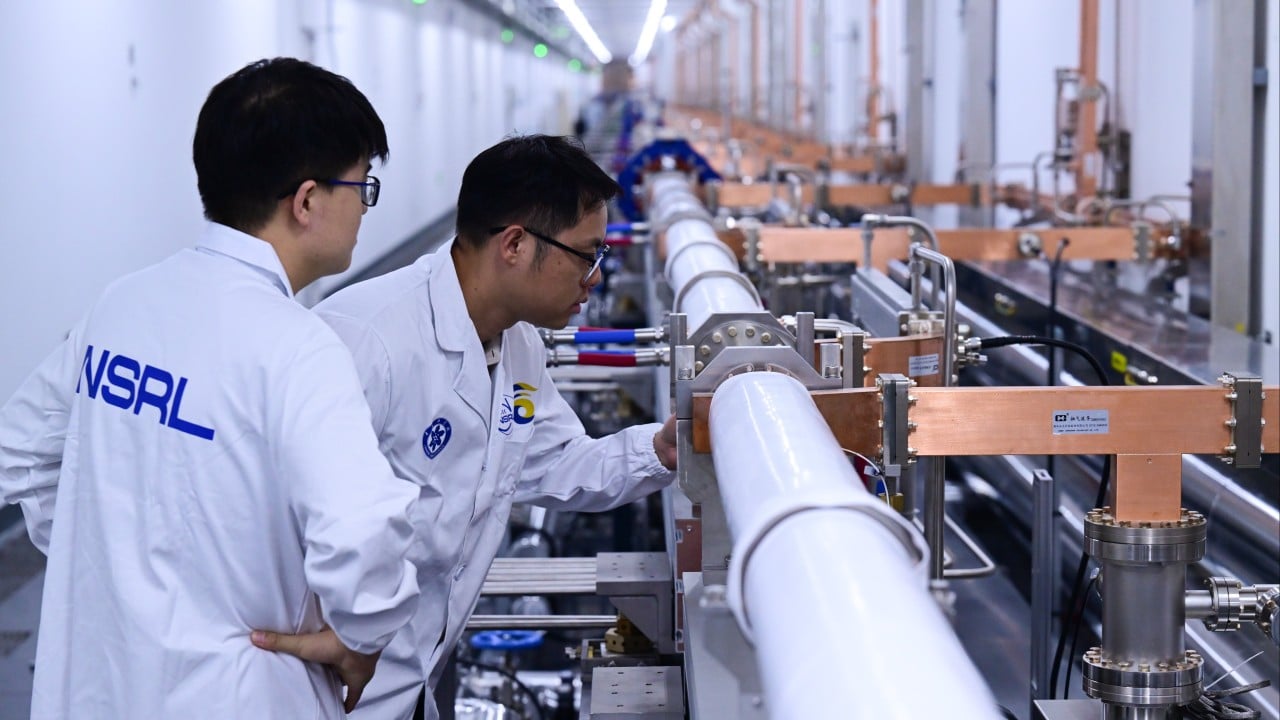
China has successfully produced an electron beam using a state-of-the-art electron gun, bringing the country closer to constructing a "super microscope" that could revolutionize fields from Alzheimer's research to advanced microchips. The Hefei Advanced Light Facility (HALF) in Anhui province initiated this milestone on September 20, 2023, when it fired its first electron beam.
The electron beam was generated by accelerating bunches of electrons to 2.2 billion electron volts using a 192-metre linear accelerator. Professor He Zhigang, a scientist involved in the project, emphasized that a successful beam production marked a crucial step toward the facility's ultimate objective. He also noted that the beam's quality, stability, and reliability greatly influenced experiments conducted at HALF.
The Hefei Advanced Light Facility is designed to provide the highest brightness and stability in the world, setting it apart from existing light sources. Feng Donglai, the project's chief and a member of the Chinese Academy of Sciences, confirmed that all critical equipment for the linear accelerator was manufactured domestically.
Fourth-generation light sources, like HALF, focus on precisely controlling electron beams, producing finer and more concentrated beams that generate brighter X-rays. This advancement is expected to enable new experimental methods and lead to breakthroughs in various areas, including high-temperature superconductivity, new energy batteries, advanced materials, and life sciences such as Alzheimer's research.
HALF will house up to 35 experimental stations for researchers worldwide, with the first ten encompassing a platform for extreme ultraviolet lithography, a technology vital for creating advanced semiconductors currently under US-led export controls. Other stations will concentrate on nano-devices.
Construction of HALF began in 2023, and the project is set to be completed by 2028. Alongside the High Energy Photon Source in Beijing and the Shanghai Synchrotron Radiation Facility, HALF will comprise China's advanced light source system, covering high-, medium-, and low-energy ranges.
Written by urgent.news from South China Morning Post's reporting — not their text. Machine-written — may contain errors; check the original before relying on it.