China is no longer just the world’s factory. It’s the HQ
The global electronics industry is entering a structural transition. For over two decades, China served as the dominant manufacturing centre, with an unmatched concentration of suppliers, skilled labour, infrastructure, logistics and engineering capabilities. That concentration is being diluted. But interpreting this as the decline of Chinese manufacturing would be a mistake. China is exporting…
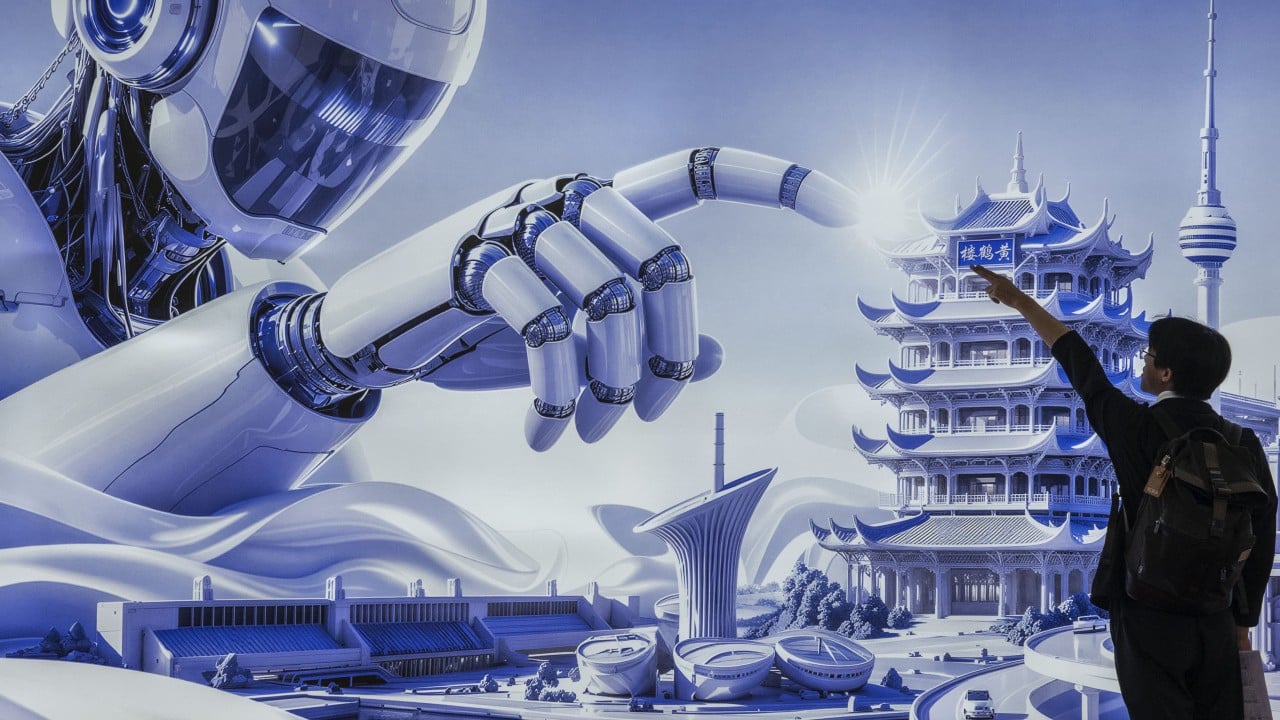
The electronics industry is witnessing a transformative shift in its manufacturing landscape. Over the past two decades, China has been the primary manufacturing hub, with an overwhelming concentration of suppliers, skilled labor, infrastructure, logistics, and engineering capabilities. However, this dominance is being challenged, and China is strategically exporting segments of its manufacturing process while preserving its core industrial strengths.
According to the Boston Consulting Group (BCG), the share of electronics manufacturers from China, Taiwan, Hong Kong, and mainland China with overseas production has surged to 56%, up from 12% in 2017. This transformation is significant, as companies have moved production from China's industrial clusters to minimize costs. While low-cost labor and high-density manufacturing ecosystems played crucial roles, the real advantage lies in the unparalleled economies of scale and operational efficiency that China offers.
Recent developments, such as escalating tariffs, extensive export controls, and heightened scrutiny of critical technologies, have prompted a shift in China's manufacturing strategy. The US tariffs aimed at reducing dependence on Chinese manufacturing and incentivizing production back to America have inadvertently increased the incentive for Chinese companies to establish production capacity in third countries.
Simultaneously, Southeast Asia, India, and Mexico have offered attractive tax incentives, subsidies, industrial parks, and other measures to entice manufacturers.
Rather than abandoning China, many companies are opting for a "hub-and-spoke" model, where the hub remains in China, and spokes extend to Vietnam, Thailand, Malaysia, India, and Mexico. This strategy enables companies to retain final assembly in China while sourcing components, materials, tooling, machinery, and engineering expertise from abroad. Consequently, these new production centers remain deeply interconnected with Chinese supply chains.
China's industrial strategy is evolving towards a division of labor, where advanced research, engineering, technological innovation, and sophisticated manufacturing remain concentrated within China, while selected production stages are distributed internationally. This shift in industrial globalisation could become a defining feature of China's future.
The industrial dominance measured by factory locations is giving way to a new model that emphasizes control over industrial ecosystems, technologies, machinery, components, standards, engineering capabilities, and supply-chain relationships.
The irony lies in the fact that Washington's efforts to reduce China's role in global manufacturing through tariffs and technology restrictions have inadvertently spurred Chinese companies to develop production networks with enhanced geographic diversification and potentially greater resilience to political risks. This transformation may lead to a manufacturing system less vulnerable to any single country's trade policies.
However, it is essential to acknowledge that China's manufacturing dominance is not guaranteed, as competitors will also develop their own supplier ecosystems, technologies, and industrial capacities.
Nevertheless, the overarching conclusion remains clear: globalization is not ending but rapidly being reshaped. China is not relinquishing its status as the "world's factory"; instead, it is redefining what this concept entails. China is emerging as a global hub for innovation and development, with manufacturing capacity potentially dispersing across various countries while retaining the "industrial brain" within its borders.
Written by urgent.news from SCMP Business's reporting — not their text. Machine-written — may contain errors; check the original before relying on it.
This story
This is one outlet's version. Read the fullest account.