Why an artist made 300 fragile replicas of Israeli weapons used in Lebanon
Lebanese-Canadian researcher and artist Elias Nafaa has not witnessed first-hand the ongoing violence that Israel has unleashed on Palestine and Lebanon since 2023, instead watching warheads descend in social media videos and numbers multiply on news segments. Over the past few years, Nafaa began to reflect on the nature of violence, how wars are documented and the emotional cost sometimes…
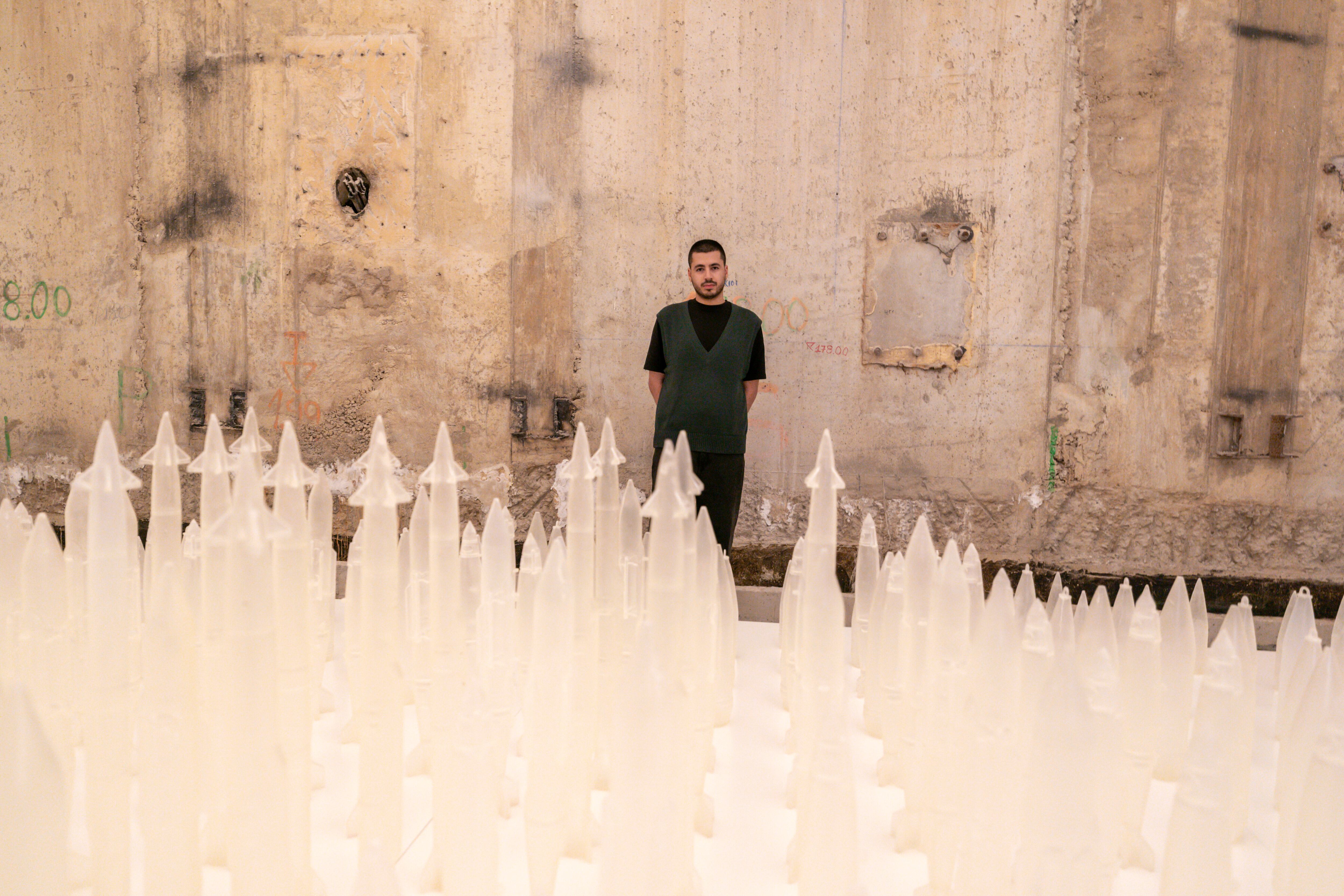
Lebanese-Canadian artist Elias Nafaa has created a thought-provoking exhibition in Braga, Portugal, consisting of 300 delicate replicas of weapons used by Israel in Lebanon since 2023. The installation, titled "Handle with Care," is displayed at Muzeu – Thought & Contemporary Art dst, a newly opened contemporary art museum. Nafaa's work aims to question the nature of violence, how wars are documented, and the emotional toll that often goes unnoticed amidst numerous headlines.
The fragile resin casts, based on six families of aerial munitions, are designed to represent the various types of weapons used in Israeli strikes on Lebanon. These miniature missiles and munitions, which may initially appear as beautiful ice sculptures or glass decorations, become objects of violence upon closer inspection. Nafaa's goal was to change the power dynamic by presenting these objects as fragile as possible, highlighting the vulnerability of technology often associated with destructive force.
Nafaa's research, drawn from sources such as the Armed Conflict Location and Event Data project (ACLED), Beirut Urban Lab, Public Works Studio, Human Rights Watch, and online data, reveals that artillery shells accounted for 40% of documented weapons, white phosphorus shells comprised 20%, cluster munitions made up 15%, and JDAMs, including "bunker busters", accounted for 12%.
The exhibition includes detailed information, charts, and mapping data to demonstrate the disparity between the number of weapons used and their respective damage capabilities.
To enhance the overall experience, a soundscape by Lebanese artist Cynthia Zaven titled "Tender Grounds" accompanies the installation. The piece incorporates live-recorded drone buzzing, low-flying aircraft, and artillery strikes, along with musical elements. Nafaa wanted to create a "seventh weapon type" without a visual counterpart, using the soundscape to represent the sonic terror experienced during conflicts.
The soundscape serves as a "seventh weapon type" and adds an additional layer of understanding to the exhibition.
Written by urgent.news from The National Business's reporting — not their text. Machine-written — may contain errors; check the original before relying on it.
Also reported by 1 other outlet
- Why an artist made 300 fragile replicas of Israeli weapons used in Lebanon thenationalnews.com