Venezuela frees 39 political prisoners after post-Maduro talks
More than three dozen political prisoners have been released in Venezuela following a second round of talks backed by Washington between the country’s interim government and the opposition.
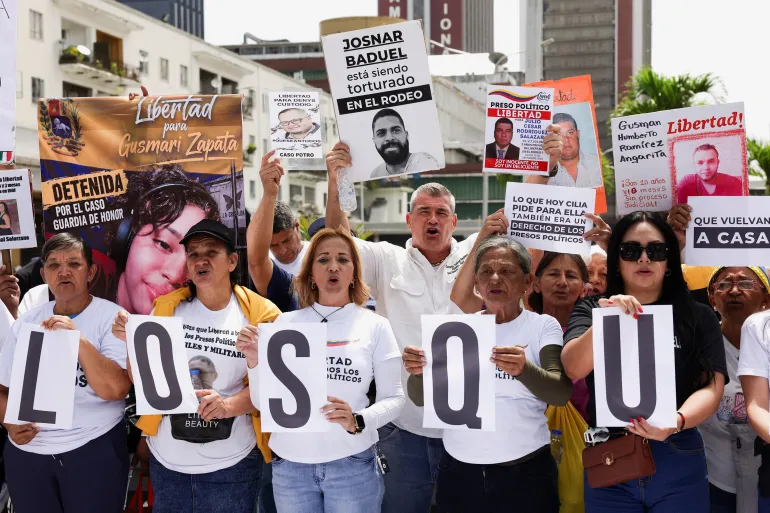
Venezuela has released 39 political prisoners following a series of talks backed by the United States between the interim government and opposition forces. The human rights organization Justicia, Encuentro y Perdon (JEP) confirmed the releases, which took place between Friday and Saturday, with the detained individuals held in various prisons across the country.
Among those freed were eight women accused of "narco-terrorism" in 2021 and six people linked to a 2020 coup attempt against former President Nicolas Maduro. JEP stated that they would continue to demand full freedom for all remaining political prisoners who are still awaiting release.
The releases followed a second round of negotiations on Friday between interim President Delcy Rodriguez and the opposition, with US approval in light of Washington's removal of Maduro in January. The first round of talks in August centered on the retrieval of Venezuelan funds frozen overseas to aid recovery from a series of earthquakes that occurred in June, resulting in over 6,300 fatalities.
The talks also aimed to reform the judiciary. Rodriguez signed an amnesty law in February under US pressure, although the pace of releases has been slow. Foro Penal, a rights group monitoring political detentions, reported that 344 individuals remained classified as political prisoners as of September 18, a decrease from 391 on August 10, when the government announced the release of 131 people under a separate "alternative measures" program.
US Secretary of State Marco Rubio highlighted this development at the time, emphasizing it as a "crucial step" for Venezuela's reconciliation process, with over 1,000 Venezuelans having been released since Maduro's removal. Families of political prisoners have continued to protest outside the US embassy in Caracas and the El Rodeo I prison, which rights groups consider a torture center.
Written by urgent.news from MyJoyOnline Ghana's reporting — not their text. Machine-written — may contain errors; check the original before relying on it.