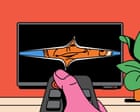
The secret Cold War history of Tetris
The beloved game arose out of the opposing forces of the U.S. and the Soviet Union
The beloved game Tetris emerged from the opposing forces of the U.S. and the Soviet Union during the Cold War. This narrative explores the controversial copyright claims surrounding the iconic video game and its dark history. The Tetris Company (TTC) holds exclusive rights to the "Tetris" pieces, which they argue are copyrighted and unique to Tetris.
However, this assertion is based on a flawed 2012 ruling, Tetris Holding, LLC v. Xio Interactive, Inc., in which a federal judge decided that geometric forms made of four equal-sized squares were indeed copyrighted. These tetrominoes, however, were first described by Caltech mathematician Solomon Golomb in 1953 and later popularized in Scientific American.
Despite these facts, TTC continues to promote their false claim of originality. The game's history is further complicated by its Soviet origins. First Lady Hillary Clinton played Tetris on a Game Boy during her visit to the White House in 1993, highlighting the game's global reach despite being created in a Soviet state artificial-intelligence research lab controlled by the KGB.
The Soviet regime did not recognize the freedom to publish, so Pajitnov, the game's creator, distributed Tetris as a samizdat - an underground cultural good shared via floppy disks. The game's success began in the Eastern bloc and eventually reached Hungary, where its commercial potential was recognized by British entrepreneur Robert Stein.
Licensing disputes involving various companies, including the Robert Maxwell group, Atari, Sega, and Nintendo, ensued, with the USSR eventually taking control of Tetris through its technology export agency, ELORG. The game's commercial success in the West funded the Communist Party, and the Berlin Wall's collapse marked the beginning of Russia's perestroika and privatization, leading to the emergence of two competing claims to Tetris ownership.
Written by urgent.news from Scientific American's reporting — not their text. Machine-written — may contain errors; check the original before relying on it.