Should seniors be hopping and stomping? Why explosive exercises may help prevent fractures and falls
Plyometric exercises aren’t just box jumps and pogo hops. Experts explain how gentler versions can help older adults train their balance, reaction time, speed and bone strength – and how to get started safely.
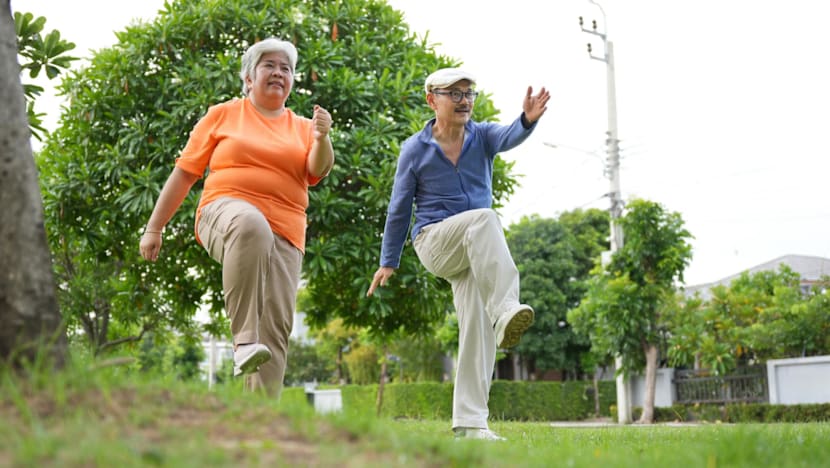
Plyometric exercises, including gentle versions, can benefit older adults by improving balance, reaction time, speed, and bone strength, according to sports medicine physician Dr Chiam Tut Fu. These exercises, which involve quick, explosive movements like jumping and hopping, can help seniors build agility and prevent fractures and falls, says personal trainer Joshua Tan.
The impact from plyometric exercises directly aids bone density formation, particularly for seniors with osteoporosis. Research supports these benefits, showing that explosive movements like jumping create forces that activate bone-building and bone-maintaining cells. For seniors, starting with simple, non-threatening movements like small hops or skips while holding onto a rail is recommended.
As they progress, exercises can become more intense by stepping up on a mat, performing hops on one leg, or adding light weights. Senior trainers should be knowledgeable about older adults' specific needs and limitations, and seniors should listen to their bodies to avoid injury. With proper guidance, seniors can experience improvements in balance, reaction time, speed, and muscle strength as early as one month with twice-weekly training sessions.
Written by urgent.news from CNA - Singapore's reporting — not their text. Machine-written — may contain errors; check the original before relying on it.
This story
This is one outlet's version. Read the fullest account.