Should seniors be hopping and stomping? Why explosive exercises may help prevent fractures and falls
Plyometric exercises aren’t just box jumps and pogo hops. Experts explain how gentler versions can help older adults train their balance, reaction time, speed and bone strength – and how to get started safely.
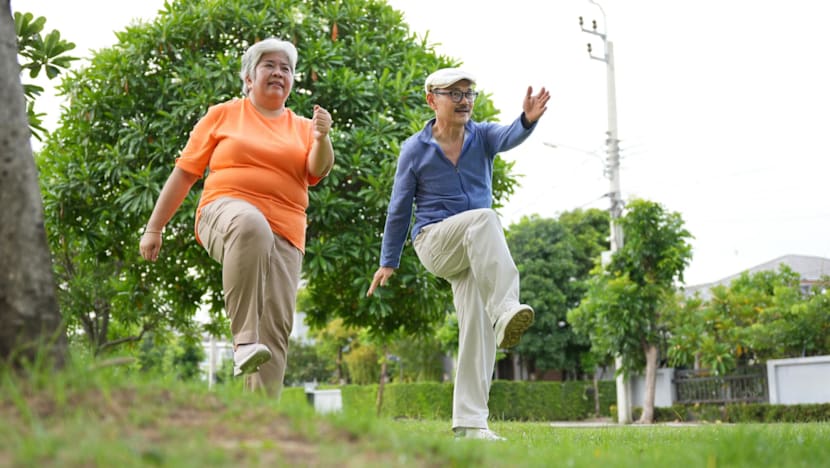
Plyometric exercises, which involve quick, explosive movements like jumping and hopping, can help older adults improve their balance, reaction time, speed, and bone strength, according to experts. Dr Chiam Tut Fu, a sports medicine physician, explains that these exercises can activate bone-building cells and maintain bone health, which is especially beneficial for seniors with osteoporosis.
Joshua Tan, a personal trainer, adds that plyometrics train the body to move and react faster, increasing the chances of catching oneself during a fall. While strength training helps with carrying one's own weight, explosive actions are crucial for balance, coordination, and speed in emergency situations. Common plyometric exercises for seniors include standing broad jumps, box jumps, and pogo hops, which can be modified to be less intense initially.
These exercises can be performed on one leg, with light weights, or by stomping feet hard on the ground. Dr Chiam emphasizes the importance of a gradual increase in intensity and a gradual step-up in the program for seniors, especially considering their potential physical limitations and fears of falling. He recommends consulting a trainer experienced in working with older individuals and listening to one's body to avoid injury.
Research shows that seniors can see improvements in body balance, reaction time, speed, and muscle strength within a month of twice-weekly training sessions.
Written by urgent.news from Channel News Asia's reporting — not their text. Machine-written — may contain errors; check the original before relying on it.