James Webb telescope shares one of its biggest images ever, with record-breaking stars hiding in the dust
One of the largest images from the James Webb Space Telescope so far reveals an intricate landscape of dwarf stars and spectacular clouds.
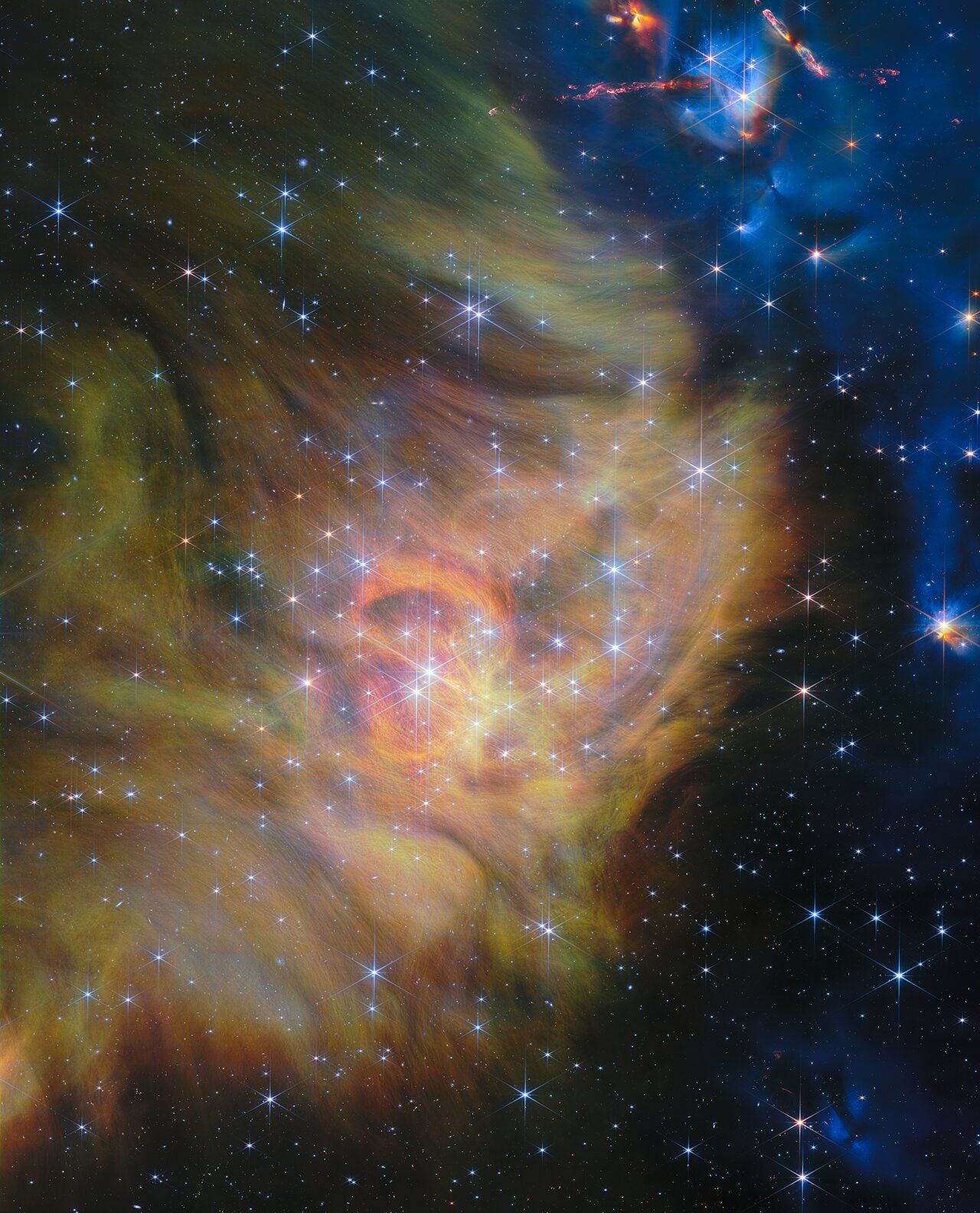
On September 15, 2026, the James Webb Space Telescope released a record-breaking panoramic image of IC 348, a star-forming reflection nebula located 1,000 light-years away in the Perseus constellation. This image showcases a complex landscape of stars, glowing material, and gas and dust clouds, with young stars punctuating the dark and luminous clouds. Around the center of the image, bright stars display JWST's distinctive diffraction spikes, resulting from the telescope's optical structure.
In the upper-right portion of the image, researchers discovered young protostars launching streams of material. Embedded within this vast nursery, researchers also found intriguing objects challenging the definition of a star. Some of these objects are brown dwarfs, which are substellar objects halfway between giant gas planets and stars.
Using JWST's NIRCam instrument in 2024, researchers identified 39 brown dwarf candidates in IC 348. Following that, NIRSpec studied the light of 15 of these objects, identifying nine new substellar members of the cluster. The faintest of these brown dwarfs were estimated to have masses around two Jupiters, setting new records for the least massive brown dwarfs ever found.
Brown dwarfs form as molecular clouds of dust and gas collapse under their own gravity, similar to regular stars. However, unlike stars, these brown dwarfs' cores never become hot enough to fuse hydrogen into helium. These peculiar objects help researchers understand the limits of how small these strange celestial bodies can be. IC 348 was also recently captured by NASA's Chandra Observatory, which captured the stellar nursery and other cosmic objects in brilliant X-ray light.
Written by urgent.news from Live Science's reporting — not their text. Machine-written — may contain errors; check the original before relying on it.