Can Real-Time Drone Detection Run on the Edge?
A 2025 study compares YOLOv8 across Raspberry Pi 5 and Jetson Orin hardware, revealing the trade-offs behind real-time drone vision.
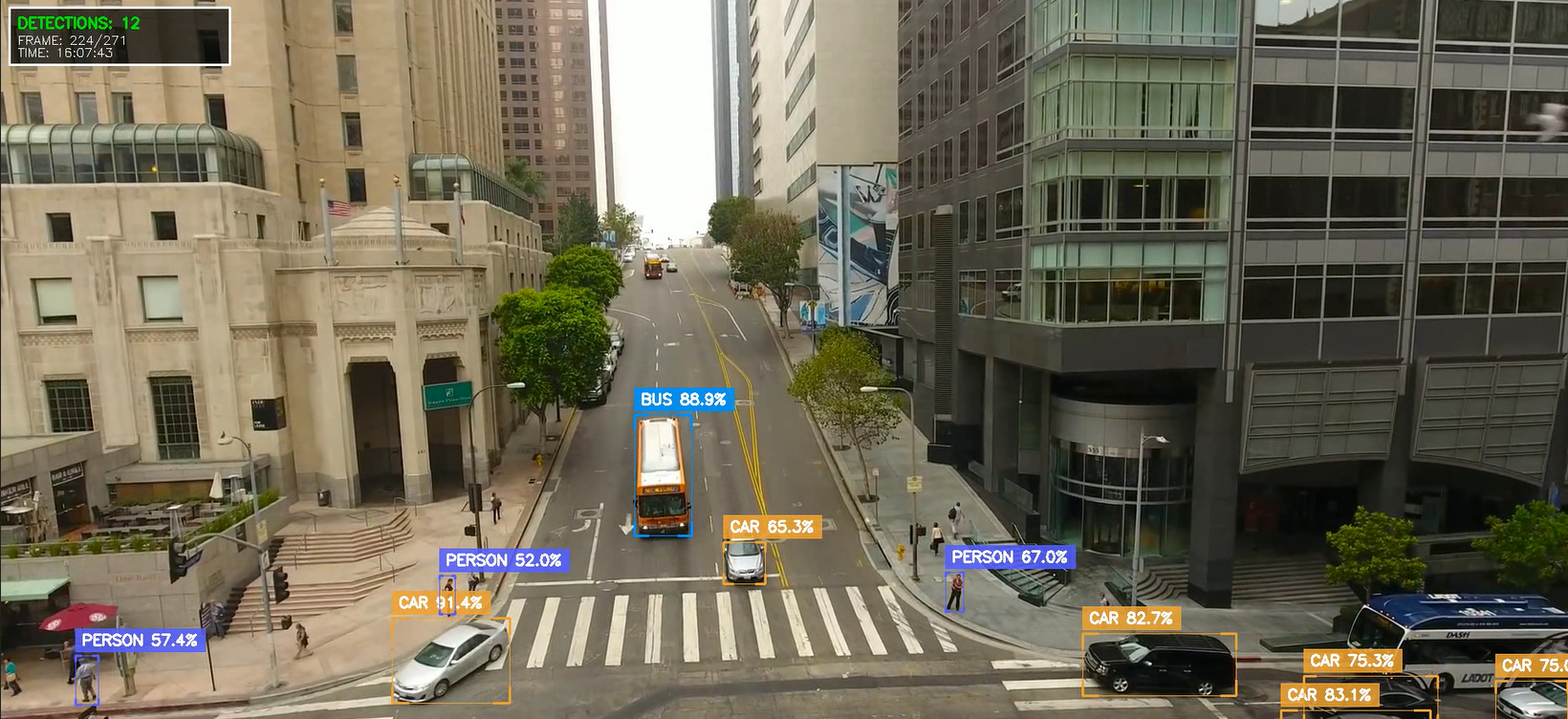
Drones have emerged as a significant hardware development in the past decade, with the focus shifting from the aircraft itself to the intelligence that can be integrated onto them. When computer vision is added to drones, several challenges arise, particularly due to the limited computational capabilities of small aircraft. This paper investigates the tension between the requirements of object detection and computer vision models and the capabilities of edge devices.
To address this issue, the authors conduct a comparative performance analysis of a real-time UAV image-processing pipeline across several edge devices, instead of proposing a new architecture. They use YOLOv8 and YOLOv10, the most widely used object detectors in 2026. However, newer NMS-free models are recommended for edge deployment due to their potential for faster latency.
The study focuses on three single-board computers with varying price-performance characteristics: Raspberry Pi 5, NVIDIA Jetson Orin Nano, and NVIDIA Jetson Orin NX. All three run YOLOv8, offering a range of options for comparison. For data collection, 6,000 aerial images of targets with varying positions relative to the drone's field of view were used.
The images were taken while the drones flew along linear and diagonal paths to capture a range of viewing angles. The dataset was then annotated, and the training began, narrowing down to the two lightest YOLOv8 variants - YOLOv8s (small) and YOLOv8n (nano).
The evaluation process consists of two stages. The first stage measures inference time, energy consumption, and continuous inference evaluation, measuring inferences per minute (IPM) and energy consumption. The second stage moves to real-world conditions, measuring throughput and latency under actual operating conditions. This approach allows for a realistic assessment of the deployed system and distinguishes the study from previous benchmark analyses.
The authors train the models using the AdamW optimizer with a learning rate of 0.002, decoupled weight decay, and a weight decay of 0.0005 on most weights, excluding biases. These configurations were chosen to optimize for both accuracy and speed in the context of edge-device deployment. The results and methodology of the study can be found in the full paper.
Written by urgent.news from HackerNoon's reporting — not their text. Machine-written — may contain errors; check the original before relying on it.