Aurora plans 30,000 driverless trucks as carriers weigh cost
Aurora plans to exit 2026 with 200 driverless trucks and wants 30,000 by 2030. Werner, one of its driverless customers, said the economics only work once scale brings costs down. The post Aurora plans 30,000 driverless trucks as carriers weigh cost appeared first on FreightWaves .
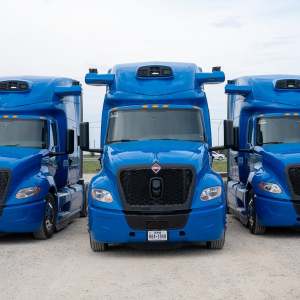
Aurora Innovation plans to deploy over 30,000 autonomous trucks by 2030, according to the company's presentation at its Analyst and Investor Day in Dallas on September 23. The company anticipates generating more than $5 billion in revenue that year with a target gross margin of around 60%. At the end of 2026, Aurora expects to have 200 autonomous trucks in operation, representing a revenue run rate of $80 million. The Aurora Driver has logged more than 500,000 driverless miles since its commercial launch.
Werner Enterprises' executive vice president and chief information officer, Daragh Mahon, acknowledged the challenge of achieving cost viability for autonomous trucks at scale. He expects the economics to become viable once the fleet reaches a larger size. Mahon stated that they are still negotiating with Aurora and working through legal, contract, and economic aspects of the partnership. They anticipate reaching breakeven on a gross margin basis by the first half of 2027, with roughly 500 trucks on the road.
Aurora targets breakeven on a run-rate basis in the first half of 2027, with about 500 trucks. By the end of 2027, the company expects over 1,000 trucks and roughly $200 million in revenue. Maday expects the company to exit 2028 with positive free cash flow on a run-rate basis, with around 7,500 trucks on the road. Capital spending is projected at about $185 million in 2027, mostly for trucks in Aurora's own fleet and the last of its second-generation hardware kits. This figure drops below $50 million in 2028.
The company's 2024 investor day presentation targeted a gross margin of around 70% by 2028. However, Maday noted that 70% is still the aim, and may take a year longer to reach. He emphasized that there are supply chain headwinds being accounted for and addressed. Aurora estimates the U.S. trucking market to be worth $1 trillion across 200 billion vehicle miles traveled, and expects to operate in 150 billion of those miles by 2030.
30,000 trucks may seem like a large number, but given the market size, it is not unreasonable, according to Maday.
Most of the growth depends on a shift in truck ownership. Aurora currently operates its autonomous trucks under Transport as a Service, or TaaS, for customers, where the company owns and operates the trucks. Under this model, Aurora's trucks average about 200,000 miles per year, with a cost of $2 per mile, including a fuel surcharge.
The company expects the fleet size to cap at roughly 500 trucks under the TaaS model. In a Driver as a Service, or DaaS, agreement, carriers own and operate the trucks while paying Aurora for the driving. Under this model, Miles per truck are expected to climb closer to 250,000 a year as carriers run the trucks through their own networks.
Aurora's revenue under DaaS drops to 85 cents or more per mile, as the company focuses on replacing driver costs rather than overall costs.
Written by urgent.news from FreightWaves's reporting — not their text. Machine-written — may contain errors; check the original before relying on it.