A temporary breather in RLNG import
EDITORIAL: The recent international oil price crisis due to the ongoing war, which has engulfed the Gulf region, is fortunately not creating havoc for Pakistan’s economy as it did during the crises of 2022 and 2008. The fiscal side is cushioned, as the government is fully passing on the impact of higher prices to consumers while charging the full levy. Plus, the absence of RLNG supply from Qatar…
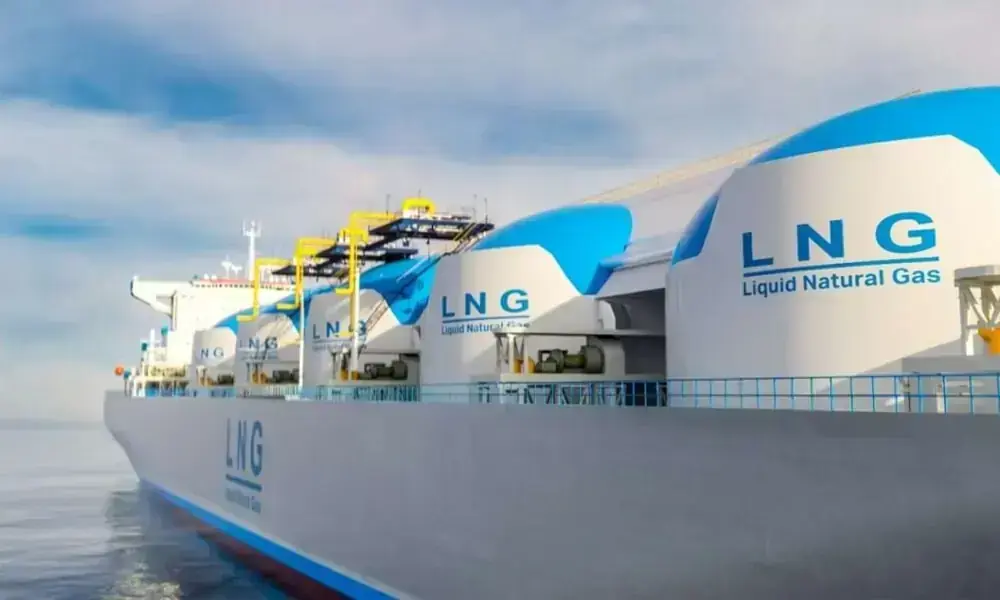
Despite the ongoing war in the Gulf region, Pakistan's economy has managed to weather the recent international oil price crisis without major turmoil. The government is successfully passing on the impact of higher oil prices to consumers while collecting full levies. A significant factor is the absence of liquefied natural gas (RLNG) imports from Qatar, which is helping to mitigate the issue.
The data from the central bank shows that during the period of March to August 2026, the current account posted a marginal surplus of $49 million, which is considerably lower than the $586 million surplus in the same period of 2025. This is primarily due to a decrease in goods imports, which have decreased by 9% year-over-year to $5.7 billion per month. The import of RLNG, which stands at about half the demand, is also lower, contributing to a $1.5 billion saving in import bills.
On the other hand, petroleum imports have increased by 19% during the same period, but the total bill is still 25% lower than during the same period of the 2022 crisis. This can be attributed to lower demand due to the passing on of higher oil prices to consumers and the increased adoption of renewable energy sources, such as solar power, in sectors like agriculture and backup power generation.
As a result, the medium- to long-term concern is a possible slowdown in these economies, which could negatively impact Pakistan's home remittances, a significant portion of which comes from the Gulf Cooperation Council (GCC) countries.
However, there are still some positives. Inflows from the GCC countries continue to rise from a higher base, increasing by 8% in March-August 2026. Additionally, net inflows in the hundi-hawala market are positive, indicating that more money is coming back to Pakistan than going out to the Gulf. The services sector is also performing well, with exports up by 23% during the same period, and the services trade deficit down to one-third.
This can be attributed to lower taxation, which provides an incentive for resident Pakistani professionals to work as freelancers. Lastly, the overall economic fragility due to oil prices is declining, and energy issues have somewhat subsided due to the increased adoption of renewables, potentially averting a crisis. However, growth may still be hindered due to the missing link of taxation reform.
Written by urgent.news from Business Recorder's reporting — not their text. Machine-written — may contain errors; check the original before relying on it.