'A proving ground': Why F&B founders take a chance on incubator spaces with short leases and uncertain odds
For budding F&B entrepreneurs, temporary spaces serve as a place to test their concepts and to learn the realities of running a business.
For Singapore-based F&B entrepreneurs, temporary spaces offer a low-risk environment to test their concepts and learn the realities of running a business. Chef Peter Smit's journey to opening Dirty Supper began on his rooftop, where he tested his supper club concept before moving to a permanent location within Hua Bee Restaurant. Similar stories are common among F&B business owners in Singapore who started their ventures through incubators or other temporary spaces before transitioning to permanent locations.
These incubators and temporary spaces provide a safety net for aspiring F&B entrepreneurs, offering lower-risk tenancies with subsidized rents and shorter lease periods. This allows entrepreneurs to experiment with their ideas, build a fan base, and assess the viability of their concepts before committing to a more substantial investment.
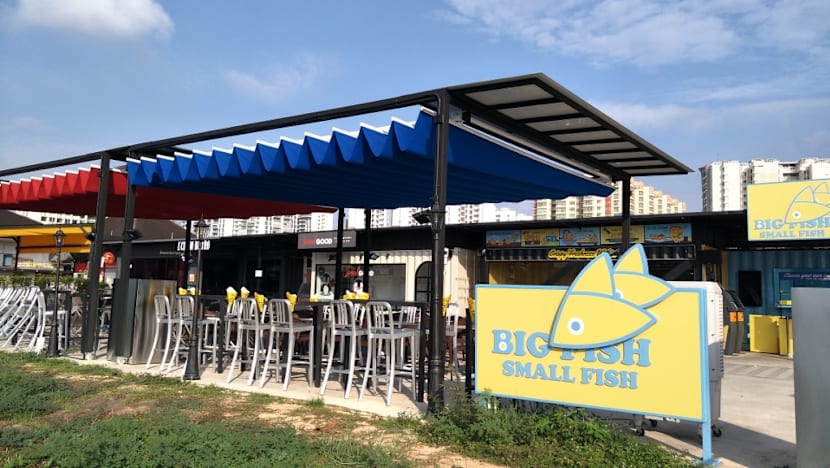
Examples include Big Fish Small Fish, which opened in Punggol East container park, and Ghostwriter, where Peter Smit gained valuable experience before launching Dirty Supper. As the Punggol East container park is set to close, the importance of shorter-term tenancies in fostering F&B innovation is evident, as these spaces enable businesses to thrive temporarily and transition to more permanent locations when the time is right.
Written by urgent.news from Channel News Asia's reporting — not their text. Machine-written — may contain errors; check the original before relying on it.
This story
This is one outlet's version. Read the fullest account.