Why Your Rules Engine Deserves Its Own Kubernetes Node Pool
Dedicated Kubernetes node pools can isolate latency-sensitive rules engines, but the decision should be based on measured contention and resource needs.
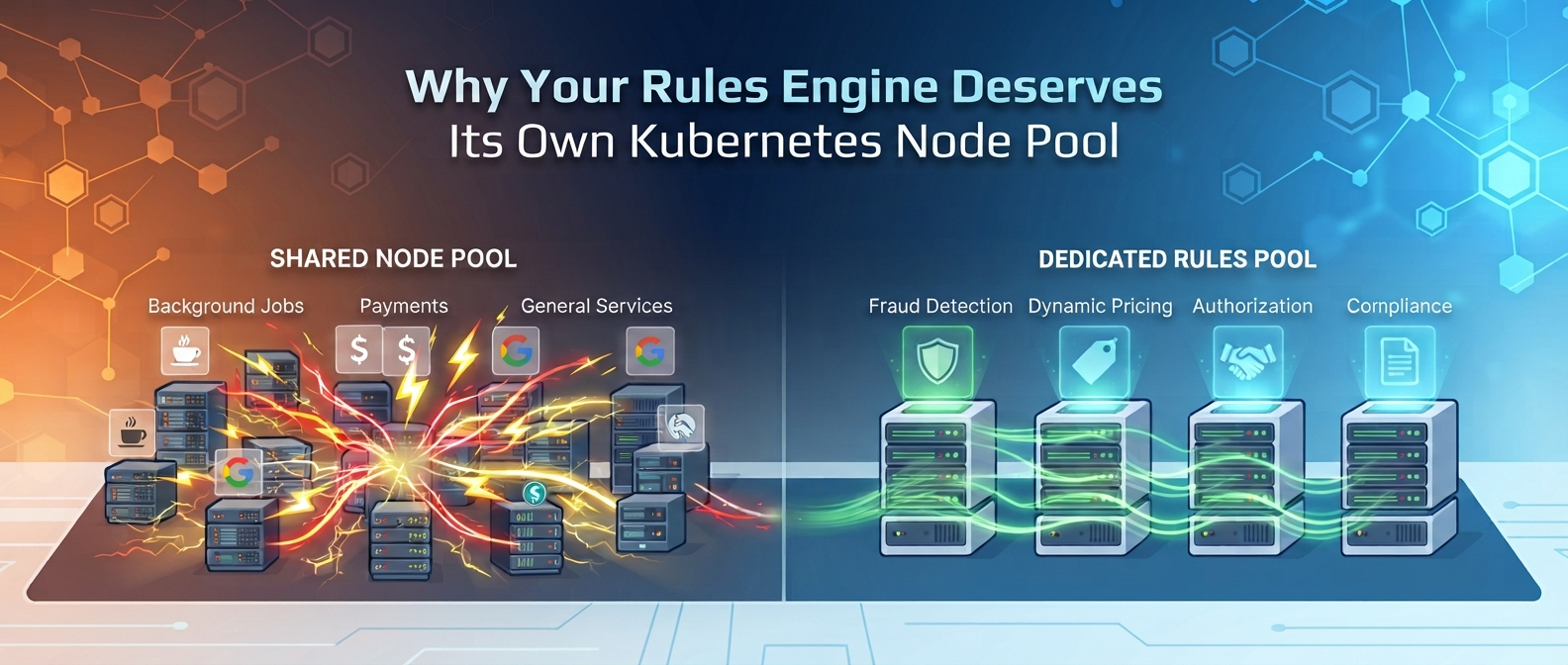
Your rules engine isn't just an afterthought in your Kubernetes cluster. It's the brain behind dynamic pricing, real-time fraud detection, authorization, and compliance. Yet, many organizations still shove it into the same general-purpose node pools as marketing microservices and cron jobs. This shared infrastructure often leads to performance bottlenecks and potential crashes. Here's why giving your rules engine its own node pool matters.
Firstly, rules engines are CPU-intensive. Parsing complex decisions and executing logic demands large amounts of processing power. When shared with other applications, resource contention can throttle performance, leading to frustrating delays. Secondly, rules engines often deal with massive payloads that can quickly exhaust memory. If a pod is terminated due to memory issues on a shared node, it can destabilize the entire system.
The key difference between a typical stateless web app and a rules engine lies in its operational profile. Rules engines experience spiky, non-linear traffic that can surge dramatically in seconds. They're also asymmetric resource hogs, rapidly switching between idle and intense computational states. Unlike other services that can tolerate brief stalls, rules engines cannot afford any downtime, as they directly impact downstream transactions.
By dedicating a Kubernetes node pool exclusively for your rules engine, you achieve absolute isolation. Even if a runaway process pushes the limits of that node, it won't affect your customer-facing APIs or authentication services. Furthermore, you can right-size the hardware specifically for rule evaluation, avoiding unnecessary costs and ensuring deterministic performance. With no noisy neighbors, your rule evaluation times become reliable and predictable, matching production realities.
To set this up, simply taint the dedicated node pool with "workload=rules:NoSchedule". Then, configure your deployment manifest to target this pool using a matching toleration and nodeSelector. This simple change safeguards your business logic, protects uptime, and gives your engineering team peace of mind.
Written by urgent.news from HackerNoon's reporting — not their text. Machine-written — may contain errors; check the original before relying on it.