This forgotten queer artifact was the key to old-school cruising
Long before the queer community had apps like Grindr and Sniffies to facilitate low-key hookups, gay men were keeping track of eligible partners the analog way. In unmarked bars, under the glow of swag lamps and the constant smog of cigarette smoke, they traded numbers inside the covers of collectible matchbooks—the same matchbooks that doubled as a form of social lubricant as couples danced,…
Before the advent of digital hookup apps like Grindr and Sniffies, gay men relied on analog means to connect with potential partners. In unmarked bars, illuminated by swag lamps and smoke-filled air, they exchanged contact information in the covers of collectible matchbooks—humble tokens that also served as social lubricants as couples danced the night away.
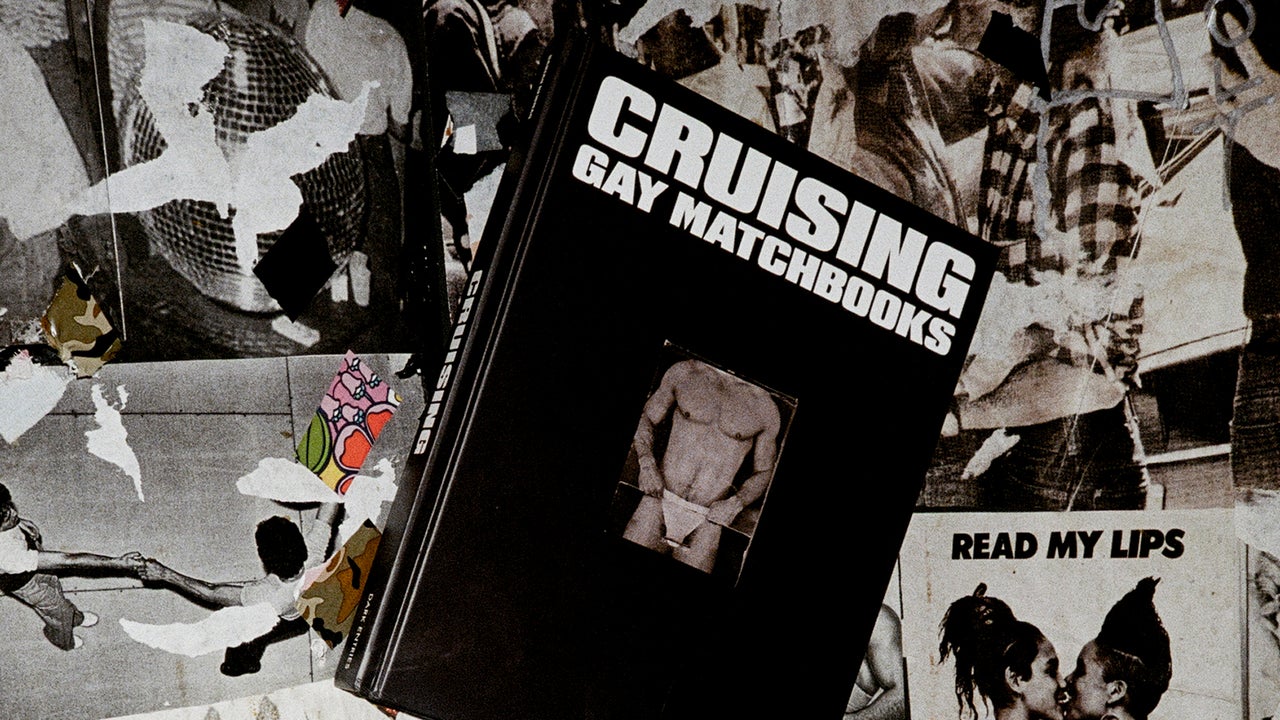
These matchbooks, a staple in gay bars throughout the mid-20th century, are now the focus of two books by designer and editor Darian Newman. The first, titled "Cruising: Gay Matchbooks," debuted in spring 2025 and sold out multiple times, prompting Newman to release a second volume with 200 additional designs and 12 curated essays.
Newman's books reveal the distinct visual identities of queer spaces, each matchbook a miniature work of art crafted to reflect the local community it represented. They also provide a rare glimpse into moments of queer joy, a time often overshadowed by stories of struggle and loss. As Newman writes in the introduction, "Design for marginalized communities is so often focused on protest, but the matchbooks exude pleasure.
The pleasure of being out and going out, the pleasure of lighting a cigarette, the pleasure of getting a stranger's number with the promise of fun."
The matchbooks feature names of clubs like "Manhole," "Dude City," "Mother Lode," and "The Mind Shaft," each emblazoned with custom typography and accompanied by hand-drawn illustrations and photography. In an era where gay bars faced frequent police harassment, these matchbooks functioned as discreet advertising, with designs that promised a unique atmosphere while avoiding police scrutiny.
Professor Lucas Hilderbrand, a film and media studies expert, notes that many bars lacked exterior signage for safety reasons, instead "fabulating vivid queer worlds" through their matchbooks and event flyers.
To uncover these hidden relics, Newman scoured eBay, Instagram, and struck up relationships with collectors in the San Francisco area. He often purchased a single matchbook only to receive dozens more, often bundled with DVDs and posters. One matchbook, entirely covered in silver foil, comes from San Francisco's Circle J; another shows a full-frontal nude on the inside cover from Hollywood's The Zone; and a third features an illustration of a swimmer holding a giant swordfish above his head from Fort Lauderdale's Marlin Beach Hotel.
For older members of the gay community, seeing these matchbooks can trigger long-forgotten memories. For younger generations like Newman, these objects offer a tangible connection to a bygone era when seeking companionship required stepping away from the couch.
Written by urgent.news from Fast Company's reporting — not their text. Machine-written — may contain errors; check the original before relying on it.