How a Pakistani rescue became a Hollywood Thriller – and what it took to get there
“When you take Pakistanis and frame them as action heroes rather than victims, that is an act of subversion… that burden of explanation, making ourselves legible, and continuously explaining context – that is a disservice to us… I’m not going to do a social justice poverty porn for you.” In August 2023, a cable car carrying eight people – six of them schoolboys on their way to class – snapped two…
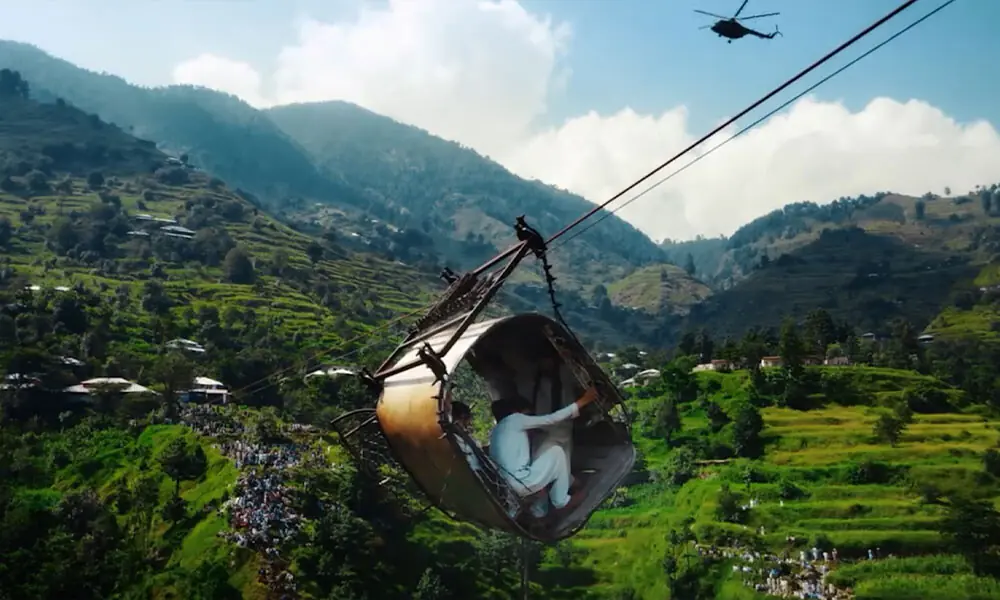
In August 2023, a cable car carrying eight individuals – six schoolboys on their way to class – collapsed above a ravine in Battagram, Pakistan. This harrowing incident garnered global attention, including from filmmaker Mohammed Ali Naqvi. Watching the rescue unfold, Naqvi saw beyond the tragedy – he envisioned a cinematic tale.
"By the time nightfall happened, and things looked really bleak, in the most unlikeliest of fashions, the boys, one by one, began to become rescued," he recalled. "So I was convinced by that time, by the end of it: this is a movie." "Hanging by a Wire" is one of the more commercially ambitious releases from Pakistan, a result of Naqvi's careful navigation of creative, ethical, and financial considerations.
The story's structure, he noted, was deeply Pakistani: a disparate group of individuals, united by a common goal, transforming their differences into a collective effort. Naqvi's instinct was right – the rescue bore the hallmarks of a Hollywood ending, with different factions coming together to triumph. The film's striking footage, including the drone shots of the boys hanging in the cable car, wasn't fabricated but captured in real-time.
The footage, provided by local entrepreneurs, including a jewellery shop owner and citizen-journalist Ikhra Ghir, was used as-is, lending authenticity to the film. Naqvi made it clear that this was not a traditional documentary but a thriller, a deliberate choice to subvert the narrative of trauma victimhood. By portraying the boys as action heroes, he aimed to give them agency and dignity, a decision that cost him some critical goodwill but stayed true to his artistic vision.
Despite working with a major studio, Naqvi managed to maintain his artistic integrity, largely due to strong support from his team. The reconstructions, mainly for the overnight rescue camp footage, were created as "coverage" around real-life footage, giving viewers a comprehensive view of the harrowing experience. The boys, without hesitation, participated in the reconstructions, guiding Naqvi on how to stage scenes based on their personal memories.
The final product, a thrilling narrative grounded in reality, emerged from a delicate balance of reality and art, a testament to Naqvi's vision and the resilience of the human spirit.
Written by urgent.news from Business Recorder's reporting — not their text. Machine-written — may contain errors; check the original before relying on it.