Once the Growth Engine, Germany Is Now an Economic Laggard in the EU: QNB
<p>Doha, Qatar: Qatar National Bank (QNB) said that Germany's weak economic performance is largely linked to mounting pressures on its export-led industrial model, which had been a key pillar of its economic strength for decades. Rising energy costs, intensifying competition from China and domestic structural constraints are increasingly weighing on the model.</p> <p>In its weekly commentary, QNB…
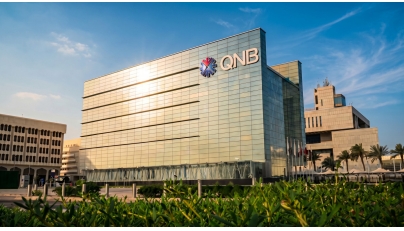
Doha, Qatar - The Qatar National Bank (QNB) has revealed that Germany's economic performance has deteriorated significantly in recent years, marking a shift from a growth engine to a laggard within the European Union. This decline is primarily attributed to mounting pressures on Germany's export-led industrial model, which has been a cornerstone of its economic strength for decades.
According to QNB, rising energy costs, intensified competition from China, and internal structural constraints are increasingly impacting this model. The bank highlighted that Germany's ability to reinvent its economic model, as some Euro area nations like Spain have done, will be crucial for shaping the continent's future prospects.
QNB stated that Germany must modernize its infrastructure, undertake structural reforms to reduce administrative burdens, and adapt its industrial base to the evolving global economy. The country, once a major growth driver for the Euro area, has since 2023 experienced contracting real output, stagnation in 2024, and only marginal growth of 0.2% in 2025.
Euro area economies have continued to expand at a stronger pace, but Germany has returned to modest positive growth this year. The bank emphasized that much of Germany's economic weakness stems from the poor performance of its industrial sector, particularly manufacturing and the competitive Mittelstand - the vast network of small and medium-sized enterprises that form the backbone of German employment and exports.
The report noted that the Mittelstand, comprising many family-owned businesses, plays a central role in employment and exports, but faces challenges from China's growing influence in the global market. Chinese exports to Germany fell by over 12% year-on-year in the first half of 2026, with China now ranking as the ninth-largest market for German goods, down from second just five years ago.
Energy costs also pose a significant challenge, with industrial electricity prices in Germany roughly double those in the United States due to the lasting impact of the loss of cheap pipeline gas. This places an additional burden on energy-intensive industries.
The IMF estimates suggest that manufacturing and construction accounted for most of Germany's growth gap relative to the Euro area, with underperformance persisting rather than being a temporary cyclical factor. Industrial production in Germany is currently around 15% below its peak, reflecting a trend over most of the past decade.
QNB identified three key dimensions of Germany's economic underperformance: the core industrial recession, the competitiveness squeeze facing the Mittelstand, and the short- and medium-term impact of high energy prices. The first dimension highlights the weak industrial sector, plagued by deep structural problems, including aging infrastructure, a shrinking working-age population, skilled-labor shortages, and bureaucratic hurdles that impede growth.
The second dimension focuses on the growing competitiveness challenges faced by the Mittelstand, particularly due to increased competition from China in the Chinese market and beyond. German exports to China have declined significantly, and more than three-quarters of German mechanical engineering companies view China as their greatest strategic threat.
Finally, the third dimension emphasizes the impact of high energy costs on German industry, with industrial electricity prices in Germany being roughly double those in the United States. Despite recent declines, energy prices in Germany remain well above pre-2022 levels, creating difficulties for industrial companies as they invest in energy efficiency and adapt to a more expensive energy environment.
Written by urgent.news from The Peninsula Qatar Business's reporting — not their text. Machine-written — may contain errors; check the original before relying on it.