How China is seeking to transform the meaning of great power
As China has emerged as a peer competitor to the United States in many areas, an increasingly familiar question is whether it has become a superpower. The question, however, may rest on a definition of power that belongs to another era. China possesses many attributes traditionally associated with great powers: a large population, vast territory, a major economy, advanced technological…
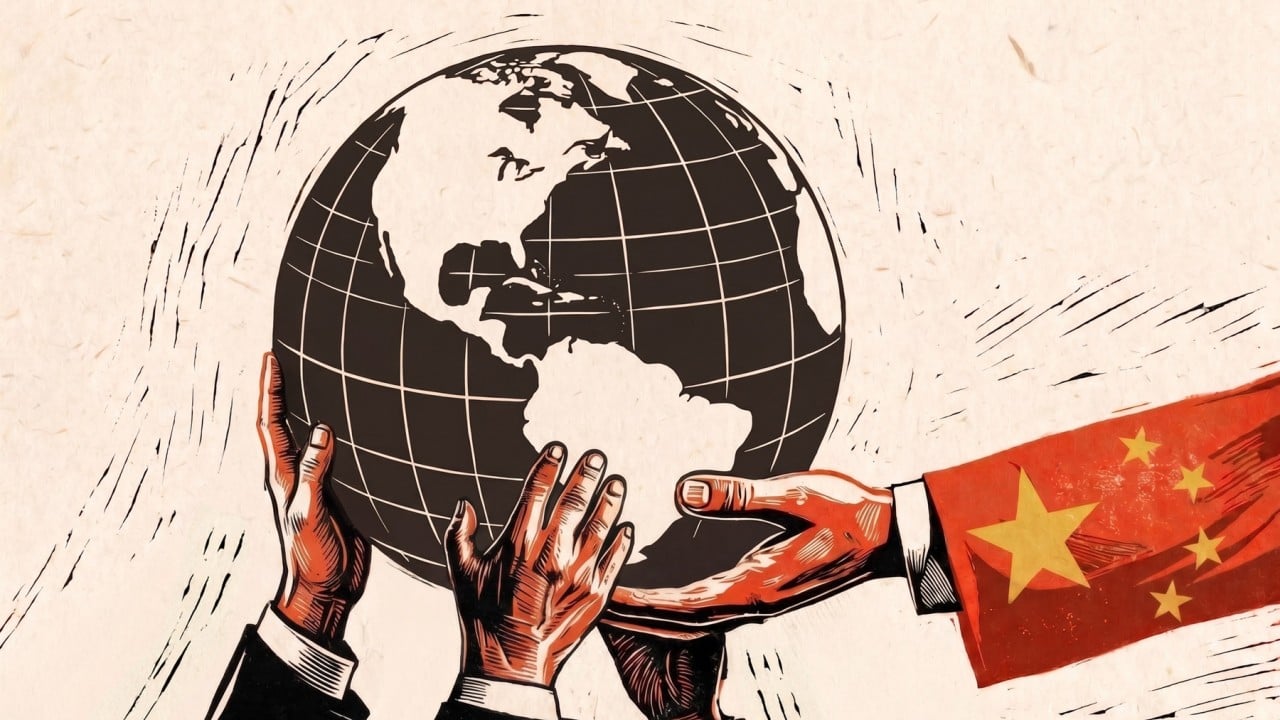
China has become a significant rival to the United States in various areas, raising the question of whether it has evolved into a superpower. However, the definition of power that once defined great powers may no longer be applicable in the modern era. While China possesses several traits traditionally associated with great powers, such as a large population, expansive territory, a robust economy, advanced technology, and a growing military, the Chinese government prefers to describe itself as a "major country" rather than a "great power" or "superpower".
The term "superpower" first emerged during World War II, referring to the United States, Britain, and the Soviet Union as a new category of states possessing exceptional military and geopolitical capabilities. These nations were responsible for shaping the post-war order and felt an exceptional obligation to maintain peace. This concept remains pertinent today, as military strength, strategic reach, and the ability to deter or defeat adversaries continue to influence global politics. However, they are no longer the sole determinants of power.
Over the past eight decades, factors such as economic interdependence, global supply chains, technology, finance, and industrial capacity have assumed considerable importance in shaping geopolitical influence. The US-China trade and technology dispute serves as an example of this shift. While China retaliated to US tariffs by imposing restrictions on critical minerals and other areas of leverage, the two nations have reached a high degree of interdependence.
A powerful military force may still be constrained by weaknesses in other areas, while a state lacking military prowess can wield significant influence through its role in strategically important economic networks.
Another factor to consider is the strategic importance of the Strait of Hormuz, which highlights how geography and asymmetric capabilities can grant a regional power leverage over actors with greater military resources. Military supremacy does not guarantee unrestricted political freedom of action. This leads to the broader question of whether a 21st-century great power should be defined solely by its ability to dominate other states or also by its capacity to contribute to international stability and development.
China's diplomatic language emphasizes its role as a "major country," emphasizing principles such as sovereignty, multilateralism, international law, development, and people-centered approaches. Its Global Governance Initiative aims to foster a more just and equitable international system, stressing the importance of multilateral cooperation and a UN-centered international order.
This perspective aligns with China's historical statecraft tradition, which values stability, order, and people's welfare. Contemporary leaders have adapted these values to modern notions of development and international governance.
China's international role increasingly revolves around development, cooperation, and problem-solving rather than formal domination. While China's economic and technological growth, military modernization, and diplomatic reach have significantly enhanced its ability to shape global outcomes, the real question is how the country chooses to utilize this capacity.
The distinction between "superpower" and "responsible major country" signifies a broader transformation in international politics. While military projection remains a vital component of power, it is no longer the sole determinant. Industrial resilience, technological capacity, economic relationships, control of critical supply chains, and the capacity to provide international public goods also play crucial roles in shaping state options.
Thus, the challenge for China may not be determining whether it qualifies as a superpower but rather whether it can effectively embody the responsibilities of a responsible major country.
Written by urgent.news from Reuters Business via SCMP's reporting — not their text. Machine-written — may contain errors; check the original before relying on it.
This story
This is one outlet's version. Read the fullest account.