Alien Life Can Survive on This Tiny Moon—We Just Need to Go Find It
Scientists have discovered that Earth-like microbes could potentially survive conditions inside Enceladus’s subsurface ocean, and that detecting signs of life on the moon may be easier than expected, according to a pair of studies.
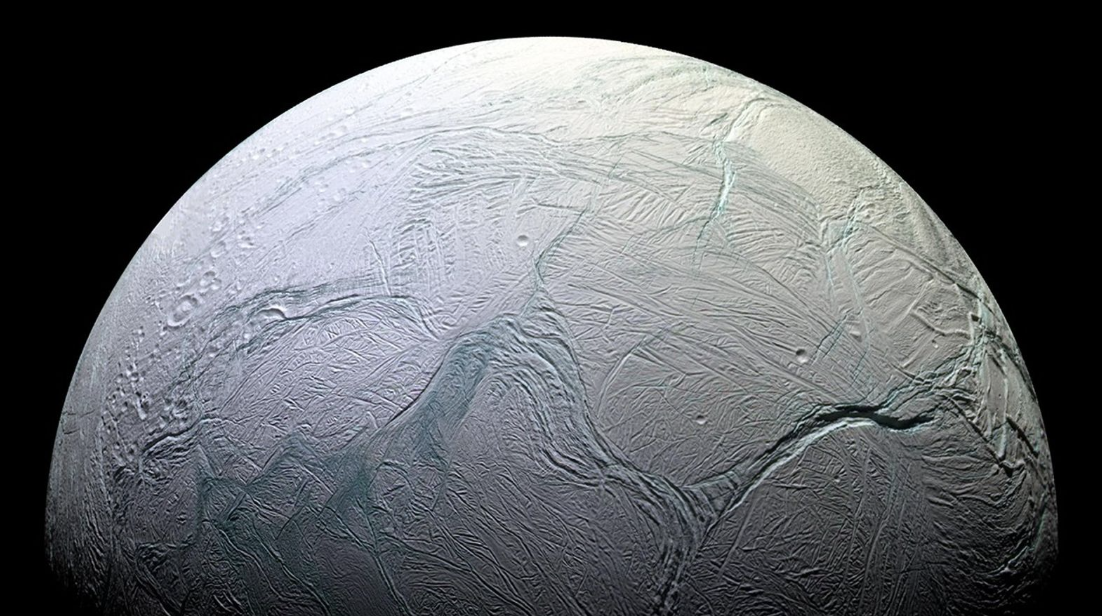
Scientists have discovered compelling evidence that suggests Enceladus, a tiny moon of Saturn, could potentially harbor extraterrestrial life. Located only 300 miles in diameter, Enceladus boasts a subsurface ocean and hydrothermal vents on its seafloor, similar to Earth's deep-sea vents where life thrives. The Cassini spacecraft, which orbited Saturn from 2006 to 2017, collected samples from the moon's geysers, providing initial insights into the alien sea.
In a groundbreaking study, researchers recreated Enceladus's alkaline and carbonate-rich "soda ocean" and introduced the heat-loving microbe Methanothermococcus okinawensis. The results revealed that M. okinawensis thrived in this environment even better than expected, potentially expanding the habitability zone of Enceladus's subsurface ocean.
Another study analyzed ice grains ejected from Enceladus by Cassini, finding that organic molecules separate out into concentrated compounds within these droplets. If these droplets contain biosignatures, they could be conveniently pre-sorted for any instrument that captures them, making future sampling missions more efficient.
Written by urgent.news from 404 Media's reporting — not their text. Machine-written — may contain errors; check the original before relying on it.