“After several attempts, a perfect opportunity eventually arose,” says award-winning astrophotographer on his super-detailed shot of Sun’s surface
Portuguese astrophotographer Miguel Claro used a high-powered telescope and camera to capture a close-up frame of writhing plasma on the Sun’s photosphere
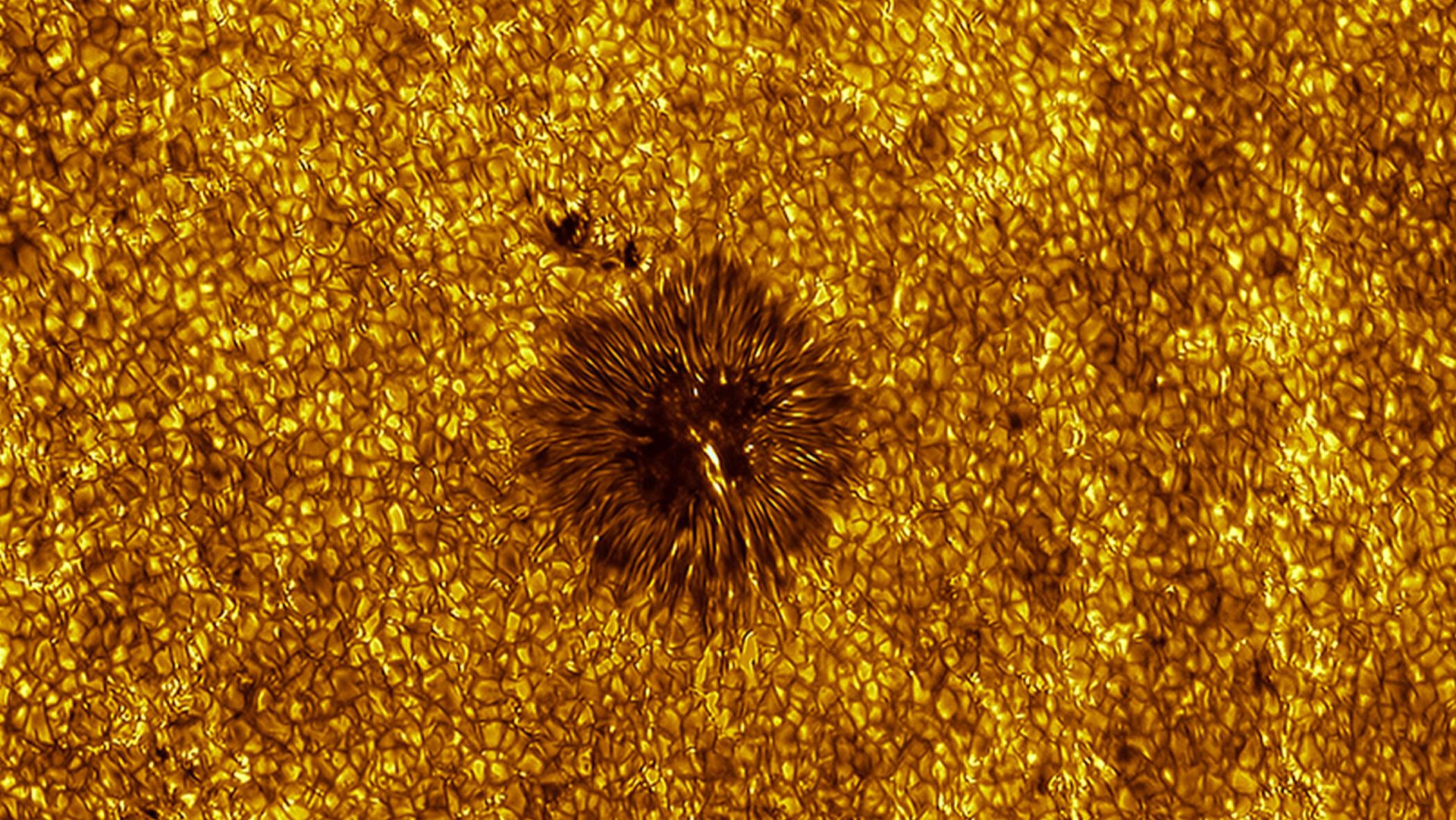
Portuguese astrophotographer Miguel Claro has finally achieved his goal of capturing a high-resolution image of the Sun's surface after multiple unsuccessful attempts. The prestigious win earned him the title of the "Our Sun" category winner in the ZWO Astronomy Photographer of the Year 2026 competition. The image showcases an intricate abstract pattern created by writhing plasma within the Sun’s photosphere, the star's outermost layer.
Claro expressed his excitement upon witnessing the perfect conditions that morning, which were ideal for capturing convection cells and bright spots between them. The winning image was taken using a Soleye 300 Dual-Band telescope, an Altair 2-nm G-Band filter, a Baader SunDancer II TZ-4S telecentric system, and a Sky-Watcher EQ6 Pro mount, along with a Player One Astronomy Apollo 428M Max Pro Solar Camera.
The technical specifications of the shot include 1,200 mm focal length, f/4 aperture, and a 67-millisecond exposure. Claro's victory came just days after Australian astrophotographer Peter Ward, a retired airline pilot and multi-award winner, was announced as the runner-up. Ward utilized a spectroheliograph to visualize calcium filaments and gas plumes expelled from the Sun's outer layers in the UV spectrum.
The competition, organized by the Royal Observatory Greenwich in London, is the largest of its kind globally. British astrophotographer James McBeath received commendation for his frame of the 2025 partial solar eclipse.
Written by urgent.news from Digital Camera World's reporting — not their text. Machine-written — may contain errors; check the original before relying on it.