The importance of technology and artificial intelligence in tourism
Technology applies scientific knowledge to achieve practical goals, solve problems, extend human capabilities, and perform daily tasks. Technology has become an important part of the tourism industry; from booking flights and hotels online to using mobile apps and digital maps, technology has changed how people plan, experience, and share their travels. Technology tools such as […]
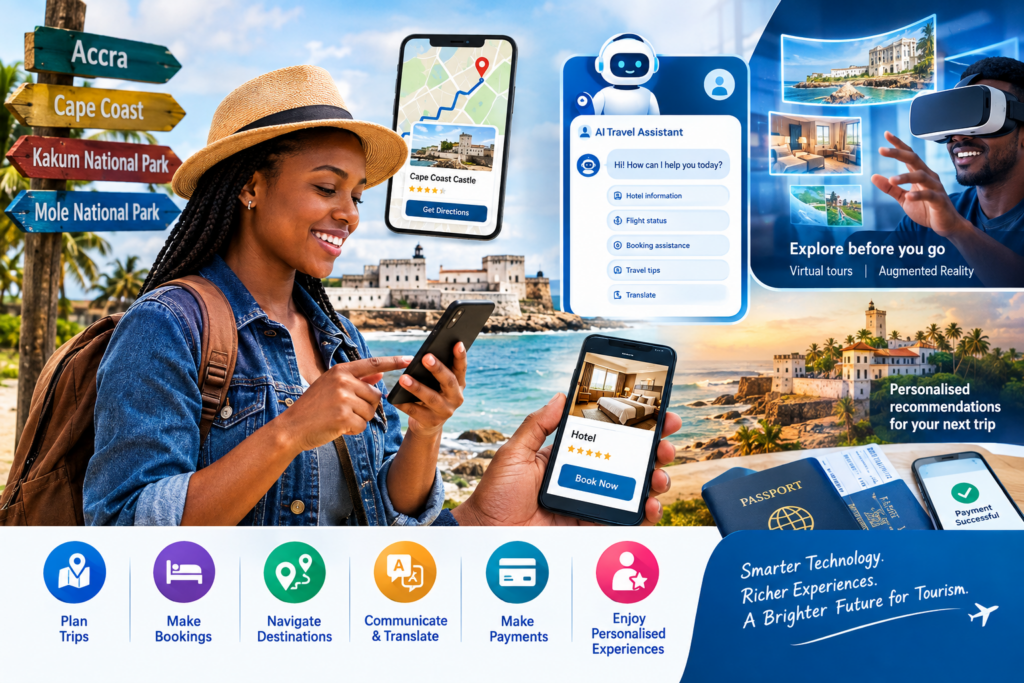
Technology and artificial intelligence (AI) have drastically transformed the tourism industry, making it easier for people to discover destinations, plan trips, make reservations, and experience services. These advancements have revolutionized how tourists explore new places, communicate with service providers, and navigate unfamiliar environments.
Previously, travelers relied heavily on travel agencies, guidebooks, physical maps, and recommendations from friends and family to plan their journeys. However, today, smartphones, websites, mobile applications, and AI have revolutionized the way people approach tourism. Instant access to information through search engines, social media, blogs, online reviews, and travel applications has empowered tourists to make well-informed decisions about their trips, considering factors such as accommodation, dining, attractions, transportation, costs, weather conditions, cultural practices, and activities.
Artificial intelligence, a branch of computer science and technology, focuses on developing computer systems, software, and machines capable of performing tasks that require human intelligence. In tourism, AI-powered chatbots have become increasingly valuable, assisting customers with queries about hotel facilities, check-in times, flight information, prices, destinations, and booking procedures. These chatbots operate 24/7, ensuring tourists receive assistance even outside regular business hours.
Moreover, AI has introduced new ways for people to explore destinations digitally. Virtual reality and virtual tours enable potential tourists to digitally experience hotels, museums, attractions, and other locations before physically visiting them. Augmented Reality (AR) further enhances these experiences by providing additional digital information about physical locations.
For instance, a tourist visiting a historical site can use a smartphone or AR device to view information about buildings, monuments, or historical events, making tourism experiences more interactive and educational.
One of the most significant advancements brought about by AI in tourism is the capability to provide personalized experiences. AI systems analyze customers' interests, previous searches, bookings, and preferences to recommend destinations, hotels, restaurants, and activities tailored to individual needs. This eliminates the need for tourists to sift through vast amounts of information to find suitable options, as AI narrows down choices based on personal preferences.
Despite the numerous benefits, technology and AI also present challenges and difficulties. Privacy concerns, cybersecurity risks, job displacement, potential inaccuracies, and excessive dependence on automated systems are some of the issues that arise with widespread AI adoption. Therefore, the future of tourism will depend on adopting new technologies responsibly, ensuring that businesses and tourists alike can fully reap the rewards of these innovations without succumbing to their drawbacks.
Written by urgent.news from MyJoyOnline Ghana's reporting — not their text. Machine-written — may contain errors; check the original before relying on it.
This story
This is one outlet's version. Read the fullest account.
- Outfoxing artificial intelligence: The great human-AI face-off businesstimes.com.sg