Scientists Invent a Digestible, Paper-based Battery That Can Power Swallowed or Implanted Medical Devices
So far, the technology has been tested only in pigs. If it's successful in humans, it could one day power technologies that monitor your health or deliver drugs or electrical currents inside the body
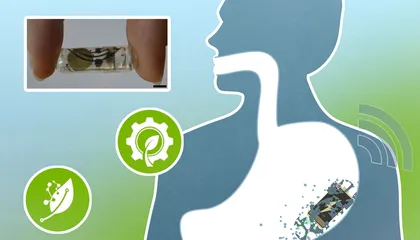
Scientists have developed a new type of ingestible, paper-based battery that could power small medical devices inside the body, according to a study published in the journal Nature Chemical Engineering on September 21. The battery, which can eventually degrade in the body, has been tested only in pigs so far. Its creators, Giovanni Traverso and his team from MIT and Brigham and Women's Hospital, say it could one day power various medical devices.
The battery's electrodes are made of magnesium and molybdenum, which are safe for human consumption and essential for various bodily functions. A biodegradable liquid salt acts as the electrolyte, allowing charge transfer between the electrodes. The cathode electrode is embedded with cellulose fibers, making the battery paper-based. The entire structure is encased in natural waxes to prevent early degradation in the stomach.
The researchers created two versions of the battery with different sizes and voltages. When exposed to gastric fluid, the batteries functioned normally for about three days, after which their performance declined, and the battery degraded completely within a few months. In tests with two devices—an RFID tag and a capsule that stimulates the production of a hunger hormone—both worked in live pigs.
The RFID tag was able to transmit data around five feet away, and the electrical current from the capsule raised ghrelin levels by about 50 percent.
The development of biodegradable batteries is seen as a potential solution to the challenges of powering ingestible sensors, as standard batteries often contain harmful chemicals. Traverso explains that the study could pave the way for improved transient electronic devices. Although lithium-ion batteries, which are rechargeable, are commonly used in various devices, they could be toxic if implanted in the body.
The researchers emphasize that biodegradable batteries have the advantage of both breaking down in the body and reducing environmental impact.
Written by urgent.news from Smithsonian's reporting — not their text. Machine-written — may contain errors; check the original before relying on it.