How inner-city stargazers navigate light pollution to capture night sky
Astronomy enthusiasts and astrophotographers say despite light pollution, there is plenty to see in inner-city night skies as telescope technology advances.
Light pollution, a common challenge for night sky enthusiasts, does not deter amateur astronomers and astrophotographers in Brisbane. The city's densely populated and polluted environment, typical of urban areas, often makes it seem like stargazing is impossible. However, modern technology and techniques have made it easier than ever to appreciate the night sky, even in the heart of a city.
Sudath Wijeratne, a five-year veteran of amateur astronomy, started with a basic telescope and camera to photograph the Moon. Today, he owns a small observatory on his Brisbane roof and a high-end telescope capable of capturing award-winning photographs. Despite the city's light pollution, Mr Wijeratne insists it does not hinder his passion for stargazing and astrophotography.
He points out that major celestial bodies like the Moon, planets, and stars are still visible from Brisbane, including the Southern Cross constellation and meteor showers.
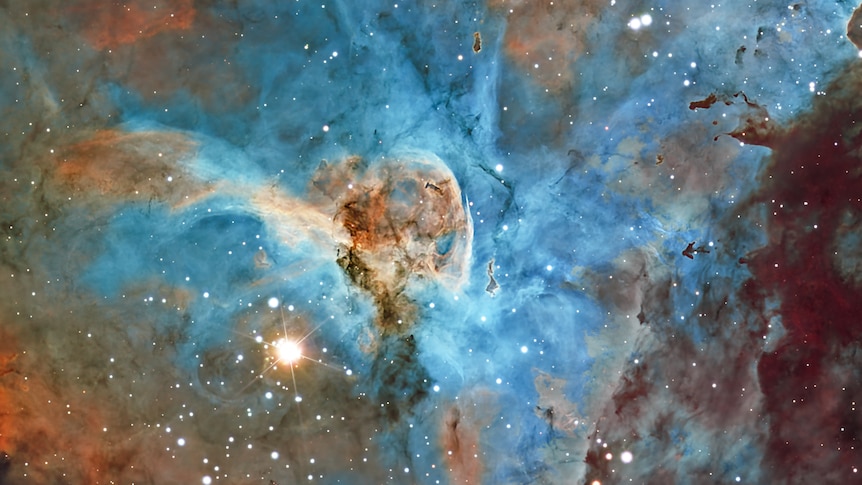
For those interested in deep-sky photography, Mr Wijeratne uses long exposure techniques to capture images of nebulae and distant stars. These images, he says, illustrate the vastness of the universe and our place within it. Astrophotography, the process of photographing celestial objects, involves taking pictures of the night sky and celestial bodies. The hobby, while potentially expensive due to high-quality telescopes, can be pursued on a budget.
Damian Fletcher, president of the South East Queensland Astronomical Society, agrees that Brisbane is a surprisingly good place for stargazing. He has noticed that many people are surprised by what they can see with their own eyes when they look through a telescope for the first time. Mr Fletcher attributes this to the growing popularity of astrophotography, which has been made more accessible thanks to new technology like smart telescopes.
Smart telescopes, controlled by an app on a smartphone or tablet, offer a more user-friendly experience than traditional telescopes. They can navigate to specific constellations or celestial bodies and take multiple short-exposure photos, which are then stacked together to create a clear image. These modern telescopes are often much cheaper than a full telescope rig, making astrophotography more accessible to beginners.
Dr Michael Cowley, an astrophysicist and senior lecturer at the Queensland University of Technology, notes that students are also benefiting from smart telescopes for research purposes. Even in urban environments, these telescopes can produce decent imagery, allowing for the discovery of features like nebulae that might otherwise go unnoticed.
While high-quality telescopes can be prohibitively expensive, both Mr Wijeratne and Mr Fletcher emphasize that beginners do not need to spend a lot of money to start enjoying astronomy. They suggest starting with a comfortable chair, stepping outside, and simply looking up. For those interested in diving deeper, attending free community events and telescope nights is a great way to get started without spending any money.
Written by urgent.news from ABC News AU's reporting — not their text. Machine-written — may contain errors; check the original before relying on it.