SA may reach its emissions targets, but are they too easy?
If every country follows this approach, global warming could reach 3°C above pre-industrial levels
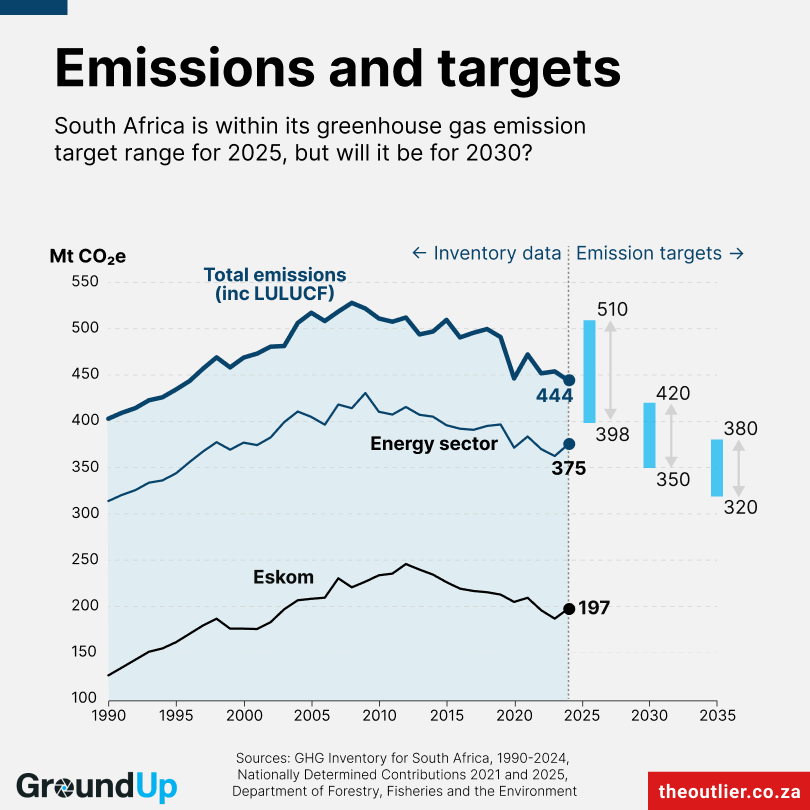
The South African government has set targets to limit its greenhouse gas emissions, as it is a party to the 2015 Paris Agreement. These targets aim to keep global warming within 1.5°C to 2°C above pre-industrial levels. However, the Climate Action Tracker rates South Africa's targets as insufficient, as they would likely result in warming of 2°C or higher by 2100.
The current targets represent a 16% to 29% reduction from 2022 to 2035, which is far lower than the 40% cut required to meet the Paris Agreement's 1.5°C goal. South Africa's estimated net 2024 greenhouse gas emissions were about 444 million tonnes, with 477 million tonnes emitted and 33 million tonnes absorbed by the land sink. While emissions peaked in 2008 and have been decreasing unevenly since, this drop is largely attributed to economic stagnation and load shedding, which have since eased.
The energy sector alone contributed 375 million tonnes in 2024, surpassing the lower target for 2030. To meet the 2030 target's upper range, emissions must decrease by an additional 24 million tonnes. However, the government's electricity plan, the IRP 2025, is uncertain in its ability to retire the necessary amount of coal power.
Critics argue that South Africa's targets are too weak and could be met without further effort, potentially leading to missed opportunities for international finance and carbon taxes.
Written by urgent.news from GroundUp's reporting — not their text. Machine-written — may contain errors; check the original before relying on it.