POLICY GAPS OP-ED: More guns won’t make South African women safer, but stronger controls will
South Africa’s GBVF crisis is being worsened by the widespread availability and misuse of firearms, with evidence showing guns can increase rather than reduce risks to women. Stronger firearm controls, policing and enforcement are needed to protect women from femicide and gun-related abuse.
South Africa's gender-based violence and femicide crisis is exacerbated by the easy access and misuse of firearms, with evidence suggesting that guns may actually increase rather than decrease risks to women. To safeguard women from femicide and gun-related abuse, stronger firearm controls, policing and enforcement are essential.
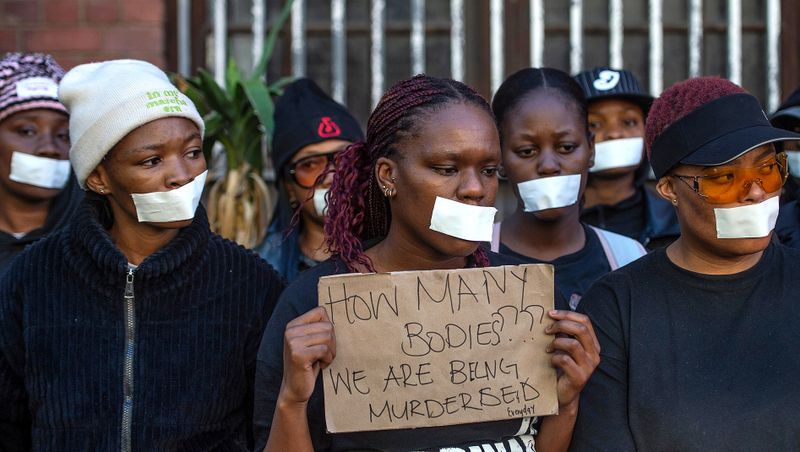
The discovery of nine women's bodies in Ekurhuleni has once again highlighted the country's high rate of GBVF, which is five times the global average. Despite this, the conversation has shifted to how women can protect themselves, with some suggesting that owning a gun is the answer. However, this is a misguided and irresponsible notion, as there is no evidence to support the idea that a gun makes a woman safer.
In fact, global evidence shows that more guns lead to women being less safe. This is illustrated by the South African Medical Research Council's tracking of femicide through four national surveys over 20 years, which reveals that gun-related femicide fell sharply in the decade after South Africa's 2000 Firearm Control Act was enacted.
However, these gains have been lost as gun control measures weakened and more firearms entered circulation. By 2020/21, guns had become the leading cause of women's deaths in South Africa, accounting for over a third of all femicides, with the sharpest increase among women killed by intimate partners. While every gun death is tragic, the statistics are even more alarming when considering that for every person killed by a gunshot, roughly two more are treated in hospital for non-fatal injuries, many of which cause permanent disability.
Guns can also be used to threaten and intimidate, often by intimate partners, family members, or other close acquaintances. This abuse can lead to psychological, emotional, and physical harm, with women and girls in South Africa often lacking access to effective systems to report and address such threats. The National Strategic Plan on Gender-Based Violence and Femicide does not address firearms, treating GBVF and gun violence as separate issues.
This lack of connection is problematic, as guns are the leading weapon used in femicides. The government has declared GBVF a national disaster, yet the necessary measures to protect women remain missing. Accurate data on femicide is lacking, and policing and investigations are inadequate, with police failing to identify perpetrators or establish the nature of the relationship between them in many cases.
Strengthening the Firearms Control Act, streamlining the removal of firearms where GBVF risk is identified, and improving forensic evidence gathering and investigation processes are crucial steps in addressing this crisis. The gun lobby has a vested interest in portraying firearms as a woman's best protection, but this narrative needs to be resisted in favor of women's safety and well-being.
Written by urgent.news from Daily Maverick's reporting — not their text. Machine-written — may contain errors; check the original before relying on it.