Nine women dead as OUTA warns SA cannot keep waiting for crisis
OUTA is calling on business and civil society to work with government before problems become crises, as nine women’s bodies are discovered across Ekurhuleni and municipal financial pressures mount.
The Organisation Undoing Tax Abuse (OUTA) has warned that South Africa cannot continue to wait for crises to occur before addressing the underlying problems, following the tragic discovery of nine women's bodies in the Ekurhuleni area over a two-month period. Duvenage, CEO of OUTA, emphasized the need for better collaboration between business, civil society, and government to prevent such crises from arising.
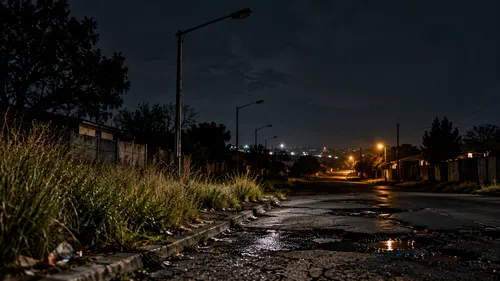
The discovery of the women's bodies, ranging from naked to partially clothed, highlights a wider issue of municipal failures in South Africa. These failures include overgrown grass, broken streetlights, and neglected public spaces. Duvenage pointed out that residents had long complained about these issues, yet the deaths of the women only brought attention to the problems.
Municipalities in South Africa are facing financial pressure, with the Development Bank of Southern Africa (DBSA) reporting a surge in high-risk municipal loans from R6.2 billion to R16.1 billion in just one year. This increase in risk has led the bank to double its provision against these loans, from R549.8 million to R1.2 billion.
DBSA itself acknowledged that "municipal credit risk remains elevated" due to issues such as financial mismanagement, poor audit outcomes, infrastructure vandalism, poor service delivery, and budgetary constraints.
The financial strain from these high-risk loans extends beyond DBSA, with national debt figures showing that municipalities owed creditors R160.8 billion by the end of December 2025, with 84.5% of this amount having been outstanding for more than 90 days. Among the creditors, bulk electricity accounted for the largest share at R87.9 billion.
Duvenage argues that while business and civil society may not take over the roles of government, their resources and expertise can be better utilized alongside government to address the country's problems more effectively. He emphasized that the deteriorating municipal infrastructure is not just a government issue but a concern for businesses and civil society alike.
Civil society, for its part, has developed mechanisms for litigation, investigations, whistle-blower support, and public accountability campaigns that should be better coordinated with government efforts.
The investigation into the deaths of the nine women is ongoing, with police cautioning that a connection between the cases has not yet been established. However, the discovery of the bodies has prompted a coordinated investigation involving detectives, forensic experts, and other specialists. Duvenage believes that intervention cannot wait until problems have already reached crisis point, and that the different strengths of business, civil society, and government should be used earlier and more effectively to prevent such tragedies from occurring again.
Written by urgent.news from IOL's reporting — not their text. Machine-written — may contain errors; check the original before relying on it.