Management: Das Erfolgsprinzip von Amazon – und was andere Unternehmen davon lernen können
Um die Managementtechniken des Konzerns ranken sich viele Legenden. Ehemalige Führungskräfte verraten exklusiv, wie sie funktionieren und wie sie sich auf andere Firmen übertragen lassen.
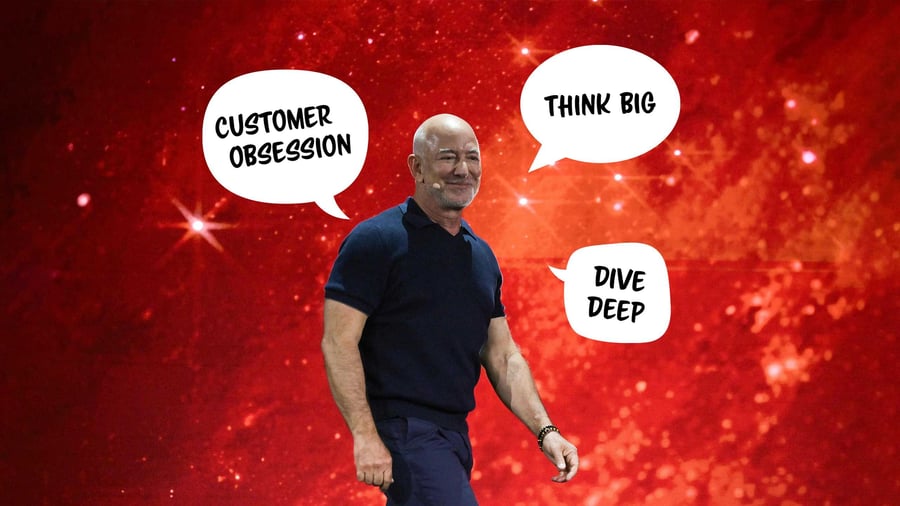
Düsseldorf. Amazon's offices are equipped with a cushion bearing the inscription "Customer" on each chair to remind decision-makers of this perspective. New project teams are called "Two-Pizza-Teams" because they are limited to members who can be fed by two large American pizzas. Managers are prohibited from presenting PowerPoint presentations during meetings; instead, they must deliver a concise text, no more than six pages, similar to a press release.
Many Amazon management principles may seem eccentric to outsiders, but they have allowed company founder Jeff Bezos to build one of the world's most valuable corporations in less than 30 years. If Amazon were considered a nation, it would rank 21st among the world's largest economies, surpassing Argentina and Sweden. The question remains: what specific management techniques are responsible for Amazon's success, and which ones can be learned and applied by other managers?
In their book "The Secret Playbook," three former Amazon executives, Marc Ebel, Georg Hesse, and Amelie Rose, along with 57 other former Amazon managers, answer these questions after discussing with 57 former Amazon executives. The Handelsblatt has pre-evaluated their analysis and interviewed additional current and former top Amazon managers.
They openly reveal what they have applied to their next career positions outside of Amazon and what has failed for them. According to former Amazon manager Andrea Euenheim, "The book finally reveals the black box of Amazon's management principles."
Written by urgent.news from Handelsblatt's reporting — not their text. Machine-written — may contain errors; check the original before relying on it.