China fuels rush to turn AI video into an industry
When Zhu Zhili was looking for a base to set up an artificial intelligence film studio in China two years ago, there was just one clear choice: The southern city of Shenzhen with its vast tech ecosyst...
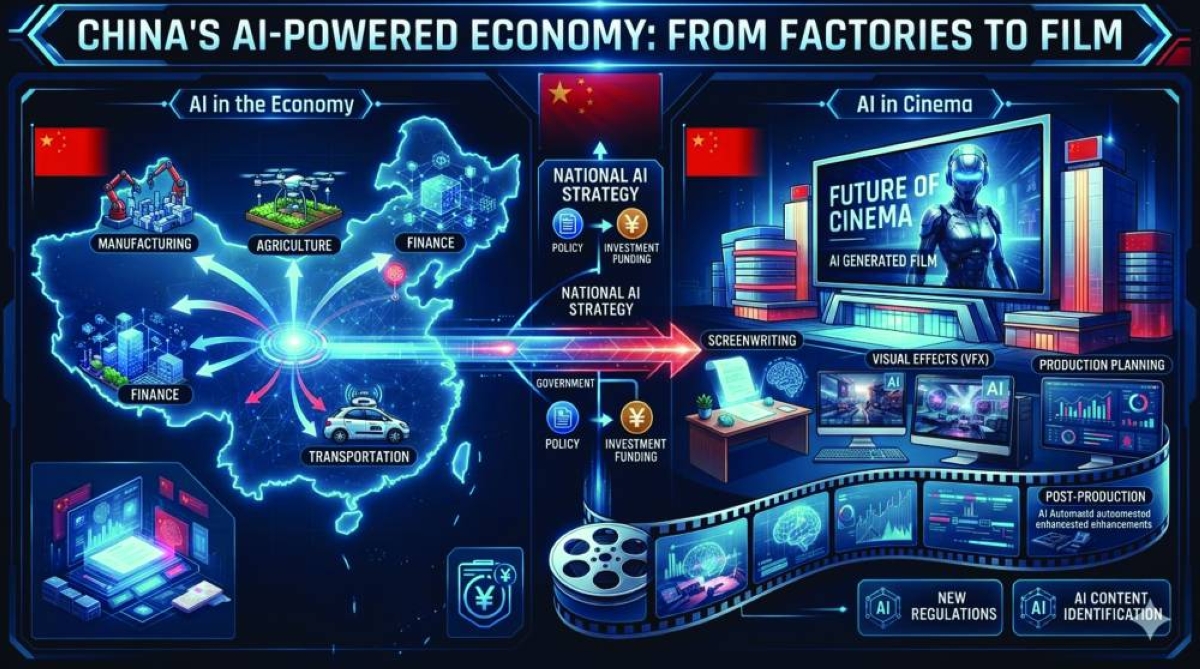
China is fueling a rapid expansion of artificial intelligence (AI) in the film industry, with officials from across the country pitching cities and industrial parks to host AI film businesses. Zhu Zhili, a prominent AI filmmaker, has received daily inquiries from various locations, both large and small, aiming to establish AI film production facilities.
The Chinese government's push to integrate AI into every aspect of the economy, including cinema, has led to promises of tech clusters and subsidies for AI filmmakers and startups.
This strategy mirrors China's successful industrial policies, such as the development of electric vehicles, solar panels, and robotics. Consequently, China has become a hub for AI filmmakers, studios, and streaming platforms, eager to gain an early advantage in production techniques and distribution. Zhu, who heads the AIGC department at China Wit Media in Shenzhen, attributes the region's success to affordable rent, living allowances, and computing support.
While the AI film industry has been welcomed by filmmakers, it faces potential risks similar to those experienced by other state-supported sectors. Overcapacity may arise as companies ramp up production, driving prices down and creating a race to the bottom. In the first half of 2026, 221,900 new AI shows were launched on Douyin, yet only 1,055 garnered over 100 million views, indicating a possible oversupply.
AI video content has attracted filmmakers due to its low production costs. For instance, a typical wedding scene would cost 60,000 yuan to shoot conventionally, but AI technology can create a similar surreal scene for just 1,400 yuan. Subsidies and rent waivers from local governments further reduce computing costs. Shanghai introduced measures in May to expedite AI-powered micro-drama production, while Beijing allocated a 260 million yuan fund for audiovisual technology, with Huairou district offering producers vouchers to minimize computing expenses.
Shenzhen continues to attract AI film talent, providing technical support for video production, visual effects, and content generation, alongside subsidized rent. Major streaming platform iQIYI has also embraced AI, offering creators subsidies for AI content streamed on its platform. The National Film Administration approved a public screening for the AI-generated science-fiction epic "Sanxingdui: Future Memories," the first AI film from a major Chinese studio to receive regulatory approval for theatrical release.
However, the surge in AI-generated content has sparked controversy. Chinese actors have expressed concerns over the use of their likenesses in AI films, raising worries about copyright infringement and job losses for voice actors. Consumers have also complained about plagiarism and a lack of originality, with some blending other people's original characters or dance clips into AI-generated content without proper credit.
Despite these challenges, AI film content continues to surge in China, even expanding to international stages, with director Cao Yiwen premiering her AI-animated film at the World AI Film Festival in Cannes.
Written by urgent.news from Gulf Times Business's reporting — not their text. Machine-written — may contain errors; check the original before relying on it.
This story
This is one outlet's version. Read the fullest account.
- China fuels rush to turn AI video into an industry thehindu.com
- China fuels rush to turn AI video into an industry nst.com.my
- China fuels rush to turn AI video into an industry investing.com
- China fuels rush to turn AI video into an industry japantimes.co.jp