China and the US can make nice, if not peace
Washington and Beijing have spent nearly a decade trading tariffs, export controls and blacklists, with each round threatening rupture. Yet they keep recovering from the brink. Tensions soared before summits and plunged immediately after. For example, in 2019 at Osaka, Trump walked back threats to impose tariffs on US$300 billion of Chinese goods and eased curbs on Huawei after Beijing reportedly…
Washington and Beijing have been engaged in a decade-long cycle of trade disputes, export controls, and blacklists. However, tensions typically rise prior to summits and decrease immediately afterward. For instance, during the 2019 Osaka summit, President Trump reduced threats to impose tariffs on $300 billion of Chinese goods and eased restrictions on Huawei after China agreed to buy American farm products.
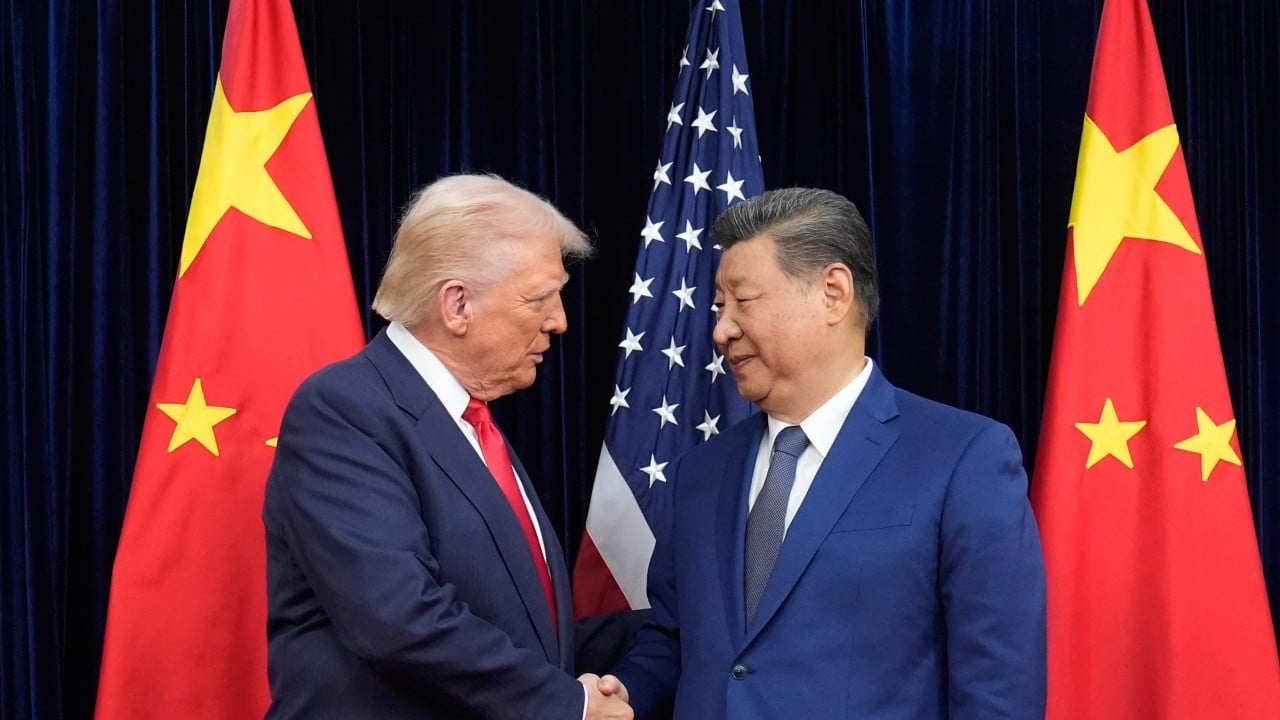
At the Busan summit in October 2022, Trump further lowered tariffs and halted export controls on thousands of Chinese companies following Xi Jinping's suspension of certain rare earth restrictions and resumption of soybean imports. As the two leaders convened recently at the White House, this pattern of fluctuating tensions seemed to repeat itself.
Essentially, detaching economic ties has proven disastrously costly for both nations. Two-way goods and services trade dropped by 25.1% last year to an estimated $494.6 billion, with American exports to China declining 26%. The effective tariff rate on many Chinese goods remains near 30%, the highest of any country, but this comes at a mutual expense.
China's control over approximately 70% of global rare earth mining and about 90% of processing capacity means a quick resolution is unlikely. The administration avoided threatening new tariffs or technology bans before this summit, unlike earlier meetings. The US is aware of China's leverage and tacitly acknowledges the necessity of maintaining stable and secure access to critical minerals.
US Trade Representative Jamie Greer stated in April that the president seeks stability and is not targeting "massive confrontation" or "full-on conflict" with China. The administration's November 2025 National Security Strategy refrained from naming China as a competitor, instead emphasizing the pursuit of "a genuinely mutually advantageous economic relationship with Beijing".
While Washington's grievances remain, such as Chinese subsidies, forced technology transfers, opaque ownership structures, and procurement rules that disadvantage foreign firms, it is unlikely that China will fundamentally change its approach. Beijing has selectively opened up market access but has not abandoned economic tools that irk Washington.
Both sides continue to adjust entity (black) lists and export controls in response to each other. At least a degree of mutual selectivity is preferable to outright exclusion. China's incremental openness has yielded profitable results for US companies like Tesla, which entered Shanghai without a local partner under conditions on local data storage and deep local sourcing.
This arrangement proved mutually beneficial. When Xi and Trump met in Beijing in May, they agreed to pursue "constructive strategic stability," marking the first shared idea in years to prevent further deterioration. A test occurred in June when the Pentagon added Alibaba, Baidu, and BYD to its civil-military entity list, while China placed 10 US entities on its dual-use export control list.
Despite the strained situation, both nations have maintained countermeasures at a relatively low level. The US should not single out China for criticism, as it has long employed similar tools like national security agreements, sectoral regulators, and data and governance provisions tested in the forced sale of TikTok. China has signaled further selective opening in advanced manufacturing, frontier research centers, and medical technology.
Many analysts on both sides believe there is a deal to be struck, where neither side sacrifices security nor forfeits competitiveness through sustained consultation and careful management of their differences. However, the Taiwan issue remains a highly sensitive flashpoint, with the People's Liberation Army conducting numerous sorties near the island's air defence identification zone and large-scale naval exercises.
These actions are likely responses to repeated US and ally naval exercises and provocative sail-throughs in the Taiwan Strait and nearby waters. While no diplomatic breakthrough occurred at this week's presidential summit, strategic stability and incremental progress on contentious issues should not be underestimated. While bypassing fundamental differences will not result in lasting stability, sustained consultation and careful management of differences on both sides can still yield tangible results.
The two superpowers may not be friends or enemies, but as nuclear-armed nations with the world's two largest economies, they cannot afford outright enmity.
Written by urgent.news from Reuters Business via SCMP's reporting — not their text. Machine-written — may contain errors; check the original before relying on it.
This story
This is one outlet's version. Read the fullest account.