Athens to Washington: What is the ‘Thucydides Trap’ Chinese President Xi keeps invoking
During discussions with US leaders, Chinese President Xi Jinping emphasized the concept of the Thucydides Trap, advocating for peaceful coexistence between the two nations. His repeated calls for mutual respect convey Beijing’s desire to evade conflict with the US. Historical instances suggest that shifts in power do not inevitably lead to war. However, analysts remain split over the implications…
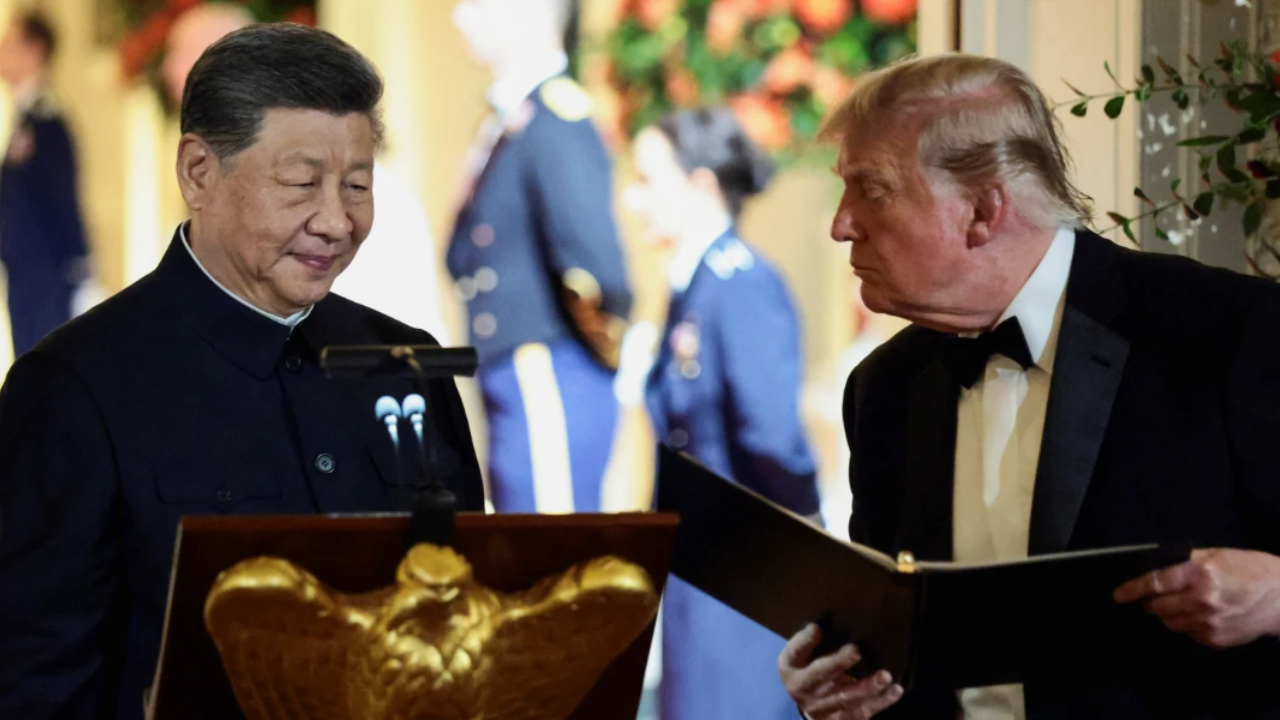
Chinese President Xi Jinping has reignited discussions about the "Thucydides Trap," an idea used to explain tensions when a rising power challenges an established one. Xi uses the concept to argue that despite China's growing power, the two nations must find a way to coexist. The term was popularized by Harvard political scientist Graham Allison, who drew parallels between the Peloponnesian War and modern-day human history.
Allison posited that a rising power's challenge to an established one can lead to tension and conflict. The concept is named after Greek historian Thucydides, who described the clash between Athens, a rising power, and Sparta, the dominant force. By invoking the Thucydides Trap, Xi frames the US-China relationship as a test of major power relations and highlights China's view of itself as an equal peer to the US.
While some analysts argue that the historical pattern does not necessarily mean every power transition leads to war, others remain skeptical of the Thucydides Trap as a sole explanation for conflict between China and the US.
Written by urgent.news from Times of India's reporting — not their text. Machine-written — may contain errors; check the original before relying on it.